



















Most Common SEO Mistakes to Avoid for Rankings
Discover common SEO mistakes that can hurt your website’s performance and learn practical tips to improve your search rankings.
While aiming for top rankings, some companies intentionally or unintentionally use Black Hat or Grey Hat SEO techniques to gain quick visibility and immediate traffic. While these methods may deliver short-term results, they carry significant risks, including penalties, loss of traffic, and long-term damage to the brand's reputation.
Such practices may seem effective initially, but ultimately affect long-term success and trust with search engines and users.
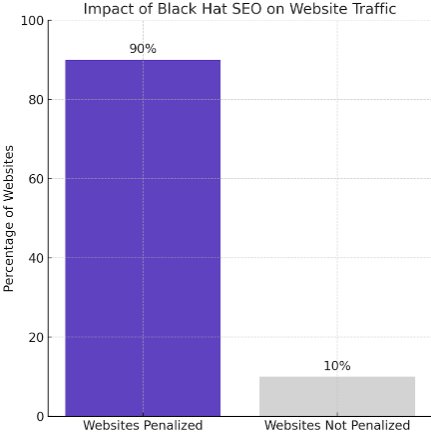
Studies show that over 90% of websites penalized for using Black Hat practices, such as buying backlinks and cloaking, experience significant drops in traffic that last for months or longer.
Forbes is a widely known business media brand with high authority in search engines. To expand its digital reach, it introduced sections like Forbes Advisor and Marketplace, publishing financial and product-related content. Much of this was created by external contributors, often optimized heavily for keywords and affiliate marketing.
Over time, Google identified this as a case of site reputation abuse, where a trusted domain is used to host content that doesn’t follow the same editorial standards as the main site. As a result, key sections lost visibility in search results, and rankings dropped across important finance and review-related pages.
To address the issue, Forbes removed or restricted low-quality content, limited third-party contributor access, and shifted content production back to internal editorial teams. They also adjusted their linking practices and improved content review processes to align with search engine guidelines.
Most Common SEO Mistakes to Avoid
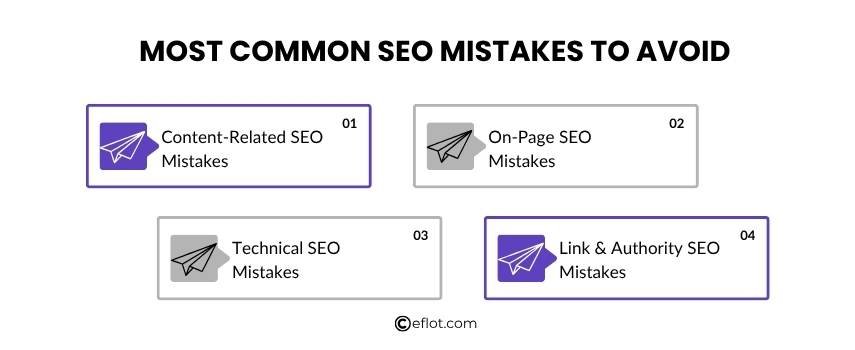
Category 1: Content-Related SEO Mistakes
1. Targeting the Wrong Keywords
What this impacts:
Trying to rank for short, popular keywords puts you in direct competition with leading brands, making it hard for your site to get noticed.
How to fix it:
-
Use long-tail keywords (e.g., “SEO tips for SaaS startups”)
-
Check search intent before writing
-
Use keyword tools like Google Keyword Planner, Ubersuggest, or AnswerThePublic
2. Ignoring Search Intent
What this impacts:
Even if you rank, people won’t stay on your page if it doesn't match what they were looking for.
How to fix it:
-
Google the keyword and study what type of content is ranking
-
Match the format: blog post, product page, video, or list
-
Determine whether the keyword intent is informational, commercial, or transactional.
3. Keyword Stuffing
What this impacts:
Adding the same keyword over and over makes content unreadable and affects rankings.
How to fix it:
-
Use your primary keyword naturally, about 5–7 times
-
Add variations and related keywords to support the topic
-
Avoid forcing keywords into every sentence
4. Thin or Duplicate Content
What this impacts:
Short content doesn’t give enough value. Duplicate content confuses search engines and damages authority.
How to fix it:
-
Aim for 1,000–1,500+ words of original, useful content
-
Rewrite any duplicated sections
-
Use canonical tags for necessary duplicates (e.g., product pages with variants)
Category 2: On-Page SEO Mistakes
5. Missing or Weak Meta Tags
What this impacts:
If you don’t tell search engines what your page is about, they won’t rank it, or worse, they’ll guess wrong.
How to fix it:
-
Write a clear, unique meta title and meta description for each page
-
Include the main keyword in both
-
Keep them within the character limits (Title: ~60, Description: ~145)
6. Poor Heading Structure
What this impacts:
Without proper headings, your content becomes hard to read, for both users and Google.
How to fix it:
-
Use only one H1 (the page title)
-
Break content into sections using H2s and H3s
-
Add relevant keywords into your headings naturally
7. Weak Internal Linking
What this impacts:
Pages become isolated, lose authority, and Google doesn’t understand how your content connects.
How to fix it:
-
Link every new blog post to 2–3 relevant existing posts
-
Use anchor text that clearly describes the link target
-
Update older posts with links to newer ones when relevant
Category 3: Technical SEO Mistakes
8. Slow Site Speed
What this impacts:
Slow-loading pages cause users to leave before reading. Google notices and lowers your rankings.
How to fix it:
-
Compress images
-
Minimize scripts and plugins
-
Use a caching plugin and CDN (like Cloudflare)
-
Test performance on Google PageSpeed Insights
9. Poor Mobile Experience
What this impacts:
Over half of all website traffic comes from mobile. If your site doesn’t work well on phones, Google won’t rank it.
How to fix it:
-
Use a responsive design
-
Test mobile friendliness using Google’s Mobile-Friendly Test
-
Avoid popups that block content on small screens
10. No HTTPS
What this impacts:
Sites without SSL are marked “Not Secure”, and users will leave quickly.
How to fix it:
-
Get an SSL certificate from your hosting provider
-
Redirect all pages from HTTP to HTTPS
-
Make sure the SSL is renewed yearly
11. Missing Sitemap or Bad robots.txt
What this impacts:
If search engines can’t find or index your pages, they won’t show up in results.
How to fix it:
-
Generate an XML sitemap and submit it to Google Search Console
-
Use robots.txt to allow bots where needed
-
Don’t accidentally block key folders like /blog or /products
Category 4: Link & Authority SEO Mistakes
12. Low-Quality or Paid Backlinks
What this impacts:
Links from spammy or irrelevant websites can lead to penalties or poor trust scores.
How to fix it:
-
Use tools like Ahrefs or Search Console to find bad backlinks
-
Focus on getting links from reputable, relevant sites through outreach or guest posting
13. No Internal Link Strategy
What this impacts:
Without linking related pages, you waste your authority and limit Google’s understanding of your site.
How to fix it:
-
Create content clusters or topic hubs
-
Link related content from every new post
-
Review old blogs regularly and add new links to them
Black Hat and Grey Hat SEO: What to Know
Some SEO techniques may appear effective, but do not comply with search engine guidelines.
Black Hat SEO refers to deliberate rule violations aimed at achieving quick rankings, often resulting in penalties. Grey Hat SEO operates in a less defined space, and while not explicitly prohibited, it carries potential risk. Understanding the distinction between these methods is essential for maintaining long-term search visibility and avoiding reputational or technical setbacks.
Black Hat SEO
-
Buying backlinks – Paid links can trigger penalties and reduce domain trust.
-
Cloaking – Serving different content to users and search engines breaks guidelines.
-
Hidden text – Invisible keywords or links damage credibility.
-
Auto-generated content – Lacks originality and fails to rank effectively.
Grey Hat SEO
-
Guest post overuse – Too many keyword-heavy links appear manipulative.
-
PBNs – Interlinked owned sites are risky if uncovered.
-
Excessive internal links – Keyword stuffing across pages disrupts user experience.
-
Fake engagement – Simulated clicks or dwell time offer no sustainable impact.
-
Expired domains – Acquiring old domains for links can yield mixed outcomes.
The Ethical SEO Practices: White Hat SEO
White Hat SEO focuses on following search engine guidelines and creating value for users. It’s safe, sustainable, and built for long-term results.
-
Quality Content: Write original, helpful, and updated content.
-
Natural Link Building: Earn links through relevant, ethical methods.
-
Clean On-Page SEO: Use proper tags, keywords, and structure.
-
Mobile & Speed Ready: Fast, responsive, and secure to achieve higher rankings.
-
Better UX: Prioritize clear layout, readability, and navigation.
-
Performance Tracking: Use analytics to guide ongoing improvements.
While shortcuts like Black Hat SEO might deliver quick results, they often lead to long-term setbacks. Prioritize ethical SEO practices with quality content and proper optimization to achieve lasting success.
Get in touch at [email protected] to improve your search engine rankings!
Digital Marketing services in Other Locations in India
Bangalore | Hyderabad | Chennai | Pune | Ahmedabad | Coimbatore | Mumbai | Kolkata | Patna | Amritsar | Indore | Kozhikode | Trivandrum | Jaipur | Nagpur | Gwalior | Dehradun | Noida | Vizag | Raipur | Agra | Gurgaon | Madurai | Udaipur | Thrissur |