
















The Dangers of Black Hat SEO for Businesses
Thinking of shortcuts in SEO? Learn the dangers of black hat SEO and how it can ruin your business rankings, and protect your brand the right way!

Are you tempted to take shortcuts to boost your website rankings quickly?
Do you understand what is black hat in SEO and the risks it poses to your business? While the promise of fast results can be appealing, black hat SEO tactics can have devastating long-term consequences that damage your brand’s reputation and search visibility.
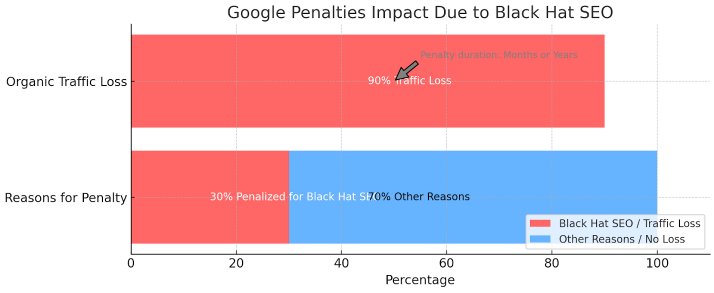
Recent studies reveal that approximately 30% of websites penalized by Google were caught using black hat SEO techniques. Furthermore, websites employing these tactics risk losing up to 90% of their organic traffic if caught, with penalties lasting months or even years. Google’s ongoing algorithm updates, like Panda and Penguin, have made the search engine much more effective at detecting and punishing unethical SEO, proving that black hat strategies are increasingly unsustainable.
In 2011, JCPenney faced a major Google penalty for using a black hat SEO tactic known as link schemes. The company paid for hundreds of thousands of spammy backlinks to boost their rankings artificially. Once detected, Google penalized JC Penney by drastically reducing their search rankings, resulting in a sharp drop in organic traffic and sales.
This forced JCPenney to urgently remove the bad links, rebuild their SEO strategy from scratch, and invest heavily in clean, white hat SEO. The incident serves as a cautionary tale about the dangers of black hat SEO and the importance of maintaining ethical marketing practices.
What Is Black Hat in SEO?
Black hat SEO refers to unethical and manipulative techniques designed to deceive search engines and gain higher rankings faster than legitimate methods allow. These tactics violate search engine guidelines and aim to exploit loopholes in algorithms rather than focusing on genuine value and user experience.
Common black hat SEO practices include keyword stuffing, cloaking, link schemes, hidden text, doorway pages, and duplicate content. While these tactics might generate temporary spikes in traffic, the long-term risks far outweigh the short-lived benefits.
Why Businesses Should Avoid Black Hat SEO
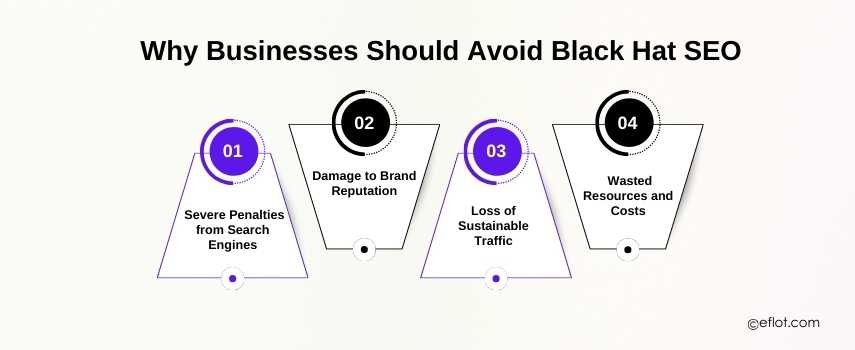
1. Severe Penalties from Search Engines
Google and other search engines actively monitor and penalize websites that use black hat SEO. Penalties can range from ranking drops to complete removal from search results (de-indexing). Recovering from these penalties can take months or even years and often requires a costly and time-consuming cleanup process.
2. Damage to Brand Reputation
When customers search for your brand and find you buried deep in search results or flagged for spammy behavior, it undermines their trust. Black hat SEO can damage your brand reputation and deter potential customers who value authenticity and transparency.
3. Loss of Sustainable Traffic
Black hat SEO may deliver short-term traffic boosts, but these are rarely sustainable. As search engines improve their algorithms, black hat tactics become less effective, leading to traffic declines that can jeopardize your revenue streams.
4. Wasted Resources and Costs
Investing in black hat SEO wastes resources on tactics that provide little long-term value. Businesses often end up spending more on recovery efforts, including SEO audits, content overhauls, and reputation management, than they would have on ethical SEO from the start.
Common Black Hat SEO Techniques to Watch Out For
-
Keyword Stuffing: Overloading a page with keywords unnaturally, making the content unreadable and spammy.
-
Cloaking: Showing different content to search engines than to users to manipulate rankings.
-
Link Schemes: Buying or exchanging links to artificially boost backlinks and domain authority.
-
Hidden Text: Using invisible text or links to stuff keywords without user visibility.
-
Duplicate Content: Copying content from other sites to increase page volume without adding value.
-
Doorway Pages: Creating low-quality pages stuffed with keywords that funnel users to a different page.
How to Avoid Black Hat SEO and Build Sustainable Success
-
Focus on Quality Content: Create valuable, informative, and engaging content that genuinely helps your audience.
-
Build Legitimate Backlinks: Earn backlinks naturally by creating share-worthy content and forming real partnerships.
-
Optimize User Experience: Ensure your site is fast, mobile-friendly, and easy to navigate.
-
Follow Search Engine Guidelines: Stay updated with Google’s Webmaster Guidelines and avoid shortcuts.
-
Use Ethical SEO Practices: Implement keyword research, on-page SEO, and technical SEO ethically and responsibly.
-
Monitor Your SEO Regularly: Use tools like Google Search Console and SEO audits to detect and fix potential issues early.
Understanding what black hat SEO is and why it’s dangerous is vital for any business aiming for long-term online success. While black hat techniques might seem tempting for quick wins, the risks of penalties, damaged reputation, and lost traffic make them a poor choice. Instead, invest in white hat SEO strategies that align with search engine guidelines and focus on adding real value to your audience. Ethical SEO not only protects your business but also builds a strong foundation for sustainable growth and brand trust.
Need a clean, penalty-free SEO strategy? Contact [email protected] today and partner with experts dedicated to your long-term business success!
Digital Marketing services in Other Locations in India
Bangalore | Hyderabad | Chennai | Pune | Ahmedabad | Coimbatore | Mumbai | Kolkata | Patna | Amritsar | Indore | Kozhikode | Trivandrum | Jaipur | Nagpur | Gwalior | Dehradun | Noida | Vizag | Raipur | Agra | Gurgaon | Madurai | Udaipur | Thrissur |