


How Swiggy Used Ads & Achieved App Traffic and Conversions
Swiggy advertising combines performance marketing and brand storytelling across digital channels, using data-driven targeting, remarketing
I remember the exact moment I started paying closer attention to Swiggy advertising. It was during an IPL match, a 20-second spot, perfectly timed, hilariously written, and gone before you could hit skip.
It felt effortless, and that’s exactly what made it effective.
But behind that 20-second window was months of targeting decisions, budget allocation, creative testing, and platform-specific optimization.
Swiggy advertising has always operated differently from traditional FMCG brands.
They were digital-first when most food brands were still buying newspaper slots. They bet on performance marketing when others were running brand-only campaigns. And they did it at a scale that shaped how millions of Indians think about ordering food online.
The Swiggy Advertising Model: Two Sides of the Same Platform
Before diving into campaigns, it’s important to understand what Swiggy advertising actually means, because it operates on two distinct levels.
1. Swiggy as an advertiser: Running paid campaigns across Google, Meta, programmatic networks, and app stores to acquire users and drive orders.
2. Swiggy as an advertising platform: Offering restaurant partners ad placements inside the app, including sponsored listings, banners, and roadblocks.
Most brands operate on one side. Swiggy does both simultaneously.
That’s what makes the model powerful.
Data from in-app ads feeds into Swiggy’s external advertising strategy. Every click, order, and browsing pattern strengthens their targeting engine.
How Swiggy Advertising Drives High-Quality App Installs
At its core, Swiggy’s performance marketing strategy follows one principle:
Reach the right user at the right moment of intent.
Sounds simple, but execution is where most brands fail.
In one campaign via InMobi’s DSP, Swiggy Instamart targeted iOS users aged 18–45 across high-engagement categories like food, sports, and finance. Ads appeared on Glance lock screens and in-app placements, reaching users when they were already active on their phones.
The key differentiator?
They optimized using SKAN (StoreKit AdNetwork) - Apple’s privacy-first attribution system.
While many brands saw SKAN as a limitation, Swiggy used it as an optimization signal, focusing on post-install conversions, not just installs.
That’s a critical distinction:
-
High install volume ≠ business growth
-
High-quality installs = actual revenue
Swiggy advertising consistently prioritized conversion-ready users; directly impacting ROI, not just vanity metrics.
Remarketing That Actually Converts (Not Just Reminds)
Most brands treat remarketing as one bucket. Swiggy doesn’t.
They break it into two clear segments:
1. Dormant users: installed but stopped ordering
2. Irregular users: order occasionally but haven’t formed a habit
For dormant users, Swiggy ran time-sensitive, context-driven campaigns aligned with IPL matches, Diwali, and Valentine’s Day.
For Instamart users, they went deeper.
Using attribution data from AppsFlyer, they identified why users dropped off:
-
Price sensitivity
-
Poor experience
-
One-time usage
Instead of pushing generic discounts, Swiggy advertising addressed the exact objection.
This is what separates good remarketing from average remarketing. Most brands push blanket offers. Swiggy mapped dropout reasons and targeted accordingly, driving reactivation at scale.
Swiggy Ads for Restaurants: Performance-Driven In-App Advertising
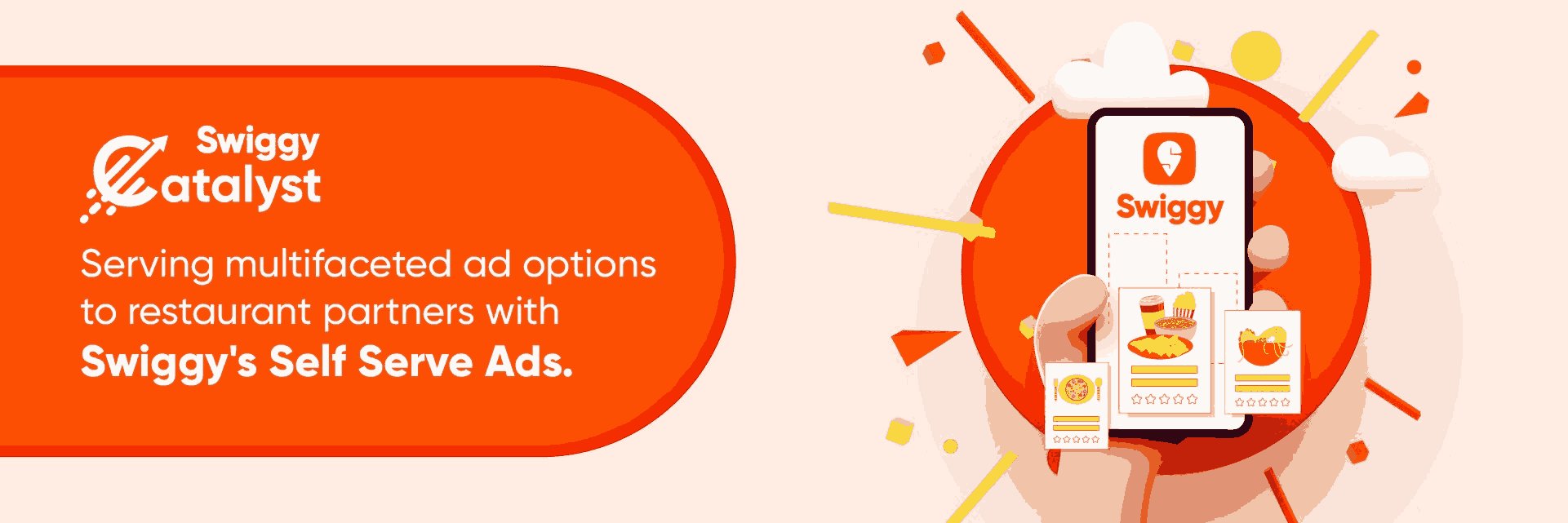
Image source: Swiggy Diaries
Swiggy isn’t just running ads. It’s selling them.
Restaurant partners can run campaigns inside the app using a cost-per-click (CPC) model, paying only when users engage.
Formats include:
-
Banner ads (home screen visibility)
-
Sponsored listings (search/category dominance)
-
Roadblock ads (full-screen takeovers)
One standout format is Swiggy Pop - single-meal deals displayed prominently to drive quick decisions.
Why it works:
-
Restaurants get conversions
-
Swiggy increases order frequency
-
Users get simple, affordable options
Campaigns are backed by real-time analytics like impressions, clicks, conversions, and ROI, making Swiggy advertising highly measurable.
Campaigns That Built Brand Recall (and Reduced CAC)
Performance marketing brings users in. Brand campaigns make them stay.
Swiggy understood this balance better than most.
1. “Why Is This a Swiggy Ad?”
A Diwali campaign that invited users to interpret cryptic creatives.
Result? Massive UGC, conversations, and organic reach.
No feature promotion, just brand personality.
2. “Swiggy Karo, Phir Jo Chahe Karo”
Short, relatable stories showing convenience in everyday life.
No heavy messaging, just situations people instantly connect with.
3. “#WhatsInAName”
Encouraging users to address delivery partners by name.
This campaign humanized the last-mile experience, building trust, not just transactions.
The takeaway:
Swiggy advertising doesn’t rely only on discounts; it builds emotional memory that reduces long-term acquisition costs.
Search Strategy: Where SEO and Paid Ads Work Together
Swiggy’s search dominance is deliberate:
-
900,000+ ranking keywords
-
285,000+ indexed pages
Their strategy relies on hyperlocal landing pages, capturing city and restaurant-level intent at scale.
On the paid side, Swiggy invests heavily in Google Ads services, even bidding aggressively on branded terms. The keyword “Swiggy” alone drives 1.83 million searches monthly, with a higher CPC than competitors like Zomato.
Paid search contributes ~4% of traffic, growing 9% YoY.
Swiggy doesn’t treat SEO and SEM as separate channels.
-
Paid search captures demand instantly
-
Organic search builds long-term visibility
Together, they maximize total search coverage efficiently.
Email & Push Notifications: The Hidden Growth Engine
In 2019, Swiggy recorded a 25% email open rate and a 7% click-through rate across a user base of a million — numbers that most e-commerce brands would consider outstanding. The emails weren't transactional. They were personality-driven, humor-laced, and event-aware.
Subject lines were deliberately click-bait without being misleading. Visuals featured food photography that made you want to order immediately. Copy referenced trending topics — cricket scores, Bollywood moments, seasonal events. The goal was to make promotional emails feel like something worth reading rather than something to delete.
Push notifications follow the same logic:
-
Timed around real-life moments
-
Personalized based on behavior
-
Designed to feel useful, not intrusive
This is where Swiggy advertising extends beyond acquisition into lifecycle marketing.
Social Media: Where Swiggy Builds Culture
Swiggy’s social presence feels like content, not advertising.
Content mix:
-
Memes
-
Real-time reactions
-
Influencer collaborations
-
Campaign teasers
Instead of relying heavily on celebrities, they use micro-creators for higher engagement.
A campaign by Dentsu Webchutney delivered:
-
40% growth in Instagram followers
-
2100% increase in traffic
This is where Swiggy advertising blends organic relevance with paid amplification.
Swiggy Instamart: A Separate Advertising Strategy Within the Same App
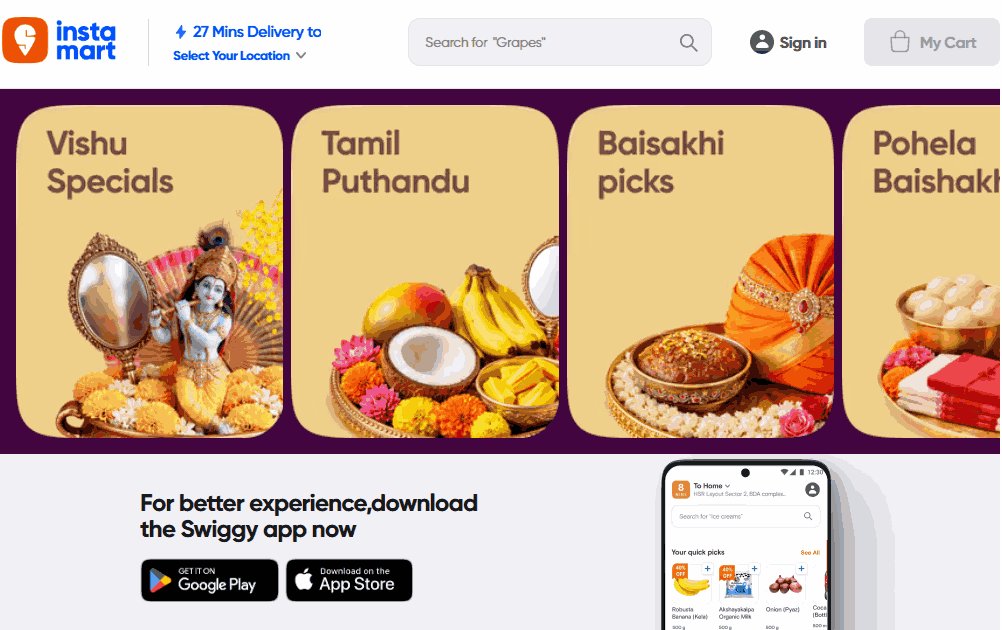
Instamart required a different approach.
Food delivery = emotional
Grocery ordering = habitual + price-driven
Swiggy adapted accordingly.
Instamart campaigns focused on:
-
Speed (delivery in minutes strategy)
-
Convenience
-
First-order incentives
Instead of acquiring new users from scratch, Swiggy targeted its food delivery users — significantly reducing acquisition costs.
Cross-promotion within the app was a major lever. A food delivery user who has never used Instamart would see targeted banners, in-app pop-ups, and push notifications promoting Instamart with a first-order discount.
They also used geo-targeted ads to show availability in specific areas, removing a key friction point before the click.
What Brands Can Actually Learn from Swiggy Advertising
Here’s what actually works:
-
Focus on install quality, not just volume
-
Segment remarketing by drop-off reason, not just recency
-
Treat brand and performance as complementary
-
Use email and push for retention, not announcements
-
Cross-sell before acquiring new users
These are execution-backed growth levers, not theory.
FAQs on Swiggy Advertising and Marketing Strategy
1. How does Swiggy’s in-app advertising work?
A CPC-based model where restaurants pay only for clicks.
2. What platforms does Swiggy use?
Google, Meta, InMobi DSPs, the SKAN ecosystem, and lock-screen platforms like Glance.
3. How does Swiggy use remarketing?
By segmenting users based on behavior and targeting specific drop-off reasons.
4. What is Swiggy’s SEO strategy?
Hyperlocal content architecture combined with paid search.
5. What makes Swiggy campaigns different?
A mix of emotional storytelling and performance-driven execution.
Want to Build a Digital Ad Strategy That Actually Converts?
At Eflot, we help growth-focused brands plan and execute performance-driven digital marketing campaigns, from app install campaigns and remarketing funnels to SEO-backed content strategies.
If your brand is ready to move from generic advertising to a strategy built on real audience insights and conversion data, let's talk.
Explore our digital marketing services.
Final Takeaway: What Swiggy Advertising Really Proves
Swiggy's advertising success is the result of a disciplined integration of brand and performance thinking.
They didn't win because they spent the most; they won because they spent smartly.
They measured what actually mattered:
-
Post-install conversions
-
Customer lifetime value
-
Reactivation rates
Not vanity metrics.
The Swiggy marketing strategy is, at its core, a lesson in building a brand that earns attention rather than just buying it. The campaigns are memorable. The targeting is surgical. The system is efficient.
If you're building a growth strategy for a product-led business, food, e-commerce, fintech, or anything in between, the frameworks Swiggy used are directly applicable. It starts with knowing your funnel, segmenting your audience correctly, and building creative that earns attention instead of just interrupting it.
Digital Marketing services in Other Locations in India
Bangalore | Hyderabad | Chennai | Pune | Ahmedabad | Coimbatore | Mumbai | Kolkata | Patna | Amritsar | Indore | Kozhikode | Trivandrum | Jaipur | Nagpur | Gwalior | Dehradun | Noida | Vizag | Raipur | Agra | Gurgaon | Madurai | Udaipur | Thrissur |