




















The Future of Web Development: Key Trends
Explore the evolving landscape of web development with key trends shaping the future, including AI, frameworks, and performance tools.
Websites have come a long way from static HTML pages to dynamic and interactive platforms that are expected to be fast, responsive, and user-friendly across all devices.
However, many businesses still rely on outdated setups. This can limit engagement, reduce performance, and make it harder to meet customer expectations, even with strong marketing efforts.
Keeping up with new web development trends helps businesses stay ahead and give users a better experience.
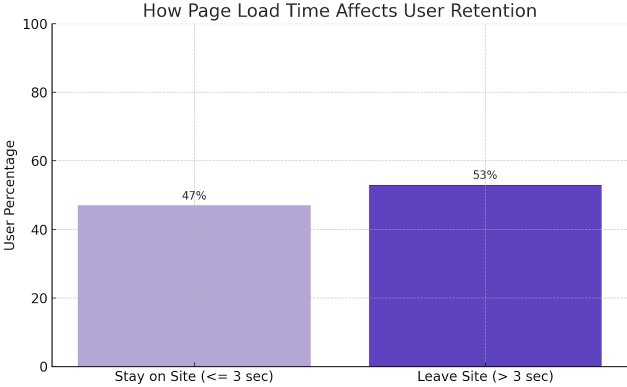
Studies suggest that 53% of users will abandon a website if it takes longer than three seconds to load, highlighting the importance of modern, efficient web design.
Understanding Web Development
Web development focuses on creating fast, secure, and user-friendly websites that meet rising user expectations. It involves delivering seamless digital experiences across all devices.
Websites need to load quickly to keep users engaged and reduce bounce rates. With most organic traffic coming from mobile devices, responsive layouts are essential. Protecting user data and maintaining trust is a top priority. Clear navigation and intuitive interfaces encourage conversions and repeat visits.
Keeping up with these changes in both web development and web design helps businesses connect better with customers and keep up with the competition.
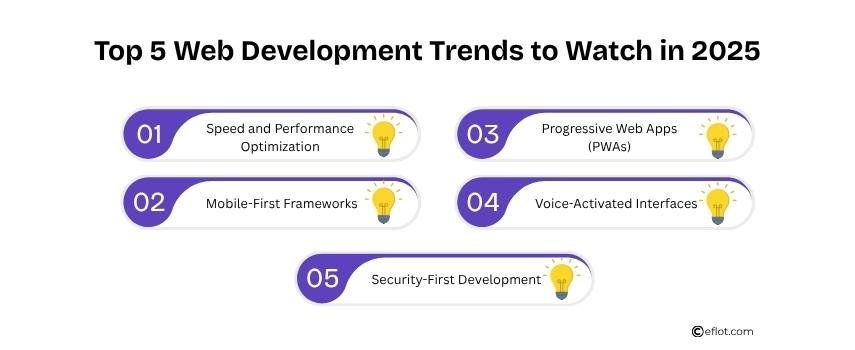
Top 5 Web Development Trends to Watch
As user expectations evolve, web development is becoming more focused on performance, accessibility, and long-term trust. These five trends are reshaping how modern digital experiences are built and how users respond to them.
1. Speed and Performance Optimization
Core Application
Improve how quickly web pages load by using efficient code, optimized assets, and smart caching techniques.
Why It’s Important
Slow websites frustrate users. Even a one-second delay can lead to fewer conversions and higher bounce rates.
Best Practices Include
-
Minify CSS, JavaScript, and HTML
-
Use image compression and lazy loading
-
Set up browser caching and Content Delivery Networks (CDNs)
-
Regularly test site speed with tools like Google Lighthouse
2. Mobile-First Frameworks
Core Application
Design websites that prioritize mobile screens first, then scale up for larger devices.
Why It’s Important
Most online traffic now comes from smartphones. A mobile-friendly design ensures accessibility for a wider audience.
Best Practices Include
-
Use mobile-first frameworks like Tailwind CSS or Bootstrap 5
-
Keep layouts simple and easy to tap
-
Optimize font sizes and buttons for smaller screens
-
Test responsiveness across various devices
3. Progressive Web Apps (PWAs)
Core Application
Build web applications that work offline, load instantly, and function like native mobile apps.
Why It’s Important
PWAs improve engagement and reduce the need for full app development while offering app-like functionality in the browser.
Best Practices Include
-
Set up service workers for offline access
-
Enable install prompts and push notifications
-
Use HTTPS and a web app manifest file
-
Focus on quick load times even on slow networks
4. Voice-Activated Interfaces
Core Application
Allow users to navigate or interact using voice commands, especially for search or accessibility.
Why It’s Important
Voice interaction is growing with smart speakers and mobile devices. It adds convenience and broadens access.
Best Practices Include
-
Structure content for voice search with natural language
-
Add schema markup for better understanding by search engines
-
Keep navigation simple and command-friendly
-
Test with different devices to ensure clarity and accuracy
5. Security-First Development
Core Application
Integrate safety measures from the beginning of the development process to protect both users and data.
Why It’s Important
Data breaches and attacks are increasing. Building secure websites helps maintain trust and meet compliance requirements.
Best Practices Include
-
Use HTTPS for secure communication
-
Require strong authentication (e.g., MFA, OAuth2)
-
Perform regular code reviews and security audits
-
Store sensitive data using encryption
How Web3 is Influencing the Future of Web Development
Web3 is driving a shift from centralized systems toward decentralized applications (dApps) and peer-to-peer transactions.
Key Impacts for Developers and Businesses:
-
Blockchain Integration
Enables secure, transparent data storage and payment processing.
-
Smart Contracts
Automate transactions and interactions without manual intervention.
-
User Data Ownership
Grants users greater control over their personal data and digital identities.
Web3 technologies are becoming essential for sectors like finance, real estate, and digital content platforms.
Ignoring decentralization in your development strategy may result in missed innovation opportunities.
Is Web4 the Next Evolution in Web Development?
Web4 may sound futuristic, but the shift is already happening.
Often referred to as the “symbiotic web,” Web4 moves beyond basic interaction. It aims to create a strong collaboration between humans and technology, where digital systems don’t just respond but anticipate needs.
Key Features of Web4 in Web Development
-
AI-Powered Personalization
Websites will dynamically adapt to each user’s behavior, preferences, and history, creating unique, real-time experiences for every visitor.
-
Integration with IoT Devices
From smart homes to wearables, websites will connect with users’ physical environments, offering more contextual and seamless interactions.
-
Predictive User Experiences
Pages will anticipate user actions before they occur, reducing clicks, suggesting next steps, and streamlining journeys based on live data.
Why UI/UX Design is Fundamental to Web Development
Technical functionality is essential, but seamless user navigation and experience determine a website’s success. UI (User Interface) and UX (User Experience) are now integral components of effective web development.
Key Focus Areas for Businesses:
-
Clear Layout and Content Flow
Users typically scan pages rather than read thoroughly, making a well-organized structure critical.
-
Responsive Design
Websites must perform flawlessly across all devices, including mobile phones, tablets, and desktops.
-
Immediate Interaction Feedback
Elements such as buttons, forms, and navigation should respond quickly to user actions.
-
Emotional Clarity
A well-crafted UX minimizes friction, fosters trust, and delivers an intuitive experience.
Thoughtful design choices significantly impact user engagement, conversion rates, customer retention, and brand advocacy.
How Businesses Use Web Development to Stay Competitive
A website often serves as the primary point of contact between a brand and its customers. Effective web development extends beyond aesthetics to deliver measurable business growth.
Key Practices of High-Performing Businesses:
-
Continuous Optimization
Regular improvements in site speed, code quality, SEO, and user interface enhance performance.
-
Data-Driven Testing
Monitoring user behavior, bounce rates, and conversion metrics informs strategic decisions.
-
Integration of Intelligent Tools
Incorporating analytics, CRM systems, live chat, and automation streamlines operations.
-
Scalable Infrastructure
Building robust backend systems capable of handling increased traffic and evolving product offerings.
By approaching web development as a strategic growth driver rather than a purely technical task, businesses create durable digital platforms that support long-term success.
FAQs
1. What is the future of web development?
The future of web development focuses on creating fast, secure, and personalized websites. Developers are adopting mobile-first designs, AI-driven features, and decentralized applications (Web3) to build websites that better meet user expectations and business needs.
2. Is web development still in demand?
Yes, web development remains in high demand. As more businesses expand online, there is a strong need for developers who can create modern, secure, and scalable websites that support growth across industries like e-commerce, SaaS, and more.
3. What is the latest technology in web development in 2026?
The latest web development technologies include Progressive Web Apps (PWAs), serverless computing, WebAssembly, blockchain integration, and no-code platforms. These innovations help improve website speed, security, and user experience.
4. How is web development used in business?
Web development helps businesses build effective websites that attract and retain customers, automate tasks, integrate with tools like CRM and analytics, and provide a smooth online experience that supports sales and brand trust.
5. What is blockchain in web development?
Blockchain technology allows websites and apps to securely store and share data without relying on a central authority. It is used for secure payments, automating contracts, and giving users more control over their data, especially in industries such as finance and healthcare.
Web development keeps changing, and it’s important to keep up. Faster, easier-to-use websites with new technologies help businesses grow and keep customers happy. A clear design, strong security, and useful tools make your site work better now and in the future. Updating your website is important to stay ahead and reach more people.
Need a website that works for your business?
We build fast, secure, and easy-to-use websites.
Email us at [email protected] to get started.
Digital Marketing services in Other Locations in India
Bangalore | Hyderabad | Chennai | Pune | Ahmedabad | Coimbatore | Mumbai | Kolkata | Patna | Amritsar | Indore | Kozhikode | Trivandrum | Jaipur | Nagpur | Gwalior | Dehradun | Noida | Vizag | Raipur | Agra | Gurgaon | Madurai | Udaipur | Thrissur |