





How MakeMyTrip Improved Bookings with Effective Campaigns
MakeMyTrip turns travel traffic into bookings by using intent targeting, retargeting, urgency, and trust signals that guide users from browsing to confident decisions.
If you’ve worked in the travel space long enough, you know this:
Getting traffic is easy, but getting bookings is hard.
Users browse endlessly. They compare prices. They abandon at the last step.
That’s the reality of the travel industry.
What brands like MakeMyTrip have done differently is simple to say, but difficult to execute:
They built campaigns that reduce hesitation at every stage of the journey.
This is where MakeMyTrip advertising stands out. It focuses less on visibility and more on decision-making triggers.
Understanding the Real Challenge in Travel Marketing
Before looking at campaigns, it’s important to understand the problem.
Travel is a high-consideration purchase:
-
Multiple options
-
Price sensitivity
-
Trust concerns
-
Timing dependency
From experience running campaigns in this space, one pattern is clear—users rarely convert on first visit.
A single traveller can go through hundreds of digital touchpoints while researching a trip, interacting across search, videos, reviews, and booking platforms.
What this means in practice is simple. A booking rarely happens from a single ad or interaction. Users explore, compare, leave, and return multiple times before making a decision.
For campaigns, this shifts the approach. Instead of pushing for immediate conversion, the focus moves to staying visible across the journey through search, retargeting, and trust signals that bring users back at the right moment.
MakeMyTrip Advertising: What Makes It Work
Most brands run ads.
MakeMyTrip builds decision systems.
Their approach combines:
-
Intent-based targeting
-
Strong retargeting
-
Urgency triggers
-
Trust reinforcement
Each campaign is structured to reduce friction between discovery and booking.
This is the foundation of MakeMyTrip advertising.
The Core Strategy Behind MakeMyTrip Campaigns
1. Capturing High-Intent Users First
MakeMyTrip invests heavily in search-based campaigns.
When users search:
-
“Flights to Goa”
-
“Hotels in Manali”
They are already close to booking.
Instead of broad awareness, their campaigns focus on:
-
Specific destinations
-
Dates and deals
-
Real-time pricing
Search works here because it captures demand that already exists, rather than trying to create it.
2. Retargeting That Feels Timely, Not Pushy
Most travel users don’t book immediately.
MakeMyTrip tracks:
-
Search behaviour
-
Abandoned sessions
-
Wishlist activity
Then retargets with:
-
Price drop alerts
-
Limited-time deals
-
Reminder ads
Retargeting strategy is one of the most commonly used digital advertising tactics worldwide. Retargeted users are 70% more likely to convert compared to new users.
For travel campaigns, this is critical because interest rarely turns into action in the first session.
3. Creating Urgency Without Overusing Discounts
Discounts alone don’t convert. Timing does.
MakeMyTrip uses:
-
Countdown timers
-
“Only 2 seats left” messaging
-
Limited-period offers
This taps into decision psychology.
Urgency performs when it matches availability or timing. When it feels artificial, users ignore it.
4. Building Trust Through Social Proof
Travel decisions depend heavily on trust.
MakeMyTrip strengthens this with:
-
Ratings and reviews
-
Verified stays
-
Clear cancellation policies
They also extend this trust through social media campaigns. Their YouTube marketing focuses on real travel experiences and storytelling. Instead of pushing offers, these campaigns show destinations, moments, and journeys, helping users picture the experience before booking.
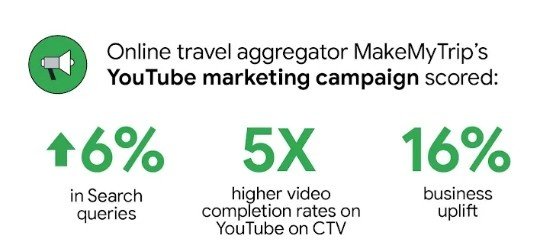
Image source: Think with Google
This approach works because video builds familiarity faster than static content. Users feel more confident when they can see what to expect.
According to Search Engine Journal, over 90% of users read reviews before making a purchase decision. When combined with video content, this builds stronger confidence and shortens the decision cycle.
5. Simplifying the Booking Journey
Over 85% of Indian travelers prefer to book their trips online, which makes the booking experience a direct factor in conversions.
One of the most underrated aspects of MakeMyTrip campaign success is UX.
-
Fast loading pages
-
Minimal steps
-
Clear pricing
Reducing friction in checkout improves conversion rates significantly.
In travel, even a small delay or confusion can lead to drop-offs.
Real Campaign Examples from MakeMyTrip
Case 1: Price Drop Alerts
Users who searched for flights but didn’t book received notifications when prices dropped.
Result:
-
Increased return visits
-
Higher booking completion rates
Case 2: Festive Campaigns (Diwali / Summer Travel)
Campaigns focused on:
-
Seasonal destinations
-
Limited-time deals
-
Bundled offers
These campaigns worked because they aligned with natural travel intent periods, where intent already exists.
Case 3: App-First Campaign Strategy
MakeMyTrip pushed app installs through ads and incentives.
Why this matters:
-
App users convert faster
-
Retargeting becomes easier
-
Notifications drive repeat bookings
What Most Brands Get Wrong
From working with travel and ecommerce campaigns, a few patterns repeat.
1. Over-Focusing on Traffic: More clicks increase visibility, but without intent, conversions stay low.
2. Ignoring Mid-Funnel Users: Users who explored but didn’t book are often left out, even though they are closer to conversion.
3. Weak Urgency Signals: Generic urgency messages fail because users recognise when they are not real.
4. Complicated Booking Experience: Too many steps or unclear pricing leads to drop-offs even after strong campaign performance.
How You Can Apply MakeMyTrip’s Strategy
You don’t need a massive budget to apply these principles.
1. Focus on Intent First: More clicks increase visibility, but without intent, conversions stay low.
2. Build a Retargeting System: Track behaviour and re-engage users who showed interest.
3. Use Real Urgency: Align it with availability and timing.
4. Improve Conversion Experience: Reduce friction in steps, speed, and clarity.
5. Align Campaigns with Timing: Run campaigns during travel peaks and planning periods.
For teams trying to execute all of this consistently, the challenge is coordination. Search, retargeting, and user experience need to work together. This is where digital marketing services for travel agencies help bring structure and consistency into execution.
Common Mistakes to Avoid
Before applying these strategies, it helps to understand where most campaigns go wrong and what actually improves results.
1. Targeting Everyone Instead of Ready Buyers: Broad targeting brings traffic, but most users are not ready to book.
2. Missing Out on Returning Users: Users who show interest leave and are not brought back.
3. Using Discounts Without Clear Timing: Frequent offers make users wait instead of booking.
4. Ignoring the Booking Experience: Slow or confusing pages lead to drop-offs.
5. No Follow-Up After Interest: Users lose intent when there is no reminder or re-engagement
Pro Tips to Turn Clicks Into Bookings
A few practical patterns consistently improve campaign performance when applied correctly.
1. Focus on High-Intent Searches: Users actively searching are closer to making a booking decision.
2. Bring Back Interested Users: Retargeting helps convert users who already explored options.
3. Keep the Journey Simple and Fast: Clear steps and quick loading improve completion rates.
4. Align Campaigns with Travel Timing: Campaigns perform better when they match real travel periods.
FAQs
1. What is MakeMyTrip advertising strategy?
It focuses on intent targeting, retargeting, urgency, and a smooth booking experience.
2. Why are MakeMyTrip campaigns effective?
They align campaigns with how users actually plan and book travel.
3. How does retargeting help in travel campaigns?
It brings back users who explored options but did not complete the booking.
4. What role does urgency play in travel marketing?
It pushes users to act when availability or timing becomes limited.
5. Can smaller brands apply these strategies?
Yes. Even with smaller budgets, focusing on intent and experience improves results.
Final Takeaway
The success of MakeMyTrip ad campaign strategy comes down to one thing: Reducing the gap between interest and booking.
Every campaign, message, and touchpoint moves the user closer to a decision.
If bookings are low despite strong traffic, the issue usually sits in how the journey is structured.
Fix that, and performance improves.
Digital Marketing services in Other Locations in India
Bangalore | Hyderabad | Chennai | Pune | Ahmedabad | Coimbatore | Mumbai | Kolkata | Patna | Amritsar | Indore | Kozhikode | Trivandrum | Jaipur | Nagpur | Gwalior | Dehradun | Noida | Vizag | Raipur | Agra | Gurgaon | Madurai | Udaipur | Thrissur |