





















How to Choose a Healthcare Digital Marketing Agency
Learn how to choose the right healthcare digital marketing agency, the questions to ask, red flags to avoid, and factors that actually drive patients.
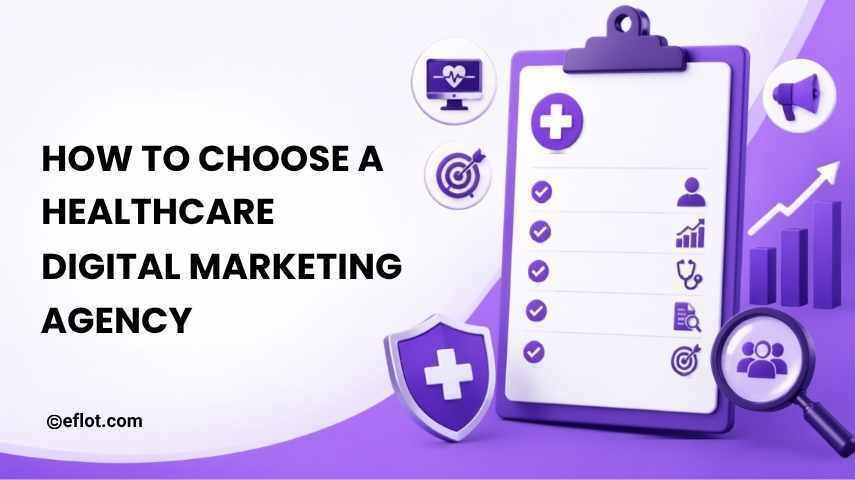
Choosing the right healthcare digital marketing agency can directly impact patient inquiries, online visibility, and your organization's reputation. Healthcare marketing requires a different approach than other industries because trust, local search, compliance, and patient experience all influence decision-making. This guide explains what to look for in a healthcare digital marketing agency, the key factors to evaluate, common hiring mistakes to avoid, and the questions you should ask before signing a contract.
Key Takeaways
-
Healthcare marketing runs on trust, accuracy, and local visibility, not just traffic volume.
-
The right healthcare digital marketing agency should show healthcare-specific experience, not repurposed retail case studies.
-
Local SEO, Google Business Profile management, and reputation management typically matter more for patient acquisition than broad brand awareness campaigns.
-
AI search readiness is now a real evaluation criterion, not a buzzword. Patients increasingly ask AI tools for provider recommendations.
-
No agency can ethically guarantee rankings, lead volume, or patient outcomes. Be cautious of anyone who does.
What Is a Healthcare Digital Marketing Agency?
A healthcare digital marketing agency is a marketing partner that specializes in helping healthcare organizations attract, convert, and retain patients through digital channels. Unlike a general marketing agency, it develops strategies around how patients search for care, how trust is established online, and the regulatory and ethical considerations that apply to healthcare communications.
Healthcare digital marketing agencies typically provide services such as:
-
Healthcare SEO and local SEO
-
Medical content strategy and content marketing
-
Reputation and online review management
-
Paid advertising (Google Ads and social media)
-
Website optimization and conversion rate optimization (CRO)
-
Analytics and performance reporting
How to Choose a Healthcare Digital Marketing Agency: A 5-Step Framework

Choosing a healthcare digital marketing agency is less about comparing service lists and more about verifying whether the agency can consistently attract qualified patients while operating within healthcare's trust, regulatory, and local search requirements. Use the following framework before comparing proposals or pricing.
Step 1: Confirm They Understand Healthcare, Not Just Digital Marketing
Healthcare is one of Google's highest-scrutiny industries. Patient acquisition depends on trust, medical accuracy, local intent, and ethical marketing, not simply on generating website traffic. An agency should be able to explain how these factors influence its strategy and provide evidence of working with healthcare organizations rather than adapting a generic marketing process.
Verify that they can demonstrate:
-
Experience with healthcare providers similar to yours
-
Healthcare-specific case studies
-
A documented medical content review process
-
Familiarity with healthcare advertising and privacy requirements relevant to your market
Step 2: Evaluate Their Patient Acquisition Strategy
Avoid agencies that present SEO, PPC, content, and social media as separate services. Strong healthcare agencies explain how these channels work together to move patients from search to appointment.
Ask them to walk you through how they would improve:
-
Local search visibility
-
Google Business Profile performance
-
Website conversions
-
Online reputation
-
Organic visibility for treatment and specialty searches
-
Paid campaigns where immediate demand exists
If every recommendation revolves around running ads, the strategy is likely too narrow for long-term growth.
Step 3: Ask How Success Will Be Measured
Marketing activity is not the same as business growth. Before signing a contract, agree on the outcomes that define success.
Look for reporting tied to metrics such as:
-
Appointment requests
-
Website conversion rate
-
Cost per patient acquisition
-
Local search visibility
-
GBP engagement
Agencies that report only impressions, clicks, or keyword rankings often fail to demonstrate whether marketing is producing actual patient demand.
Step 4: Assess Their Technical and AI Search Readiness
Healthcare websites need more than good content. Technical SEO, structured data, fast page performance, and content that clearly answers patient questions increasingly influence both traditional search results and AI-generated answers.
Ask how the agency approaches:
-
Core Web Vitals
-
Schema markup
-
AI search optimization
-
E-E-A-T implementation for medical content
An agency that cannot explain how healthcare content is optimized for both search engines and AI search platforms is unlikely to have a future-ready strategy.
Step 5: Verify Transparency Before You Commit
The final evaluation should focus on how the agency operates, not just what it promises.
Before signing, confirm:
-
Your organization retains ownership of the website, analytics, advertising accounts, and Google Business Profile.
-
The agency provides a documented roadmap for the first 90–180 days.
-
Reporting explains both performance and the actions being taken to improve it.
-
Expected timelines are realistic, and no rankings or patient volumes are guaranteed.
Healthcare marketing compounds over time. Agencies that emphasize transparency, continuous improvement, and measurable business outcomes are generally more reliable partners than those relying on guarantees or proprietary "secret" methods.
Key Factors to Evaluate Before Hiring a Healthcare Digital Marketing Agency
1. Healthcare Industry Experience
Healthcare marketing has its own vocabulary, compliance sensitivities, and patient psychology. An agency that has only worked with SaaS or e-commerce brands will need to learn healthcare on your budget.
Warning signs: Vague answers, no healthcare-specific portfolio, or an agency that treats a hospital the same way it would treat a fashion retailer.
Verify the evidence, not just the claims: Ask for healthcare-specific case studies that explain the client's objective, the strategy implemented, and measurable business outcomes, such as improvements in organic visibility, qualified patient inquiries, or local search performance. Where possible, request client references or testimonials from healthcare organizations similar to yours. This helps confirm the agency has practical experience in healthcare rather than relying on generic marketing success stories.
2. SEO Expertise
Organic search is usually the highest-trust, most sustainable channel to increase patient appointments and acquisition, because patients trust results they find themselves more than ads.
Google's own guidance on creating helpful, people-first content is a useful benchmark; a competent healthcare digital marketing agency should be able to explain how its process aligns with it.
Warning signs: An agency that can't explain E-E-A-T, or that proposes keyword-stuffed content over genuinely useful patient information.
3. Local SEO Capabilities
Most healthcare decisions are made locally. A hospital in Bangalore competing for "cardiologist in Bangalore" needs a fundamentally different local SEO strategy than a usual strategy used for a national brand.
Warning signs: No clear local SEO process or a strategy that ignores location pages entirely.
4. Google Business Profile Optimization
For many patients, your Google Business Profile is the first real impression of your practice hours, photos, services, and reviews, all live there before a patient ever reaches your website. Google's own Business Profile help center documents how much of local visibility depends on a complete, accurate, actively managed profile.
Warning signs: Treating Google Business Profile as a one-time setup task instead of an ongoing part of the healthcare digital marketing agency relationship.
5. Content Strategy
Healthcare content has to educate without alarming, build authority without exaggerating, and stay genuinely useful to a worried reader. Weak, generic content undermines trust fast. Eflot's content marketing services are built around this kind of accuracy-first approach.
Warning signs: Content written with no medical review process or promises of outcomes that no ethical provider would make.
6. Reputation Management
Reputation management has a measurable impact on patient decision-making. According to BrightLocal's Local Consumer Review Survey, most consumers consult reviews before choosing a local business, and many compare information across multiple review platforms before making a decision. For healthcare providers, maintaining accurate, timely responses and a consistent review profile has become a core trust signal rather than a nice-to-have.
Warning signs: No structured review process or suggestions that cross into incentivized or fake reviews, both of which violate platform policies and can backfire badly.
7. Transparent Reporting
You should be able to see exactly what is being done, what it's producing, and how it connects to actual patient inquiries, not just impressions and clicks.
Warning signs: Reports full of vanity metrics with no connection to business outcomes.
8. Technical SEO Expertise
A healthcare website that loads slowly, isn't mobile-friendly, or has structural errors will lose patients before they ever read your content, and it will struggle to rank regardless of how good the content is.
Warning signs: No mention of technical SEO at all, or a strategy that starts with content and ads while ignoring a broken site foundation.
9. AI Search Readiness
Patients are increasingly asking AI tools and AI-powered search summaries questions like "best fertility clinic near me" or "how do I choose an orthopedic surgeon?"
Warning signs: No awareness of AI search behavior, or a strategy stuck entirely in 2019-era SEO tactics.
Check Eflot's detailed blog on the future of digital marketing with Ask Engine Optimization, which explains how structured, direct-answer content increasingly determines whether a provider gets surfaced in these AI-generated answers.
10. Proven Long-Term Growth Strategy
Sustainable patient acquisition takes months to build and compounds over time. An agency chasing quick wins with paid ads alone, without building organic and reputation assets, leaves you dependent on ad spend forever.
Warning signs: A plan that is 100% paid media with no organic or reputation-building component, or unrealistic promises about how fast results will appear.
Important Note: Healthcare marketing also requires an understanding of applicable healthcare advertising, patient privacy, and professional advertising standards. Ask how the agency reviews campaigns and content to ensure they align with relevant regulatory and ethical requirements in the markets where your organization operates.
Quick Evaluation: What to Look For vs. Red Flags
|
Look for |
Red Flags |
|
Demonstrated healthcare marketing experience with relevant case studies |
Generic marketing experience with no healthcare examples |
|
Clear SEO, local SEO, and Google Business Profile strategy |
Focuses only on ads or broad marketing tactics |
|
Transparent reporting tied to patient inquiries and business outcomes |
Reports limited to impressions, clicks, or rankings |
|
Medical content reviewed for accuracy and compliance |
Generic AI-generated or unreviewed medical content |
|
Ongoing reputation management and review response process |
No structured approach to online reviews |
|
Technical SEO audit before recommending major investments |
Ignores website performance, Core Web Vitals, or technical issues |
|
Realistic timelines with a long-term growth strategy |
Guarantees rankings, patient volume, or immediate results |
|
Knowledge of AI search optimization, structured data, and healthcare E-E-A-T |
Uses outdated SEO tactics with no consideration for AI search |
|
Clear ownership of your website, analytics, ad accounts, and Google Business Profile |
Agency retains control of critical business accounts |
|
Explains its strategy and decision-making process clearly |
Relies on vague promises or proprietary "secret" methods |
Common Mistakes Healthcare Organizations Make When Hiring an Agency
-
Choosing on price alone, without evaluating healthcare-specific experience, often means the cheapest quote is from the least specialized team.
-
Skipping the technical and content audit stage, jumping straight into ads without understanding why the website underperforms in the first place.
-
Ignoring Google Business Profile and local SEO in favor of a website-only strategy, even though most patients start their search locally.
-
Accepting vague reporting instead of asking for clear, appointment-linked metrics from day one.
-
Not clarifying who owns the data and accounts, analytics, ad accounts, and GBP access should belong to the practice, not be locked inside the agency's systems.
-
Underestimating reputation management, treating reviews as an afterthought rather than a core acquisition channel.
-
Believing guaranteed-ranking promises, which no ethical healthcare digital marketing agency can honestly make, since no agency controls Google's or an AI system's algorithm.
Questions to Ask Before Signing a Contract
-
Can you share examples of healthcare clients you've worked with, including what specifically improved?
-
Who will be our day-to-day point of contact, and how often will we receive updates?
-
What does your onboarding process look like? Will you run a technical and content audit first?
-
How do you measure success, and how quickly can we expect meaningful movement in inquiries?
-
Who owns our website, analytics, ad accounts, and Google Business Profile if we end the contract?
-
How do you handle compliance-sensitive content, like claims about outcomes or treatments?
-
What is included in the monthly retainer, and what counts as a separate project fee?
-
How do you approach reputation management, including negative review responses?
Healthcare Digital Marketing Agency Evaluation Checklist
Before signing a contract, make sure you can answer "Yes" to most of the following:
✓ The agency has proven healthcare marketing experience with relevant case studies.
✓ They provide a documented SEO, local SEO, and Google Business Profile strategy.
✓ They have a defined medical content review process.
✓ They explain how they'll improve patient acquisition, not just website traffic.
✓ Monthly reporting includes appointment-focused KPIs, not only impressions and clicks.
✓ They actively manage online reputation and review responses.
✓ They perform a technical SEO audit before recommending major investments.
✓ They understand AI search optimization, structured data, and healthcare E-E-A-T expectations.
✓ Your practice retains ownership of all websites, analytics, advertising accounts, and Google Business Profile access.
✓ They provide realistic timelines instead of guaranteeing rankings or patient volume.
How to Measure Success After Hiring a Healthcare Digital Marketing Agency
Choosing the right agency is only the beginning. To determine whether your investment is delivering value, track business outcomes instead of marketing activity alone.
The most meaningful healthcare marketing KPIs include:
-
Qualified patient inquiries: Growth in calls, increased patient appointment requests, and contact form submissions from prospective patients.
-
Appointment bookings: The percentage of inquiries that become confirmed appointments.
-
Local search visibility: Improvements in Google Business Profile visibility, local map pack rankings, and location-based keywords.
-
Organic website traffic: Growth in visits from patients actively searching for your services.
-
Review growth and reputation: Increases in review volume, average rating, and response rate across Google and other relevant platforms.
-
Website conversion rate: The percentage of visitors who call, book an appointment, or submit an inquiry.
-
Cost per patient acquisition (CPA): How much marketing spend is required to generate a qualified new patient.
Rather than expecting immediate results, evaluate progress over several months. Sustainable improvements in local visibility, reputation, and patient inquiries generally compound over time as SEO, content, and reputation management work together.
Ready to Find Out What's Limiting Your Patient Growth?
Not sure whether your current marketing is actually generating qualified patient inquiries?
Book a free Healthcare Growth Audit with Eflot.
Your audit includes:
-
A technical SEO health check
-
Google Business Profile review
-
Local search visibility assessment
-
Website conversion review
-
Content and E-E-A-T gap analysis
-
Competitor visibility comparison
-
Actionable recommendations prioritized by business impact
Instead of a generic marketing report, you'll receive a practical assessment of what's helping your practice attract patients, what's holding it back, and where the biggest growth opportunities exist.
For more details, visit eflot.com.
Every healthcare organization has different growth objectives, but the fundamentals remain the same: patients need to find you, trust you, and feel confident enough to book an appointment. An agency that combines healthcare expertise, strong local search capabilities, transparent reporting, and a long-term growth strategy is far more likely to deliver lasting results than one focused on short-term marketing metrics.
Frequently Asked Questions
What does a healthcare digital marketing agency do?
A healthcare digital marketing agency manages the online visibility and reputation of hospitals, clinics, and private practices, typically covering SEO, local search optimization, Google Business Profile management, content strategy, reputation management, and paid advertising, all adapted to healthcare's trust and compliance requirements.
Is healthcare SEO worth it?
For most providers, yes. Because healthcare searches are highly local and trust-driven, ranking well organically tends to produce more sustainable, higher-trust patient inquiries than paid ads alone, though the two typically work best together.
How long does healthcare SEO take?
Meaningful movement in local rankings and patient inquiries typically takes a few months of consistent work, technical fixes, content, local citations, and reviews, all compounding over time. Anyone promising overnight ranking results should be treated with caution.
How much do healthcare marketing agencies charge?
Pricing varies widely based on scope. A single-location clinic's local SEO and Google Business Profile management will cost less than a multi-location hospital system running SEO, content, PPC, and reputation management together. Ask for a scope-based proposal rather than comparing flat monthly figures across agencies.
Should healthcare providers choose SEO or PPC?
Most healthcare providers benefit from both, used for different purposes: PPC can generate inquiries quickly for time-sensitive services, while SEO, local search, and reputation management build the long-term, lower-cost patient acquisition engine.
Digital Marketing services in Other Locations in India
Bangalore | Hyderabad | Chennai | Pune | Ahmedabad | Coimbatore | Mumbai | Kolkata | Patna | Amritsar | Indore | Kozhikode | Trivandrum | Jaipur | Nagpur | Gwalior | Dehradun | Noida | Vizag | Raipur | Agra | Gurgaon | Madurai | Udaipur | Thrissur |