






















Understanding SEO Keywords Power in Digital Marketing
Learn how SEO keywords impact digital marketing strategies, helping businesses improve visibility, traffic, and engagement online.

Businesses are continuously looking for strategies to increase awareness and remain ahead of the competition. One of the most successful methods to accomplish this is through SEO (Search Engine Optimization), which includes a strong tool called SEO keywords. These keywords form the basis of search engine rankings and digital marketing strategies. They enable businesses to engage with potential clients by making their material visible and relevant to search inquiries.
As a digital marketing expert with considerable experience in SEO methods, I've seen how selecting the appropriate SEO keywords can make or damage a company's online presence. Over the years, I've assisted clients from a variety of industries in optimizing their websites, blogs, and content using exact keyword research and implementation. SEO keywords are more than simply words; they connect what people search for to what businesses have to offer. Businesses that understand the role of SEO keywords and implement them properly can significantly enhance their search engine results, attract more quality traffic, and achieve their marketing objectives.
What Are SEO Keywords?
SEO keywords are the specific terms or phrases that internet users enter into search engines like Google when looking for information, products, or services. These keywords act as a link between the user’s search intent and the content available on the web. For businesses, identifying and targeting the right SEO keywords ensures that their website appears when potential customers are searching for relevant topics.
Keywords can be as simple as a single word, like "shoes," or more specific phrases, like "best-running shoes for women." In either case, SEO keywords guide search engines in understanding what a webpage is about, allowing it to show up in relevant search results. Without the right SEO keywords, your content will remain invisible to your target audience, no matter how well-designed or informative it may be.
The Importance of SEO Keywords in Digital Marketing
SEO keywords are vital for a variety of reasons. First and foremost, they help improve a website’s visibility in search engine results pages (SERPs). When you use the right SEO keywords, you increase your chances of ranking higher for relevant search queries, which directly leads to more organic traffic. This increased visibility is crucial for reaching your target audience and growing your online presence.
Moreover, SEO keywords are key to understanding search intent, the underlying reason behind a user’s search. People use search engines to find information, make purchases, or solve problems. By identifying and targeting keywords related to these intents, businesses can ensure their content addresses what users are looking for, making it more likely to convert visitors into customers. In short, the strategic use of SEO keywords drives both visibility and engagement, two essential factors for any successful digital marketing campaign.
How to Find the Right SEO Keywords
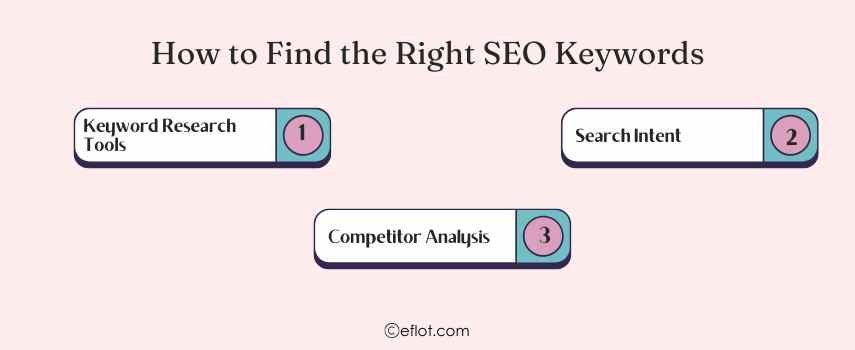
The first step in optimizing your website for search engines is understanding what SEO keywords to target. Here’s how you can identify the right keywords for your business:
-
Keyword Research Tools: Tools like Google Keyword Planner, Ahrefs, SEMrush, and Moz help you discover high-traffic, low-competition keywords that are relevant to your business. These tools provide valuable insights into search volume, competition level, and related keywords, which are essential for building an effective SEO strategy.
-
Search Intent: Understanding search intent is critical when choosing SEO keywords. Users typically search with one of three intents: informational (seeking knowledge), navigational (looking for a specific website), or transactional (ready to make a purchase). By identifying the search intent behind your keywords, you can tailor your content to meet the needs of your audience.
-
Competitor Analysis: Reviewing competitors’ websites and analyzing their targeted keywords can help identify gaps and opportunities for your content. By learning from what your competitors are ranking for, you can target similar or better keywords to stay ahead in the search results.
Types of SEO Keywords
Not all SEO keywords are created equal. Depending on your business goals and audience, you may choose to target different types of keywords:
-
Short-Tail Keywords: These are broad, one- or two-word keywords that have high search volume but also intense competition. For example, “digital marketing.” While they can drive significant traffic, they are harder to rank for and often attract a less-targeted audience.
-
Long-Tail Keywords: Long-tail keywords are longer, more specific phrases (e.g., “best digital marketing agency in Bangalore”). These keywords tend to have lower search volume but are easier to rank for and attract a more targeted audience. They often lead to higher conversion rates since they cater to users who know exactly what they want.
-
LSI (Latent Semantic Indexing) Keywords: LSI keywords are related terms or synonyms that help search engines understand the context of your content. Using LSI keywords can enhance your content’s relevance and make it more likely to rank for a variety of related queries.
How to Use SEO Keywords Effectively
To get the most out of your SEO keywords, you need to use them strategically throughout your content:
-
On-Page Optimization: Incorporate SEO keywords in key areas such as the page title, meta description, headers, and throughout the content. This helps search engines understand what the page is about and ensures your content is optimized for the right keywords.
-
Keyword Density: While it’s important to use keywords naturally throughout your content, avoid overstuffing them. Excessive keyword usage can lead to penalties from search engines and diminish the readability of your content. Aim for a natural flow where keywords are integrated organically.
-
Internal Linking: Use SEO keywords as anchor text for internal links. Linking to other pages on your website using relevant keywords can help with SEO and improve user experience by guiding visitors to related content.
-
Content Optimization: Content should be informative, valuable, and engaging. Use SEO keywords in a way that enhances the quality of the content, addressing the needs and queries of your target audience.
Case Studies:
Case study 1
BigBasket, an online grocery delivery service in India, wanted to increase its visibility in search results and drive more customers to its platform. Despite offering a wide variety of products, BigBasket faced challenges in ranking for competitive grocery and local search terms.
Challenge:
BigBasket struggled to capture organic traffic for competitive keywords, especially for hyper-local terms like “grocery delivery in [city].” They needed to optimize their SEO strategy for better local search visibility.
Solution:
BigBasket focused on SEO keywords specific to the cities and regions they served. By optimizing their website content and product listings for local search terms like “best grocery delivery in Mumbai,” they improved their rankings. BigBasket also created city-specific blog posts and partnered with local influencers to drive engagement. This approach resulted in a 30% increase in local organic traffic and helped the company expand its customer base in key regions.
Case study 2
Swiggy, a popular food delivery service in India, wanted to improve its visibility in search results and attract more local customers. Despite a strong user base, they struggled with ranking for location-specific search queries.
Challenge:
Swiggy faced the challenge of competing in local searches like "food delivery in [city]" and "best restaurants near me," which were crucial for attracting users in different cities.
Solution:
Swiggy optimized its website and content around local SEO keywords such as “food delivery in Bangalore” and “best restaurants in Delhi.” They also updated their Google My Business listings for each city and created city-specific blog content to target local search queries. This approach led to a 30% increase in local traffic and higher app downloads, boosting both user engagement and orders.
SEO keywords are at the heart of any successful digital marketing strategy. By understanding what SEO keywords are, how to find the right ones, and how to use them effectively, businesses can dramatically improve their visibility in search engine results, attract more traffic, and drive better conversion rates. The strategic use of SEO keywords is essential for boosting brand awareness, improving rankings, and ultimately achieving a higher ROI from digital marketing efforts. As a digital marketing specialist, I’ve witnessed how businesses that focus on optimizing their SEO keywords see significant improvements in their online presence and customer acquisition. Investing time and effort into selecting and optimizing the right keywords will pay off in the long term by increasing organic traffic and fostering long-term growth.
Digital Marketing services in Other Locations in India
Bangalore | Hyderabad | Chennai | Pune | Ahmedabad | Coimbatore | Mumbai | Kolkata | Patna | Amritsar | Indore | Kozhikode | Trivandrum | Jaipur | Nagpur | Gwalior | Dehradun | Noida | Vizag | Raipur | Agra | Gurgaon | Madurai | Udaipur | Thrissur |