











How to Implement an AI Marketing Strategy?
Learn how to implement an AI marketing strategy by integrating data, automation, and customer insights to improve campaign performance.
From manual planning and cold outreach to smart systems that automate daily tasks and drive real-time actions, marketing has undergone significant shifts from its traditional roots.
What used to take hours can now be completed in minutes. While some teams still follow traditional methods, others are using AI to understand customers, run automated campaigns, and focus on strategy and creativity. It’s about working smarter and staying focused on goals in a rapidly changing business landscape.
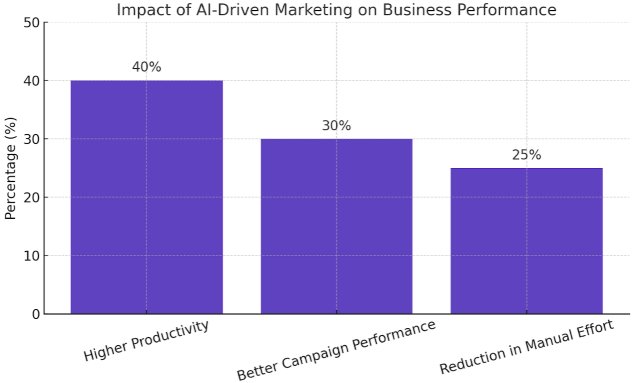
According to industry reports, businesses that adopt AI-driven marketing see up to 40% higher productivity, 30% better campaign performance, and a 25% reduction in manual effort across teams.
Red Bull is known worldwide for its energy drinks and exciting sports marketing. The company creates lots of videos and uses events and influencers to reach people, especially in India. They share content on platforms like YouTube and Instagram and have a large, engaged audience.
As Red Bull made more videos, it became hard to organize and manage them all. The team spent a lot of time tagging and sorting videos by hand, which slowed things down. They also found it hard to know which videos worked best for different groups of people and regions.
To fix this, Red Bull started using an AI system. This system automatically tags videos, studies how viewers watch them, and suggests the best content for different audiences. This helped Red Bull share more relevant videos faster and increased how much people watched. Using AI has made their marketing work better and faster.
What Is an AI Marketing Strategy?
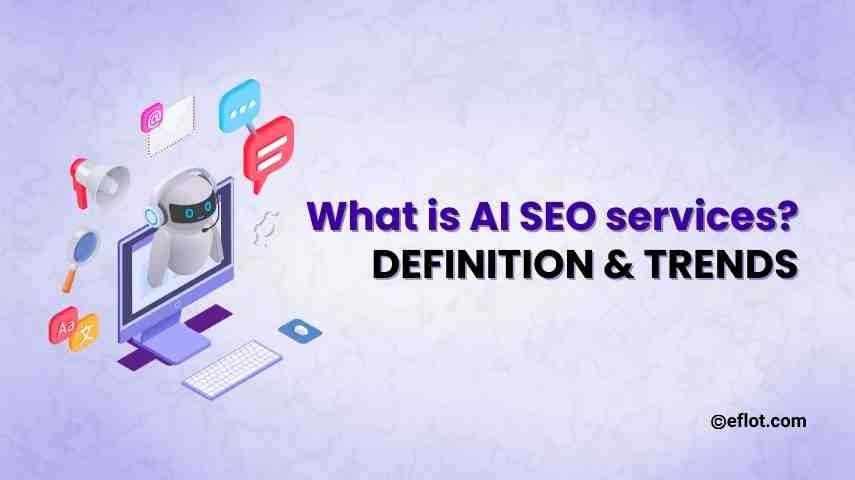
An AI marketing strategy uses artificial intelligence tools to improve marketing decisions automatically, accurately, and in real time. The Impact of AI enables businesses to make smarter choices quickly and respond effectively to customer needs.
This approach helps you:
-
Analyze customer behavior from large data sets
-
Deliver the right message to the right audience at the right moment
-
Automate routine tasks so your team can focus on key priorities
-
Predict trends and customer actions before they occur
Think of it as equipping your marketing team with advanced tools that provide continuous support, while maintaining the essential human touch. AI assists your team by delivering deeper insights and enabling faster decision-making.
AI Marketing Strategy Trends
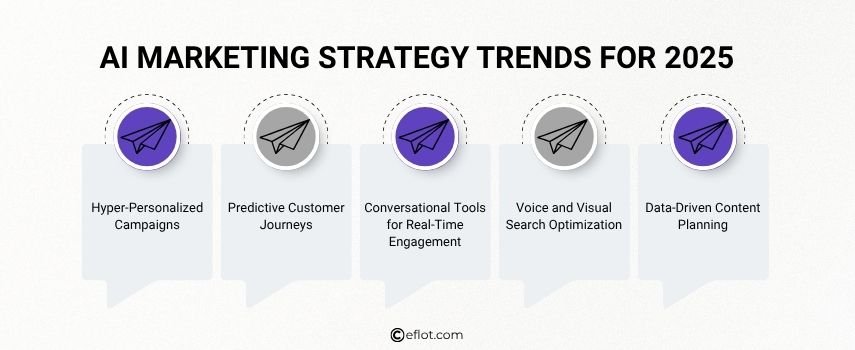
Here are the key trends shaping how brands use technology in marketing this year and beyond:
-
Hyper-Personalized Campaigns
Technology studies individual user behavior. such as pages visited, emails opened, and products preferred to create campaigns personalized to each customer.
Trend Insight: Brands using dynamic content with personalization see up to twice the engagement rates.
-
Predictive Customer Journeys
Systems now predict customer behavior, identifying who is likely to purchase, lose interest, or need additional attention.
Trend Insight: Predictive analysis helps reduce churn and increase conversions across e-commerce, SaaS, and B2B sectors.
-
Conversational Tools for Real-Time Engagement
Chatbots that communicate naturally are being used more to:
-
Solve customer questions
-
Recommend products
-
Book appointments
Trend Insight: Instant messaging apps with conversational tools improve conversion rates by up to 40% compared to web forms.
-
Voice and Visual Search Optimization
With the growing use of smart speakers and image searches, brands optimize content for voice commands and visual inputs.
Trend Insight: Voice search is expected to account for over 50% of mobile queries, making optimization critical.
-
Data-Driven Content Planning: Brands use detailed data analysis to plan and schedule content that aligns with audience interests and behaviors, improving engagement and relevance. Trend Insight: Companies applying data insights to content strategy report higher audience retention and improved campaign results.
Mistakes to Avoid in AI Marketing Strategy
Strong marketing strategies can underperform if basic steps are missed. Here are five common mistakes to avoid:
1. No Clear Goal
Without a specific objective, it's hard to measure success. This often leads to confusion and poor results. Always begin with a defined outcome in mind.
2. Using the Wrong Tools
Selecting tools that don’t match your business needs can waste time and budget. Each tool should solve a clear problem or support a specific task.
3. Poor Data Quality
Unclean or scattered data can lead to inaccurate targeting and reporting. Consistent, organized, and updated data is essential for reliable results.
4. Too Much Personalization
Over-customizing messages can feel forced or unnatural. Keep communication clear and helpful, with a tone that fits your audience.
5. Not Training Your Team
If your team isn’t comfortable with the tools, it limits how well the strategy works. Basic training helps everyone use the technology effectively.
How to Build an AI Marketing Strategy
A structured approach helps you apply intelligent tools effectively across your marketing efforts. Here’s a step-by-step guide:
1. Define a Clear Business Goal
Start with a focused objective. What specific outcome do you want to improve?
-
Increase lead quality
-
Automate email campaigns
-
Reduce customer drop-off
Your goal sets the direction for every step that follows.
2. Review and Prepare Your Data
Accurate data is the foundation of any intelligent system. Before you begin:
-
Clean and validate your data
-
Remove duplicates and outdated entries
-
Consolidate information in a central location
A strong strategy relies on high-quality, organized data.
3. Select the Right Tools
Choose tools that align with your specific needs, not just what's popular.
-
For content planning: use content generation tools
-
For marketing flows: use marketing automation platforms
-
For customer grouping: use tools with predictive capabilities
Make sure the tools integrate smoothly with your existing systems.
4. Segment Your Audience More Precisely
Use data insights to identify patterns in customer behavior and group them accordingly:
-
By engagement level
-
By the purchase stage
-
By frequency of interaction
Precise segmentation improves targeting and overall campaign performance.
5. Start Small with Automation
Begin with one focused task, such as automated follow-up emails or lead scoring.
-
Run small-scale tests
-
Measure the outcome
-
Refine and expand gradually
This approach lowers risk while allowing continuous improvement.
6. Monitor and Refine Regularly
Track performance using dashboards and reports.
-
Adjust content and timing
-
Improve based on ongoing insights
A strong strategy requires continuous learning and refinement.
AI marketing helps teams make faster, smarter decisions backed by real data. With clear goals, the right tools, and strong data management, businesses can create more effective campaigns. Start with small steps, track results, and keep improving. When used correctly, AI becomes a valuable part of your marketing strategy, making everyday tasks easier and results more accurate.
Ready to make your marketing smarter with AI?
Reach out at [email protected] and start your AI marketing journey with Eflot.
Digital Marketing services in Other Locations in India
Bangalore | Hyderabad | Chennai | Pune | Ahmedabad | Coimbatore | Mumbai | Kolkata | Patna | Amritsar | Indore | Kozhikode | Trivandrum | Jaipur | Nagpur | Gwalior | Dehradun | Noida | Vizag | Raipur | Agra | Gurgaon | Madurai | Udaipur | Thrissur |