







How Keyword Intent Drives Targeted Traffic to Websites
Discover how keyword intent influences website traffic and engagement by aligning search queries with user needs for better targeting.
As a digital marketing specialist, I've had the privilege of working with businesses of all sizes to enhance their online visibility. Over the years, one concept has become clear, Keyword intent is at the heart of driving targeted traffic to a website. Early in my career, I noticed that many businesses focused purely on ranking for high-volume keywords, without fully understanding the user intent behind those queries. While ranking for high-traffic keywords is important, the true secret to driving valuable, targeted traffic lies in understanding and optimizing for keyword intent.
When I first began working with keyword research, it was apparent that Search intent is more than just a tool for search engine optimization (SEO). It's a critical factor in ensuring that the right visitors, those most likely to engage with your business, find your website. Through refining this understanding of intent, I’ve been able to help clients not only increase their search rankings but also drive higher-quality traffic, improve conversions, and ultimately boost their revenue. Here, I will explain what keyword intent is, how it works, and why it’s so important for driving targeted traffic. I’ll also share case studies from top companies to showcase how implementing keyword intent in their strategies led to increased success.
What is Keyword Intent?
Keyword intent refers to the underlying purpose or goal behind a user’s search query. When someone types a query into a search engine, they are typically looking for something very specific, whether it's information, a product, or a service. The key to successfully driving targeted traffic lies in understanding this intent and crafting content or campaigns that align with it.
There are generally three primary types of keyword intent:
-
Informational Intent: The user is seeking information or answers to a question. For example, they might search for "How to bake a cake" or "What is SEO?"
-
Navigational Intent: The user is looking for a specific website or page. They might search for "Facebook login" or "YouTube homepage."
-
Transactional Intent: The user is ready to make a purchase or take some action. This could include searches like "buy running shoes" or "book a flight to New York."
Understanding Search intent helps you create content that meets the exact needs of the user. By matching your content to the right type of intent, you ensure that users who land on your website are more likely to take the desired actions, such as making a purchase or subscribing to your newsletter.
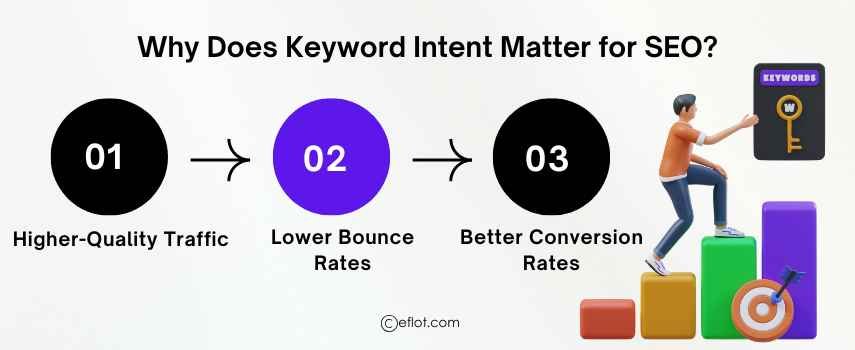
Why Does Keyword Intent Matter for SEO?
In the world of SEO, not all keywords are created equal. Some keywords might attract high volumes of traffic, but that traffic might not be relevant to your business. For example, if your website sells luxury shoes, ranking for a keyword like "shoes" will bring in a lot of traffic, but much of that traffic might be looking for budget shoes or generic content. This can result in high bounce rates and low conversion rates.
Here are three key points explaining why keyword intent matters for SEO:
-
Higher-Quality Traffic:
Search intent helps ensure that your website attracts the right visitors. By targeting transactional intent keywords, you draw in users who are actively looking to make a purchase or take specific actions, resulting in higher-quality traffic. This means the visitors you attract are more likely to convert into paying customers, improving your ROI. -
Lower Bounce Rates:
When your content aligns with the user’s intent, they are more likely to stay on your website longer, reducing bounce rates. For example, if a user searches for "best luxury shoes for women," and your website offers exactly that, they will find your content relevant and valuable, leading to longer engagement and less chance of leaving the site quickly. -
Better Conversion Rates:
Understanding and using Search intent means targeting users at different stages of the buying journey. While informational intent might be useful for raising awareness, transactional intent keywords will lead to conversions, as these users are already looking to take action. By focusing on intent-driven keywords, you are increasing the likelihood of conversions, which is key to driving business success.
How Keyword Intent Drives Targeted Traffic
1. Improved Targeting
The most significant benefit of focusing on Search intent is that it allows businesses to target specific types of users. For example, users with informational intent may be looking for blog posts, how-to guides, or educational resources. In contrast, users with transactional intent are more likely to respond to product pages, case studies, and special offers.
By creating content that aligns with the specific intent of users, businesses ensure they are offering the right kind of content at the right time. This results in better targeting and a higher likelihood of converting that traffic into customers.
2. Better Content Creation
When you understand the Search intent behind your audience's searches, it’s easier to create content that fulfills their needs. For instance, if someone is searching for the "best SEO tools for small businesses," they likely want an in-depth review or comparison guide. In this case, creating a well-researched, detailed blog post or video will resonate better with the user and keep them engaged longer. When content is created with Search intent in mind, it’s more likely to match the user’s expectations, resulting in better rankings, lower bounce rates, and higher engagement.
3. Enhanced User Experience
A website that aligns its content with the user's intent provides a better user experience. This leads to users spending more time on your website, which Google takes into account when ranking pages. Additionally, a positive user experience encourages return visits, word-of-mouth referrals, and higher engagement on social media platforms.
4. Higher Conversion Rates
Targeting the right Search intent significantly increases the likelihood of converting traffic into customers. If someone is searching for "buy leather jackets online," they are likely closer to making a purchase. By targeting this specific intent with optimized landing pages, businesses can offer an experience tailored to the user’s needs, improving conversion rates.
Case Studies
Case Study1:
Amazon is one of the largest e-commerce platforms in the world. It has successfully used keyword intent to target shoppers with high purchase intent. Amazon has a robust search engine optimization (SEO) strategy that ensures its products are shown to users who are actively searching to make a purchase.
Challenges:
Amazon faced intense competition from other retailers and needed to ensure its product listings were shown to users who were ready to buy, not just browse.
Solutions Implemented:
Amazon optimized its product listings for transactional intent keywords such as “buy running shoes online” and “best laptops.” Amazon’s vast inventory of user-generated reviews and highly targeted product pages catered to transactional intent, leading users down the path to conversion.
Case Study2:
HubSpot is a leader in the inbound marketing space and has successfully driven targeted traffic through its content marketing efforts.
Challenges:
HubSpot needed to ensure its content reached users who were interested in learning more about inbound marketing and purchasing HubSpot’s software tools.
Solutions Implemented:
HubSpot created a comprehensive content strategy that targeted informational intent keywords like "how to create a marketing plan" and "what is inbound marketing."
It also targeted transactional intent keywords like "buy CRM software" and "HubSpot pricing."
Understanding keyword intent is more important than ever. By focusing on the user’s intent behind the search, businesses can create highly relevant, targeted content that improves both the quality of their traffic and their conversion rates. Whether you're focusing on informational intent for awareness or transactional intent for sales, aligning your content with these needs ensures you are targeting the right audience at the right time. If you're ready to start attracting the right kind of traffic, it's time to assess your Search intent strategy and start creating content that aligns with what your audience is truly searching for. With the right approach, your business can see improved traffic, higher engagement, and more conversions.
Digital Marketing services in Other Locations in India
Bangalore | Hyderabad | Chennai | Pune | Ahmedabad | Coimbatore | Mumbai | Kolkata | Patna | Amritsar | Indore | Kozhikode | Trivandrum | Jaipur | Nagpur | Gwalior | Dehradun | Noida | Vizag | Raipur | Agra | Gurgaon | Madurai | Udaipur | Thrissur |