
























How Schema Markup Improves Search Engine Understanding
Schema markup helps search engines understand your website content better, improve rich results, increase visibility, and boost SEO performance in search results.

What if search engines could clearly understand your website just like a human does? This is exactly what Schema Markup helps achieve in SEO. Instead of making search engines guess the meaning of your content, Schema Markup provides clear signals about your pages, services, and business details.
As an important part of Technical SEO, it helps websites communicate better with search engines and improves overall Digital Marketing results. Schema Markup works in the background to organize your website data in a search-friendly way. It helps improve visibility, create rich search results, and achieve accurate rankings.
What Is Schema Markup?
Schema Markup is a type of structured data added to website code to help search engines understand content clearly. It explains what a page, product, or business is about in a language search engines understand. This is widely used in SEO and Technical SEO strategies.
-
Definition of Schema Markup: Schema Markup is extra code that tells search engines what your content means. Instead of guessing, search engines get clear signals. This improves accuracy in SEO Services and Digital Marketing efforts.
-
How schema works behind the scenes: Schema does not change how a page looks to users. It works in the background, helping search engines process data faster. This makes it a powerful Technical SEO tool.
-
Difference between content and structured data: Normal content is written for users, while Schema Markup is written for search engines. Digital Marketing Agencies use schema to bridge this gap. This helps search engines interpret content correctly.
-
Why schema is part of Technical SEO: Technical SEO focuses on how search engines crawl and understand websites. Schema Markup improves data structure and clarity. This supports better indexing and visibility.
-
Schema and SEO performance: While schema does not directly improve rankings, it improves search result quality. Better understanding leads to richer search results. This benefits overall SEO Services.
Why Search Engines Need Schema Markup
Search engines scan billions of pages daily, but plain text can be confusing. Schema Markup helps them understand context, relationships, and meaning. This makes it an essential part of Technical SEO and Digital Marketing.
-
Challenges search engines face: Without structured data, search engines rely on guesses. This can lead to incorrect indexing. Schema Markup removes ambiguity and improves SEO accuracy.
-
How schema adds clarity to content: Schema explains whether content is about a product, service, event, or business. This helps search engines categorize pages properly. Digital Marketing Services benefit from improved content relevance.
-
Role of schema in semantic search: Semantic search focuses on meaning, not just keywords. Schema Markup supports this by defining relationships between data. This improves modern SEO performance.
-
Reducing content misunderstanding: Search engines may misinterpret page intent without schema. Technical SEO uses schema to guide crawlers correctly. This leads to better search visibility.
-
Why Digital Marketing Agencies use schema: A Digital Marketing Agency uses schema to ensure search engines fully understand client websites. This strengthens SEO Services and improves long-term results.
How Schema Markup Helps Search Engines Understand Content
Schema Markup directly helps search engines understand what each part of a page represents. It removes confusion and improves how content is indexed. This is critical for strong SEO and Technical SEO performance.
-
Identifies content type clearly: Schema tells search engines if content is a blog, product, or business. This helps Digital Marketing Services target the right search intent. Clear identification improves indexing.
-
Improves indexing accuracy: Search engines index pages faster and more accurately with schema. Technical SEO benefits from reduced crawl errors. This leads to better SEO consistency.
-
Connects related information: Schema links data like reviews, prices, and locations. This improves content relationships. Digital Marketing strategies become more effective with structured data.
-
Removes ambiguity in content: Words can have multiple meanings. Schema Markup clarifies intent for search engines. This improves SEO Services and content relevance.
-
Supports advanced search features: Search engines use schema for rich results and enhanced listings. This improves how pages appear in search. Better appearance often leads to higher engagement.
Impact of Schema Markup on Search Results
Schema Markup improves how websites appear in search results. It helps generate rich results that attract attention. This plays an important role in Digital Marketing and SEO visibility.
-
What are rich results: Rich results show extra information like ratings or FAQs. Schema Markup enables these features. SEO Services benefit from improved SERP presentation.
-
Improved visibility in SERPs: Enhanced listings stand out visually. Digital Marketing Agencies use schema to improve click potential. Better visibility supports organic growth.
-
Influence on click-through rates: Users trust results with more details. Schema helps provide this information. Higher trust often leads to better CTR.
-
Not a ranking factor but impactful: Schema does not directly boost rankings. However, better understanding improves relevance. This indirectly supports SEO performance.
-
Brand credibility improvement: Clear and rich listings improve brand trust. Digital Marketing Services focus on this advantage. Schema supports brand authority in search.
Common Types of Schema Markup
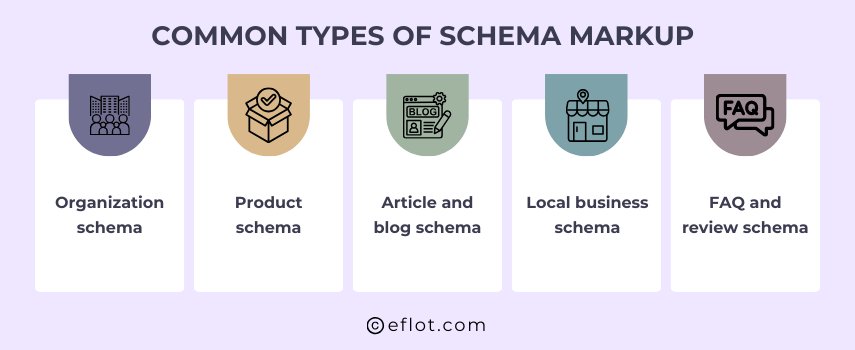
There are many schema types used in SEO and Digital Marketing. Each type serves a specific purpose. Choosing the right schema improves Technical SEO effectiveness.
-
Organization schema: Helps search engines understand business details. Digital Marketing Agencies use this for branding. It improves trust and clarity.
-
Product schema: Defines product details like price and availability. This improves eCommerce SEO. Schema Markup enhances product visibility.
-
Article and blog schema: Helps search engines understand written content. This supports content-focused SEO Services. It improves indexing accuracy.
-
Local business schema: Important for local SEO strategies. Digital Marketing Services use it to improve local visibility. It helps show accurate business information.
-
FAQ and review schema: Improves SERP appearance with expandable answers. Schema increases user engagement. Technical SEO benefits from better interaction signals.
Schema Markup and User Experience
Schema Markup improves how users see search results. Better presentation leads to better engagement. This supports Digital Marketing goals and SEO performance.
-
Clearer search listings: Users get more information before clicking. Schema Markup supports this clarity. This improves user trust.
-
Improved relevance for users: Search engines show more accurate results. SEO Services benefit from better targeting. Users find what they need faster.
-
Higher engagement levels: Rich results attract attention. Digital Marketing Agencies use schema to improve engagement. This supports organic growth.
-
Better mobile search experience: Schema improves how content appears on mobile. Technical SEO benefits from optimized presentation. This improves usability.
-
Supports long-term SEO success: Good user experience supports SEO indirectly. Schema Markup plays a supporting role. It strengthens Digital Marketing strategies.
How to Implement Schema Markup
Implementing Schema Markup requires planning and accuracy. It is a core part of Technical SEO. Proper implementation ensures search engines read data correctly.
-
Choosing the right schema format: JSON-LD is widely recommended. It is easy to manage and update. SEO Services prefer it for Technical SEO.
-
Adding schema to the website: Schema can be added to page code or CMS. Digital Marketing Agencies handle this carefully. Proper placement improves results.
-
Using schema generation tools: Tools help create error-free schema. This reduces Technical SEO mistakes. It saves time and improves accuracy.
-
Matching schema with content: Schema must reflect visible content. Mismatch can harm SEO performance. Accuracy is critical in SEO Services.
-
Testing before publishing: Testing ensures schema works correctly. Technical SEO relies on validation. This prevents errors in search results.
How to Test and Validate Schema Markup
Testing Schema Markup ensures it works as intended. Validation is important in Technical SEO. It helps maintain SEO quality over time.
-
Why testing is important: Errors can prevent schema from working. SEO Services rely on clean data. Testing avoids visibility issues.
-
Checking for errors and warnings: Validation tools highlight problems. Digital Marketing Agencies fix these early. This improves performance.
-
Ensuring required properties are present: Missing fields reduce schema effectiveness. Technical SEO focuses on completeness. This improves search understanding.
-
Monitoring schema performance: Schema results should be tracked. Digital Marketing Services analyze performance. This helps improve strategies.
-
Updating schema regularly: Content changes require schema updates. SEO Services maintain accuracy. This supports long-term SEO health.
Common Schema Markup Mistakes to Avoid
Incorrect schema implementation can harm SEO efforts. Technical SEO requires precision. Avoiding common mistakes improves results.
-
Using incorrect schema types: Wrong schema confuses search engines. SEO Services ensure correct usage. Accuracy is critical.
-
Adding schema not visible on page: Hidden data violates guidelines. Digital Marketing Agencies avoid this. Transparency supports SEO trust.
-
Overusing schema unnecessarily: Too much schema adds complexity. Technical SEO focuses on relevance. Use only what is needed.
-
Ignoring validation errors: Errors reduce schema effectiveness. SEO Services fix issues quickly. This improves performance.
-
Not updating outdated schema: Old schema misleads search engines. Digital Marketing strategies require updates. Consistency supports SEO.
Best Practices for Using Schema Markup Effectively
Using Schema Markup correctly improves SEO results. Best practices ensure long-term success. Technical SEO benefits from structured planning.
-
Use relevant schema types only: Choose schema based on content purpose. SEO Services focus on relevance. This improves understanding.
-
Keep schema data accurate: Accuracy builds trust with search engines. Digital Marketing Agencies maintain consistency. This supports SEO quality.
-
Combine schema with strong content: Schema supports content, not replaces it. Digital Marketing requires quality content. SEO works best with both.
-
Follow search engine guidelines: Guidelines ensure safe implementation. Technical SEO relies on compliance. This avoids penalties.
-
Monitor performance regularly: Schema impact should be tracked. SEO Services analyze results. This helps refine strategies.
Schema Markup helps search engines clearly understand what your website content means, not just what it says. By adding structured data, it becomes easier for search engines to identify your services, pages, and key information, which improves SEO performance. As part of Technical SEO, Schema Markup supports better search visibility, richer results, and more accurate rankings. For businesses offering Digital Marketing Services or working with a Digital Marketing Agency, using Schema Markup helps build trust with search engines and strengthens overall Digital Marketing efforts.
Digital Marketing services in Other Locations in India
Bangalore | Hyderabad | Chennai | Pune | Ahmedabad | Coimbatore | Mumbai | Kolkata | Patna | Amritsar | Indore | Kozhikode | Trivandrum | Jaipur | Nagpur | Gwalior | Dehradun | Noida | Vizag | Raipur | Agra | Gurgaon | Madurai | Udaipur | Thrissur |