















Real Estate SEO Services: 10 Proven Strategies to Generate Property Leads
Discover 10 proven real estate SEO strategies that generate consistent property leads. Learn what real estate SEO services should actually deliver.
Key Highlights
-
Buyers begin their search online first far more often than they contact an agent first. Organic visibility puts you in front of them at that moment, before a competitor does.
-
Real estate SEO is not general SEO. Hyperlocal intent, MLS/IDX feeds, constantly changing inventory, and higher trust requirements all demand a different approach.
-
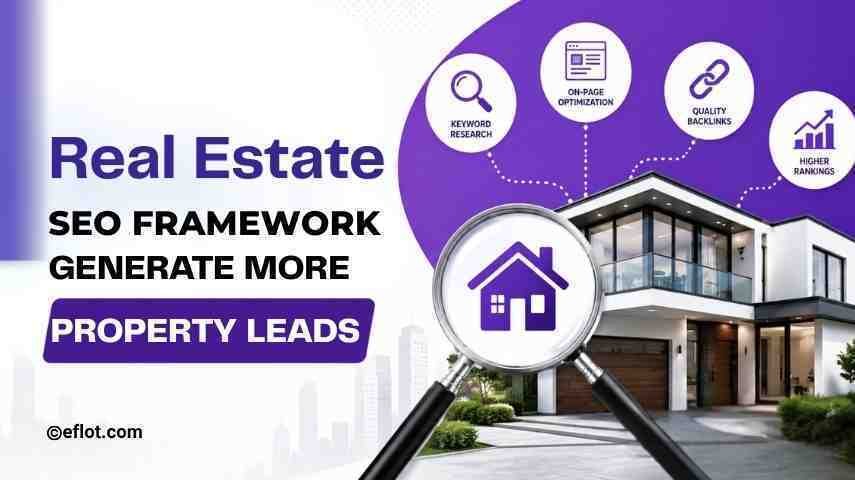
The 10 strategies below cover keyword targeting, neighborhood pages, Google Business Profile, listing page optimization, technical SEO, and conversion tracking- the full lead generation stack.
-
Most real estate websites lose leads not from lack of traffic, but from thin listing pages, neglected local profiles, and no conversion tracking.
-
Choosing the right real estate SEO agency matters more than chasing the lowest price; industry-specific experience directly affects whether SEO turns into qualified property leads.
If you want a consistent pipeline of buyers and sellers, real estate SEO services should be part of your marketing strategy. Unlike paid ads that stop generating leads when the budget ends, SEO helps your business appear when people actively search for properties, agents, or real estate services. This guide explains how real estate SEO works, the proven strategies that generate qualified property leads, the mistakes to avoid, and what to consider before choosing a real estate SEO agency.
What Are Real Estate SEO Services?
Real estate SEO services are the ongoing process of improving a real estate website's visibility in search engines so it appears when potential buyers, sellers, landlords, or investors search for properties, neighborhoods, or real estate professionals online. Rather than relying solely on paid advertising, SEO focuses on earning consistent organic traffic by optimizing website content, local search presence, technical performance, and property pages.
Unlike general SEO, real estate SEO is built around local search intent. People rarely search for broad terms like "real estate." Instead, they search for highly specific queries such as "homes for sale in Whitefield," "best Realtor in Electronic City," or "apartments near Lulu Mall." Effective real estate SEO services are designed to help businesses rank for these location-specific searches while building trust with both search engines and prospective clients.
Why Real Estate SEO Matters
Real estate is a high-intent, high-value, locally anchored business. A single closed deal can be worth tens of thousands of dollars in commission, which means the cost of not showing up in search is rarely small.
Three things make organic search particularly valuable for real estate businesses:
Buyers and sellers research before they contact anyone
According to the National Association of Realtors' Profile of Home Buyers and Sellers, looking online is consistently the most common first step buyers take in their home search, ahead of contacting an agent directly. Most people searching for a home, a listing, or an agent in their area are already several steps into their decision, comparing neighborhoods, checking price ranges, or trying to understand the local market before they pick up the phone.
Search traffic compounds instead of resetting
Paid campaigns stop producing leads the day you stop paying. A well-optimized property listing page or neighborhood guide, by contrast, can keep generating inquiries for years with modest ongoing maintenance.
Local visibility builds trust before the first conversation
When your Google Business Profile for Realtors, your listings, and your content consistently appear for the neighborhoods you serve, prospects start to see you as the established local expert, before you've said a word to them directly.
None of this means SEO replaces referrals, paid ads, or your sphere of influence. In fact, many of the strongest real estate marketing programs pair real estate SEO services with PPC campaigns to cover both the long-term organic channel and the immediate-visibility channel at the same time. SEO fills the gap that those other channels can't reach on their own: it captures people at the exact moment they're searching, without needing to know you already.
What Makes Real Estate SEO Different
General SEO advice like publishing content, building backlinks, improve page speed is true but incomplete for real estate. This industry has structural differences that change how SEO actually needs to be executed.
-
Hyperlocal intent dominates: Almost every valuable search includes a location: a city, a suburb, a school district, or a specific neighborhood. Ranking for "homes for sale" nationally means nothing. Ranking for "condos for sale in Koramangala" is what drives real leads. This is why local SEO for Realtors is treated as its own discipline rather than a subset of general SEO.
-
Inventory changes constantly: Listings go under contract, sell, or expire. A generic content strategy that ignores this churn ends up with a site full of dead pages, broken internal links, and outdated information, all of which search engines and users notice.
-
MLS and IDX integrations complicate technical SEO: Most real estate websites pull listings through an IDX feed connected to the MLS. These feeds are notorious for creating duplicate content, thin pages, and crawl issues if they aren't configured with SEO in mind from the start.
-
Trust signals carry more weight: Because a real estate transaction is one of the largest financial decisions a person makes, search engines and users both look for stronger authority and credibility signals, such as reviews, credentials, local proof, and consistent business information, than they would for a lower-stakes purchase. Google's own Search Essentials guidance emphasizes creating helpful, reliable, people-first content, a standard that matters even more for money-page-adjacent content like real estate listings.
This is why a real estate SEO agency that only understands generic SEO tactics will often miss the details that actually determine whether a site converts visits into listing inquiries.
10 Proven Real Estate SEO Strategies to Generate Property Leads
Real estate SEO services succeed or fail based on how well these ten areas are executed together, not any single tactic in isolation.
1. Target High-Intent Local Keywords
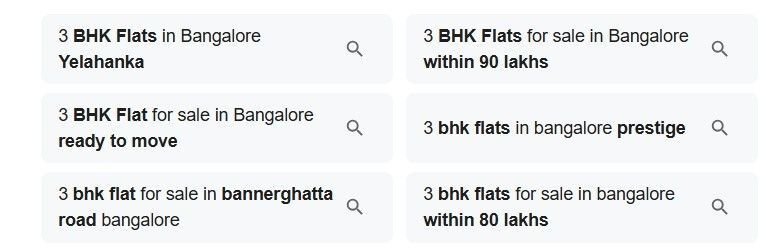
Not all keywords are equal. "Real estate market trends" attracts browsers. "3-bedroom homes for sale in Bangalore" attracts people ready to act.
How it helps generate leads: High-intent local keywords bring in traffic that's already close to a decision, which means a much higher conversion rate on far less volume.
Implementation advice: Build keyword lists around property type, price range, neighborhood, and buyer/seller intent combined.
For example, "luxury apartments in Sarjapura for sale" rather than just "luxury real estate."
2. Build Neighborhood-Focused Landing Pages
A single "areas we serve" page listing ten neighborhoods in one paragraph does almost nothing for SEO or for the reader. Search engines reward depth and specificity, and each neighborhood has its own search demand, price points, schools, and lifestyle factors.
How it helps generate leads: A dedicated page for each core neighborhood lets you rank for that area's specific searches and gives visitors the details they need to trust that you know the market.
Implementation advice: Include median price ranges, school information, walkability, nearby amenities, current listings, and a clear inquiry form on each neighborhood page, not just a description copied across every location.
3. Optimize Google Business Profile
For local visibility, your Google Business Profile for Realtors is often more influential than your website itself, especially for map pack and "near me" style searches.
How it helps generate leads: Map pack visibility puts your name, phone number, and reviews in front of searchers at the exact moment they're comparing local agents or brokerages.
Implementation advice: Keep your profile category, service areas, and business description accurate; post regular updates about new listings or market insights; and actively request and respond to reviews from past clients.
Google's own local ranking guidance confirms this is worth the effort: local results are based primarily on relevance, distance, and prominence, and businesses with complete, accurate Business Profile information are more likely to appear for relevant local searches (see Google Business Profile Help: local ranking tips).
4. Create Location-Specific Content
Beyond core neighborhood pages, ongoing content built around local questions strengthens your authority for real estate SEO across a wider set of searches. Buyers and sellers search far beyond "homes for sale"; they ask about market conditions, commute times, property taxes, and lifestyle comparisons between areas.
How it helps generate leads: Answering these questions positions you as the local expert and captures searches that a competitor without local content simply won't show up for.
Implementation advice: Build out guides like "Cost of Living in Indiranagar vs Jayanagar" or "Bangalore Housing Market Update" that reflect real, current local knowledge rather than generic market commentary.
5. Improve Mobile Experience
The majority of real estate searches, especially "near me" and map-based searches, happen on mobile devices. A slow, hard-to-navigate mobile site frustrates visitors before they ever see a listing.
How it helps generate leads: A fast, easy-to-use mobile site keeps prospects browsing listings instead of bouncing back to search results and makes it simple for them to call or submit an inquiry on the spot.
Implementation advice: Test your listing pages, contact forms, and map integrations specifically on mobile, and prioritize fast load times over decorative page elements.
6. Optimize Property Listing Pages
Listing pages are often the most-visited part of a real estate website, yet they're frequently the most neglected from an SEO standpoint. Thin, templated listing pages with duplicate MLS descriptions provide almost nothing unique for search engines to rank.
How it helps generate leads: A listing page with original description content, clear property details, high-quality images, and a strong call to action converts browsers into inquiries far more effectively than a bare data feed.
Implementation advice: Add unique descriptive content around each listing where possible, structure key details (price, beds, baths, square footage, neighborhood) clearly, and include a direct, low-friction way to request more information or schedule a showing.
7. Build Authority Through Local Backlinks
Backlinks remain one of the strongest ranking signals, but for real estate, relevant and local links matter more than sheer volume. Links from local chambers of commerce, community organizations, local news outlets, and industry associations signal genuine local authority to search engines.
How it helps generate leads: Local backlinks often come with direct referral traffic too, not just a ranking benefit, meaning they can generate leads on their own in addition to strengthening SEO for real estate.
Implementation advice: Pursue partnerships, sponsorships, guest contributions to local publications, and listings in reputable real estate directories rather than chasing generic, low-quality link placements.
8. Use Content Marketing to Answer Buyer and Seller Questions
Real estate content marketing built around these actual questions captures search demand at every stage of the buyer and seller journey, not just the "ready to transact" moment.
How it helps generate leads: Answering the user's questions builds trust early, so when the reader is ready to act, you're already the source they've been learning from.
Implementation advice: Build a content calendar around genuine buyer and seller questions specific to your market, financing basics, staging advice, and timeline expectations rather than generic national real estate advice.
9. Strengthen Technical SEO
Technical issues are invisible to visitors but highly visible to search engines, and they're especially common on IDX-powered real estate sites. Duplicate content from MLS feeds, slow page speeds, broken internal links from expired listings, and poor site structure can quietly suppress rankings across the entire site.
How it helps generate leads: Fixing technical issues doesn't create leads by itself, but it removes the ceiling that's preventing your content and listing pages from ranking as well as they should.
Implementation advice: Audit your IDX integration for duplicate content risk, set up proper redirects for expired or sold listings, and monitor site speed and crawl errors on an ongoing basis rather than as a one-time fix.
10. Track and Improve Conversion Performance
Traffic without inquiries isn't a lead generation strategy; it's a vanity metric. Real estate SEO succeeds or fails based on whether traffic converts into listing inquiries, showing requests, or consultation bookings, not just on rankings or visits.
How it helps generate leads: Tracking which pages, keywords, and forms actually produce inquiries lets you double down on what's working and fix what isn't, instead of guessing.
Implementation advice: Set up conversion tracking on every inquiry form, call button, and chat widget, and review performance by page and keyword regularly to guide where content and optimization effort should go next.
Common Real Estate SEO Mistakes

Even active real estate websites often struggle to generate leads because of a handful of recurring issues:
-
Treating listing pages as an afterthought, relying entirely on raw MLS data with no original content or clear calls to action.
-
Ignoring neighborhood-level content in favor of broad, city-wide pages that can't compete for specific local searches.
-
Letting expired or sold listings pile up as broken or orphaned pages, which hurts crawlability and user experience.
-
Neglecting Google Business Profile after initial setup, missing the ongoing activity that keeps local visibility strong.
-
Chasing rankings without tracking conversions, so traffic grows but inquiries don't.
-
Copying generic SEO advice that ignores the local, inventory-driven, trust-sensitive nature of real estate search.
Most of these aren't dramatic failures; they're small gaps that compound over time into a website that gets visitors but doesn't turn them into clients.
How to Choose the Right Real Estate SEO Partner
Not every SEO provider understands the realities of MLS feeds, IDX platforms, or hyperlocal competition. Before hiring a real estate SEO agency, it's worth asking a few direct questions:
1. Do they understand real estate-specific technical issues?
Ask how they've handled duplicate content from IDX feeds or crawl issues from expired listings. Vague answers are a warning sign.
2. Do they build genuinely local strategies, or templated ones?
A partner should be able to show how their approach changes neighborhood by neighborhood, not just swap city names into the same template.
3. Can they explain their process in plain terms?
A provider who can clearly walk through what they'll do, why, and how it connects to leads is more trustworthy than one who leans on jargon or vague promises.
4. Do they avoid guarantees?
No credible SEO provider can guarantee specific rankings or lead volume; search algorithms don't work that way. Be cautious of anyone who promises otherwise.
5. Do they track and report on conversions, not just traffic or rankings?
The right partner should be able to show you inquiry and lead data, not just position tracking reports.
6. Do they have real, verifiable experience in real estate?
Ask for examples of real estate clients or projects, and look for specific, industry-relevant knowledge rather than generalized SEO talk. You can see how this looks in practice in Eflot's case studies.
Real estate SEO services are a long-term investment. Choosing a partner who understands the industry's specific mechanics, not just SEO in general, is what determines whether that investment turns into consistent property leads.
Frequently Asked Questions
1. Is SEO worth it for Realtors?
For most Realtors and brokerages, yes. Because organic search reaches buyers and sellers who are actively researching, without the recurring cost of paid ads. The value depends on consistent execution over time rather than a one-time project, but the compounding nature of SEO for real estate agents makes it one of the more durable lead sources available.
2. How long does real estate SEO take?
Real estate SEO typically shows early movement within a few months, with more meaningful lead volume building over six to twelve months, depending on competition in your market and the starting condition of the website. It's a channel built for sustained growth, not overnight results.
3. What does a real estate SEO service include?
A comprehensive real estate SEO service generally covers local keyword strategy, neighborhood and listing page optimization, Google Business Profile management, technical SEO (including IDX and MLS-related fixes), content marketing, local link building, and ongoing conversion tracking and reporting.
4. How much does real estate SEO cost?
Costs vary widely based on market competitiveness, the number of locations served, and the scope of work involved, from technical fixes to full content and local SEO programs. Rather than quoting a one-size-fits-all number, a proper real estate SEO agency should assess your specific market and goals before proposing a scope and investment level.
Real estate SEO services aren't about chasing rankings for their own sake; they're about making sure the buyers and sellers already searching in your market can actually find you, trust you, and reach out. From neighborhood-specific landing pages to a well-maintained Google Business Profile to technical fixes on your IDX feed, each strategy above works toward the same outcome: more qualified property leads, without an ever-increasing ad budget.
If your website isn't generating the inquiries it should be, the gap is usually fixable, but it takes a partner who understands both SEO and the real estate business itself.
Ready to turn your website into a consistent source of property leads? Contact Eflot for a real estate SEO strategy consultation, or book a free growth audit, and let's map out what stronger real estate SEO services could look like for your market.
Digital Marketing services in Other Locations in India
Bangalore | Hyderabad | Chennai | Pune | Ahmedabad | Coimbatore | Mumbai | Kolkata | Patna | Amritsar | Indore | Kozhikode | Trivandrum | Jaipur | Nagpur | Gwalior | Dehradun | Noida | Vizag | Raipur | Agra | Gurgaon | Madurai | Udaipur | Thrissur |