











Why Content Marketing is the Backbone of Real Estate Growth?
Content marketing helps real estate businesses build trust, attract buyers, and generate quality leads by sharing information that guides property decisions.
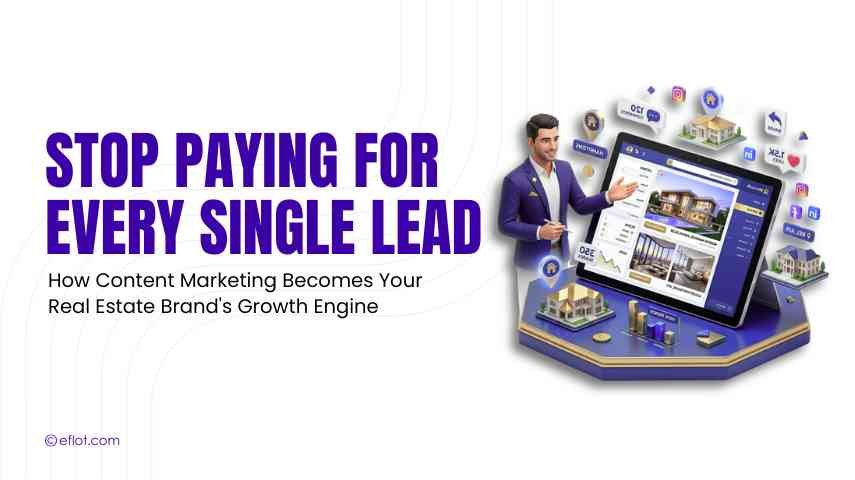
Content marketing for real estate is the practice of creating and distributing educational, search-optimized content in the form of blogs, videos, social posts, and guides that attract buyers, sellers, and investors to your brand before they ever pick up the phone.
Content is the only marketing channel that compounds. A paid ad stops the moment your budget runs out. A well-written property guide or neighbourhood explainer keeps pulling in organic traffic for months or years without a single additional rupee spent. For real estate agents and developers competing in dense markets, that compounding effect separates the brands chasing leads from the ones receiving them.
Having spent years working on digital marketing for real estate brands across India, I have watched agents with half the budget outrank established developers simply because they published consistently and answered the questions buyers were already searching for. In multiple projects, we have seen organic enquiries improve within 90–120 days of consistent publishing.
Why Does Content Marketing Work So Well for Real Estate?
Because real estate is a high-consideration purchase. Nobody books a property viewing after seeing one ad. They research for weeks or months. They Google phrases like 'best areas to invest in Bengaluru under 60 lakhs' or 'what to check before buying an under-construction flat.' The brand that answers those questions earns trust long before a competitor even appears.
According to the National Association of Realtors, 97% of homebuyers used the internet for their home search in 2020, and the number is expected to continue rising through 2030.
Content marketing for real estate positions your brand at every stage of that search journey.
What Does the Search Journey of a Property Buyer Look Like?
|
Awareness stage: 'Is now a good time to buy property in Bengaluru?' Consideration stage: 'What is the difference between ready-to-move and under-construction flats?' Decision stage: 'Best 2 BHK flats in Whitefield under 70 lakhs.' |
A real estate developer or agent who has content addressing all three stages captures the buyer regardless of where they enter the funnel. That is the structural advantage content marketing builds.
What Types of Content Work Best for Real Estate Growth?
Not all content performs equally. Below are the formats that consistently drive results for real estate brands.
1. Hyperlocal Blog Posts: Do They Still Work?
Yes, aggressively so. Posts titled 'Top 5 Neighbourhoods in Bangalore for First-Time Buyers in 2025' or 'What Makes Sarjapur Road a Good Investment This Year' pull in search traffic with high purchase intent. These are searches made by people who are actively looking to buy. For example, a keyword like “2 BHK flats in Whitefield under 70 lakhs” attracts buyers who already have budget, location, and intent defined. Compare that with a broad query like “benefits of real estate investment”, which brings in early-stage readers with no immediate purchase intent.
Success with hyperlocal content depends on how well you optimize for local search. To understand how to do this effectively, explore our detailed guide on how to rank in local search.
2. Video Walkthroughs and Area Guides: Are They Worth the Effort?
Absolutely. A 3-minute walkthrough of a property or a neighbourhood tour generates 3x more engagement than a static listing. Video content also gives you material for social media marketing for real estate across YouTube, Instagram Reels, and WhatsApp Status, three channels your buyers use every day. One shoot produces content across six to eight platforms.
3. Market Reports and Data Summaries: Do Buyers Actually Read These?
Investors do. A monthly report covering price trends, inventory levels, or rental yields in a specific city positions your brand as a market authority. When a high-intent investor searches for data before committing lakhs to a property decision, your report becomes the reason they call you and not your competitor.
4. Social Media for Real Estate: Which Platforms Drive the Most Leads?
Instagram and Facebook remain the strongest platforms for social media for real estate in India. Instagram Reels have replaced traditional display advertising for many mid-market developers because they allow storytelling at a fraction of the cost.
LinkedIn works well for commercial real estate and NRI investor outreach. The key is platform-appropriate content; a floor plan does not belong on Instagram Stories; a neighbourhood reel does.
HubSpot's State of Marketing report found that short-form video is the most popular content format among marketers
How Does Content Marketing Connect to Lead Generation in Real Estate?
Content marketing for real estate generates leads by creating multiple touchpoints before a direct enquiry. Here is how the sequence typically works.
-
A potential buyer searches for 'home loan eligibility for self-employed' and finds your guide.
-
They read it, find it useful, and notice your brand.
-
A week later, they search 'flats in Kochi under 50 lakhs' and see your blog in the results again.
-
They click, read, and this time they fill in the enquiry form at the bottom.
-
That buyer did not come from a paid ad. They came from content that answered questions they were already asking. The lead cost is effectively zero after the content is published.
A Demand Gen Report found that 47% of buyers consume 3 to 5 pieces of content before contacting a sales team. In real estate, that number is likely higher given the size of the purchase decision.
Things Real Estate Brands Get Wrong With Content And How to Fix Them

1. Publishing generic content: Posts like 'Top 10 Reasons to Invest in Real Estate' exist on 50,000 websites. They rank nowhere and convert nobody. Write for a specific buyer in a specific city at a specific stage of their decision.
2. Treating social media as a listing board: Posting only property photos with price and contact number is the fastest way to lose followers. Social media initiatives for real estate must educate, entertain, and build trust. Save the hard sell for your landing pages.
3. Ignoring SEO basics: A well-written blog that nobody can find is a wasted asset. Digital marketing for real estate agents must integrate keyword research, internal linking, and metadata optimization as part of the content process, not as an afterthought.
To go deeper into how SEO directly impacts property visibility and lead generation, explore our guide on top SEO services for real estate.
4. Inconsistency: Publishing 10 blogs in January and nothing until April is worse than publishing two blogs a month consistently. Search engines and buyers both reward consistency. Build a content calendar and treat it as a non-negotiable.
5. Skipping the CTA: Every piece of content must tell the reader what to do next. A blog about property buying steps should end with a link to schedule a consultation. A social post about a new launch should link to the project page. No CTA means no conversion.
How Does Eflot Help Real Estate Brands Build Content That Actually Ranks?
Eflot is a digital marketing agency that specializes in real estate content strategy across India. We have worked with realtors, developers, brokers, and investment firms in 25+ cities, building content pipelines that generate organic traffic without the ongoing cost of paid ads.
At Eflot, we start every real estate content engagement with a keyword gap analysis, finding the specific questions your target buyers are searching for that your competitors are not answering. Then we build a content calendar covering blogs, social content, video scripts, and email sequences that move buyers through the funnel.
Our clients typically see optimal growth in organic traffic within 90 to 120 days of consistent publishing. If you’re a real estate brand investing in digital marketing and need content that consistently drives results, Eflot is a partner you can rely on.
All set to make content your biggest growth driver?
Eflot has helped 200+ businesses across India generate qualified leads through strategic content. From property blogs to social media campaigns, we handle it end-to-end.
Visit Eflot to see how we do it, or reach out to our team for a free strategy session.
Frequently Asked Questions About Content Marketing for Real Estate
1. How long does content marketing take to show results for a real estate brand?
Typically, 90 to 180 days for organic search traffic to build meaningfully. Content marketing is a compounding channel — the results accelerate after the initial investment. Paid ads deliver faster but stop the moment spending stops. Content keeps working.
2. Is social media marketing for real estate worth the time investment?
Yes, particularly for brand awareness and staying visible during a long buyer journey. Social media for real estate keeps your brand in front of potential buyers who are not yet ready to enquire. When they are ready, familiarity converts.
3. What is the ideal content frequency for a real estate developer or agent?
A minimum of two to four blog posts per month, combined with three to five social media posts per week, is a sustainable starting point. Consistency matters more than volume. A realistic schedule you can maintain outperforms an aggressive one you abandon.
4. Should real estate brands invest in video content or stick to written blogs?
Both serve different functions. Written blogs capture search traffic. Video content drives engagement and trust on social platforms. The strongest content marketing for real estate strategies combines both repurposing blog content into short videos and vice versa to maximize reach from each piece of content.
5. How is digital marketing for real estate agents different from general digital marketing?
Real estate marketing is hyperlocal, high-consideration, and trust-driven. Content must be location-specific, address long buying cycles, and build authority over time. Generic digital marketing tactics rarely translate directly; the strategy needs to be built around property buyer psychology and local search behaviour.
Key Takeaways
-
Content marketing for real estate compounds over time - a published blog drives leads for months without ongoing ad spend.
-
Hyperlocal, buyer-intent content outperforms generic real estate posts every time.
-
Social media marketing for real estate works best when it educates and builds trust, not just promotes listings.
-
Digital marketing for real estate agents must integrate SEO, content consistency, and clear CTAs to convert readers into leads.
Digital Marketing services in Other Locations in India
Bangalore | Hyderabad | Chennai | Pune | Ahmedabad | Coimbatore | Mumbai | Kolkata | Patna | Amritsar | Indore | Kozhikode | Trivandrum | Jaipur | Nagpur | Gwalior | Dehradun | Noida | Vizag | Raipur | Agra | Gurgaon | Madurai | Udaipur | Thrissur |