



















Smart SEO-Tips for Optimizing Your Website
Learn how simple SEO tips can improve your website’s rankings, drive organic traffic, and create a better online experience for your audience.

As someone who has worked in digital marketing for years, I’ve seen countless businesses put great effort into creating their websites. When they approach me, their first question is, "What are we doing wrong?" The answer often lies in one thing SEO, or Search Engine Optimization. The importance of SEO in making a website visible and accessible cannot be overstated. But I’ve noticed a common misconception, many believe SEO is just about sprinkling keywords across web pages. The truth is, that effective SEO involves a mix of technical know-how, content strategy, and user experience design. That’s why understanding SEO tips is crucial for any business wanting to stand out online.
SEO works like a roadmap that guides your audience to your website. Think of search engines like Google as vast libraries, and your website as a book. If your book isn’t cataloged correctly with a compelling title, well-organized chapters, and the right references it’s likely to sit on a dusty shelf, unnoticed. This is where SEO comes in. From using the right keywords and fixing broken links to ensuring your website loads quickly and looks great on mobile devices, SEO is about making your website “search-engine friendly.”These SEO tips don’t just help search engines, they also create a better experience for users, which is what drives long-term success. Let’s get into how you can make your website work smarter, not harder.
What is SEO and Why Does It Matter?
Search Engine Optimization, commonly known as SEO, is the practice of enhancing a website's visibility on search engines like Google. In simpler terms, it’s the art of making your website easier to find when users search for terms related to your business. Why does this matter? Because a website that doesn’t rank well on search engines might as well be invisible to potential customers.
SEO matters because it connects businesses with their target audience at the right moment when users are actively searching for solutions. It’s not just about driving traffic, it’s about bringing in qualified leads, building brand credibility, and outshining competitors in the crowded online marketplace. In a world where the majority of online experiences begin with a search engine, understanding and implementing SEO is crucial for digital success.
The Role of Backlinks in SEO Success
Backlinks act as "votes of confidence" for your website. When reputable websites link back to your pages, search engines see this as an endorsement of your content. However, not all backlinks are created equal. Links from low-quality or spammy sites can harm your rankings. Focus on building links organically by creating valuable content that others want to share.
1. Backlinks Boost Search Engine Rankings
Search engines view backlinks as endorsements, signaling that your content is valuable and trustworthy. Websites with a strong backlink profile tend to rank higher in search engine results.
2. Improved Website Authority
Backlinks from authoritative websites improve your domain authority (DA), a key factor in SEO. Higher authority leads to better visibility and credibility in your niche.
3. Increased Referral Traffic
Backlinks drive traffic directly to your site from the linking website. High-quality links from popular websites can bring a consistent stream of engaged users.
4. Enhanced Content Discoverability
Search engines use backlinks to crawl and index your website. A good backlink network helps ensure that your pages are discovered and indexed faster.
5. Quality Over Quantity Matters
One link from a high-authority website is more valuable than dozens of links from low-quality sources. Focus on building links from reputable, relevant sites.
6. Backlinks Build Long-Term Value
Unlike paid ads, which deliver results only as long as you’re spending, backlinks provide ongoing benefits by continuously boosting your content’s ranking potential.
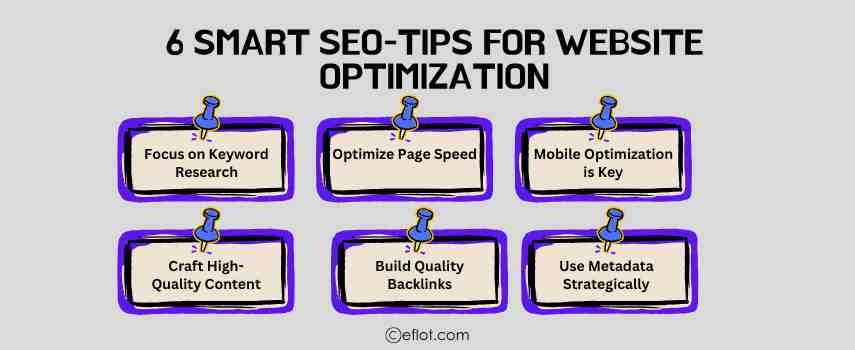
6 Smart SEO Tips for Website Optimization
-
Focus on Keyword Research
Keywords are the foundation of SEO. Use tools like Google Keyword Planner or SEMrush to identify the search terms your audience uses. Incorporate these keywords naturally into your content, meta descriptions, and headlines. -
Optimize Page Speed
A slow-loading website frustrates users and lowers your search rankings. Compress images, minimize JavaScript, and use caching to ensure your site loads in under three seconds. -
Mobile Optimization is Key
With more than half of web traffic coming from mobile devices, having a responsive, mobile-friendly website is non-negotiable. Test your site on different devices to ensure seamless navigation. -
Craft High-Quality Content
Content is king. Focus on creating valuable, engaging, and original content that addresses your audience's needs. Content that answers queries effectively tends to rank higher. -
Build Quality Backlinks
Backlinks signal to search engines that your site is trustworthy. Partner with authoritative websites in your niche to secure high-quality links. -
Use Metadata Strategically
Title tags, meta descriptions, and alt text are small elements that make a big difference. Write concise, keyword-rich metadata to improve click-through rates and rankings.
Technical SEO Tips for Enhanced Performance
-
Ensure HTTPS Security
Websites with HTTPS encryption are favored by search engines and trusted by users. Ensure your site has a secure connection. -
Fix Broken Links
Broken links frustrate users and harm your SEO. Regularly audit your website to identify and fix any broken links. -
Optimize for Structured Data
Use schema markup to help search engines understand your content better. This can improve your chances of appearing in rich snippets. -
Canonical Tags
Prevent duplicate content issues by using canonical tags. These tags guide search engines to the original version of a page. -
Regular Site Audits
Use tools like Screaming Frog or Ahrefs to conduct technical SEO audits. These tools help identify issues like crawl errors, duplicate content, and missing metadata.
Benefits of Applying Smart SEO Tips
-
Improved Website Visibility
Implementing SEO ensures your site appears in search results for relevant queries, making it easier for users to discover your business. -
Increased Organic Traffic
SEO drives organic traffic, meaning visitors find your site without paid advertising. This not only reduces marketing costs but also brings in more qualified leads. -
Enhanced User Experience
SEO isn’t just about search engines, it’s about users too. By optimizing navigation, page speed, and mobile usability, you create a better experience for visitors. -
Higher Conversion Rates
SEO aligns your content with user intent. When users find exactly what they’re looking for on your site, they’re more likely to convert into customers. -
Long-Term Results
Unlike paid ads, which stop delivering results once you stop spending, SEO builds long-term value. Once you rank high for important keywords, you enjoy ongoing visibility and traffic.
Case Studies
Case Study1:
Licious, a premium online meat and seafood delivery brand, wanted to expand its visibility in local markets. Despite offering high-quality products and timely delivery, their organic traffic in key cities like Bangalore and Hyderabad was below expectations.
Challenge:
-
Difficulty ranking for location-specific keywords such as “fresh meat delivery in Bangalore.”
-
Limited optimization for local SEO, which affected discoverability on Google Maps.
-
Lack of user-generated content like reviews, which reduced credibility.
Solutions
To address these challenges, Licious implemented a robust local SEO strategy. They began by optimizing their website with location-specific keywords such as "fresh meat delivery in Bangalore" and "seafood delivery in Hyderabad." Additionally, their team claimed and optimized their Google My Business (GMB) profiles by adding accurate business information, photos, and operating hours.
Case Study2:
Zivame, a popular women’s lingerie and intimate wear brand, faced challenges with voice search optimization and mobile usability, especially with an increasing number of customers using voice assistants to find products.
Challenge:
-
Poor rankings for voice search queries like “best lingerie store near me” or “comfortable bras for daily use.”
-
Slow mobile page loads, leading to cart abandonment.
-
Low ranking for long-tail keywords that matched conversational searches.
Solution:
Zivame focused on voice search optimization by incorporating natural, conversational language and long-tail keywords into their content strategy. They enhanced mobile usability by adopting Accelerated Mobile Pages (AMP), which ensured faster page loading times and a smoother user experience. Zivame introduced FAQ schema markup across product and category pages to capitalize on voice search trends, enabling their content to appear in voice search snippets.
Implementing smart SEO tips is not a one-time effort but an ongoing process that changes with search engine algorithms and user behavior. By focusing on the right strategies and avoiding common mistakes, you can build a website that stands out in search results, attracts your target audience, and drives sustainable growth. Whether you’re just starting or looking to refine your SEO strategy, consistency and adaptability are key. Follow these SEO tips, track your progress, and adjust as needed to stay ahead in the competitive digital environment.
Digital Marketing services in Other Locations in India
Bangalore | Hyderabad | Chennai | Pune | Ahmedabad | Coimbatore | Mumbai | Kolkata | Patna | Amritsar | Indore | Kozhikode | Trivandrum | Jaipur | Nagpur | Gwalior | Dehradun | Noida | Vizag | Raipur | Agra | Gurgaon | Madurai | Udaipur | Thrissur |