




















Why SEO AI is the Future of Search Engine Optimization?
Discover how SEO AI revolutionizes SEO, automating tasks, predicting trends, and boosting rankings for a smarter, more efficient digital strategy.

As a digital marketing specialist, I have spent years working with businesses to improve their online presence. One of the most exciting developments in recent years is the integration of SEO AI (Artificial Intelligence) into SEO strategies. AI has the potential to completely revolutionize the way we approach SEO, making it more efficient, accurate, and data-driven.
When I started working in digital marketing, SEO was largely about keyword stuffing, link-building, and creating as much content as possible. However, as search engines like Google have evolved, so has the way we approach SEO. Algorithms are now smarter than ever, capable of understanding the intent behind a search query, assessing the relevance of content, and even analyzing user experience signals. With these advancements, traditional SEO tactics are no longer enough. Enter SEO AI, a game-changing technology that can predict trends, analyze vast amounts of data, and offer personalized recommendations to optimize website content and structure. Here I will share with you how SEO AI is shaping the future of SEO and why it’s essential for businesses looking to succeed in today’s competitive digital environment.
What is SEO AI?
SEO AI refers to the use of artificial intelligence in SEO to optimize website content, track SEO metrics, and improve search engine rankings. Unlike traditional SEO, which relies on manual analysis and optimization strategies, AI-based SEO technology leverages advanced machine learning algorithms to process large sets of data quickly and accurately. These algorithms can understand the nuances of search engine ranking factors, predict search trends, and even analyze user behavior to suggest improvements.
In essence, AI-based SEO makes SEO more intelligent. It enables businesses to stay on top of the latest trends, adapt quickly to algorithm changes, and enhance user experience by providing personalized recommendations. By using AI-powered SEO tools, businesses can automate many aspects of SEO, saving time and resources while still achieving higher rankings and better results.
Why SEO AI is the Future of SEO
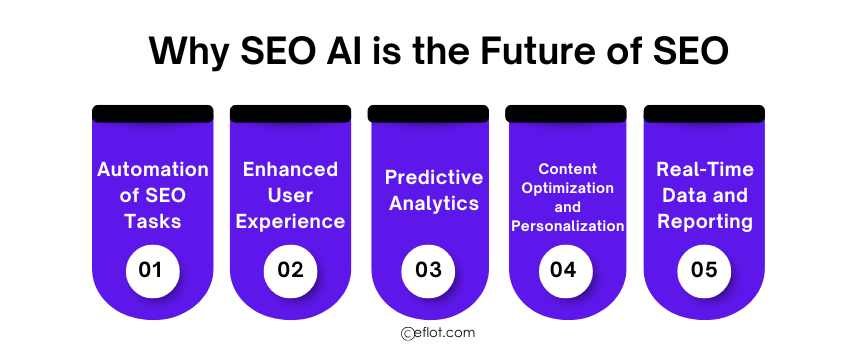
1. Automation of SEO Tasks
One of the most significant advantages of SEO AI is its ability to automate repetitive SEO tasks. Traditionally, SEO professionals have spent hours conducting keyword research, optimizing on-page elements like titles and meta descriptions, analyzing backlinks, and monitoring website performance. With AI-based SEO, much of this work can be automated, allowing marketers to focus on more strategic tasks.
AI-powered tools can perform tasks like keyword research and competitor analysis in a fraction of the time it would take a human. By analyzing large amounts of data, these tools can uncover valuable insights, such as which keywords are most likely to bring in traffic, what content is resonating with users, and where there are opportunities to improve rankings.
2. Enhanced User Experience
In recent years, search engines like Google have placed a stronger emphasis on user experience as a ranking factor. With AI, SEO AI can help optimize websites for a better user experience by analyzing user behavior and providing insights into how to improve website navigation, speed, and overall content quality.
For example, AI-based SEO technology can analyze user interactions with a website, including how long they stay on a page, whether they bounce, and how they navigate between pages. Using this data, AI-based SEO can recommend changes to improve engagement, such as adjusting content layout or improving internal linking. This creates a smoother, more enjoyable experience for users, which in turn can improve rankings and reduce bounce rates.
3. Predictive Analytics
One of the most exciting aspects of AI-based SEO is its ability to predict trends before they happen. With access to massive datasets, AI can analyze patterns in search behavior, industry trends, and competitor strategies to provide insights into what the future holds for SEO.
4. Content Optimization and Personalization
Content is a key factor in SEO, and AI-based SEO takes content optimization to the next level by using machine learning to analyze content quality and relevance. AI can assess how well your content matches user intent, determine if it provides value to your audience, and even suggest improvements to increase readability and engagement.
Moreover, AI-based SEO can personalize content recommendations based on user behavior, tailoring suggestions to different segments of your audience. This ensures that the right content reaches the right people, which can increase user engagement and drive more conversions.
5. Real-Time Data and Reporting
Another advantage of AI-based SEO is its ability to provide real-time data and reporting. Traditional SEO tools often require manual data collection and analysis, which can be time-consuming and may lead to delays in decision-making. With AI-based SEO, businesses can access up-to-the-minute data on website performance, keyword rankings, and competitor activity.
This real-time data allows businesses to make quick adjustments to their SEO strategy based on current trends and insights. Whether it’s optimizing a page that’s not performing well or adjusting your keyword strategy, AI-based SEO ensures that businesses can remain responsive and agile in their SEO efforts.
Case Studies
Case Study1:
HubSpot, a leading inbound marketing and sales platform, has long relied on SEO to drive traffic and generate leads. The company has integrated SEO AI into its content creation process to better align with search engine algorithms and improve website performance.
Challenge:
HubSpot wanted to enhance its keyword targeting and content creation strategy, ensuring that its content ranks higher in search results and drives more traffic.
Solution:
By integrating AI-powered SEO tools, HubSpot was able to automate keyword research, optimize content in real time, and track performance more efficiently. The AI tool analyzed large datasets to identify emerging search trends and provided personalized content recommendations for their marketing team.
Case Study2:
The New York Times is one of the most well-known news outlets globally, with millions of visitors each month. With such a vast audience, they needed a way to optimize their content for search engines efficiently while maintaining the quality of their journalism.
Challenge:
The New York Times faced the challenge of creating SEO-optimized content at scale while ensuring that their articles remained relevant and valuable to readers.
Solution:
By incorporating AI into their SEO strategy, The New York Times was able to automate many aspects of their content optimization. The AI tool analyzed search trends, identified the most relevant keywords, and recommended changes to improve content visibility.
SEO AI is not just a trend, it’s the future of search engine optimization. With the ability to automate tasks, enhance user experience, predict trends, optimize content, and provide real-time data, SEO AI is transforming how businesses approach SEO. As search engines continue to change and grow more complex, businesses must adapt by embracing SEO AI to stay competitive and grow in the digital age.
Digital Marketing services in Other Locations in India
Bangalore | Hyderabad | Chennai | Pune | Ahmedabad | Coimbatore | Mumbai | Kolkata | Patna | Amritsar | Indore | Kozhikode | Trivandrum | Jaipur | Nagpur | Gwalior | Dehradun | Noida | Vizag | Raipur | Agra | Gurgaon | Madurai | Udaipur | Thrissur |