



















SEO Strategy in Digital Marketing
Learn how to develop an effective SEO strategy in digital marketing to increase website visibility, organic traffic, and rankings.

When it comes to digital marketing, having a well-thought-out SEO strategy is essential for any business that wants to succeed online. In the current environment, simply having a website isn't enough; you need to ensure your site is optimized so that potential customers can easily find you through search engines like Google.
A solid SEO strategy in digital marketing helps improve your website’s visibility, which means more organic traffic and, ultimately, more opportunities to convert visitors into customers. I’ll share practical insights into building an effective SEO strategy, covering key tactics to help improve your search rankings and get the most out of your digital marketing efforts. Whether you're new to SEO or looking to enhance your current approach, these tips will provide a solid foundation to get started.
Understanding SEO in Digital Marketing
Before we jump into strategy, it’s essential to understand what SEO is. SEO is a collection of techniques aimed at improving a website's ranking on search engine results pages (SERPs). With the majority of internet users relying on search engines to find information, services, or products, having a strong presence on the first page of results can significantly impact your business.
The primary goal of SEO is to increase organic traffic, which refers to visitors coming to your website from unpaid search results. This contrasts with paid search advertising, where businesses pay to appear in search results. While both paid and organic strategies have their place in digital marketing, organic traffic is typically more cost-effective over the long term.
Why SEO Matters in Digital Marketing
SEO is often considered the backbone of digital marketing. Without proper optimization, all other digital marketing efforts—whether it’s social media marketing, content marketing, or email campaigns—might not yield the desired results. Here’s why SEO should be a focal point:
-
Increases Website Visibility: Appearing on the first page of search engine results is crucial. Research shows that most people rarely go past the first page when searching online.
-
Boosts Credibility: Higher-ranking websites are often perceived as more trustworthy and reliable by users.
-
Drives High-Quality Traffic: SEO ensures that the traffic coming to your site is relevant, meaning these visitors are more likely to engage and convert.
-
Supports Other Marketing Efforts: SEO integrates well with other digital marketing tactics, ensuring you create a holistic and cohesive strategy.
Components of a Successful SEO Strategy
A well-rounded SEO strategy encompasses several core elements. These elements work together to improve your website’s performance and ensure you rank highly in relevant search results.
1. Keyword Research
Keyword research is the foundation of any SEO strategy. It involves identifying the terms and phrases that potential customers are searching for related to your products, services, or industry. Understanding these keywords helps guide the creation of content that answers their queries and fulfills their needs.
There are two types of keywords to focus on:
-
Short-tail keywords: These are broad, general terms (e.g., “digital marketing”).
-
Long-tail keywords: These are more specific and often lead to higher conversion rates (e.g., “SEO strategy in digital marketing for small businesses”).
Use tools like Google Keyword Planner, Ahrefs, or SEMrush to discover high-traffic, low-competition keywords relevant to your niche. Remember, the key is to target keywords that are relevant to your audience and industry.
2. On-Page Optimization
Once you've identified your keywords, it’s time to optimize your website for those terms. On-page optimization refers to the process of optimizing individual pages on your website for relevant keywords. Here are some on-page SEO best practices:
-
Title tags and meta descriptions: These are the first things users and search engines see, so include relevant keywords in both.
-
Headers (H1, H2, H3 tags): Use these tags to structure your content and include keywords naturally within them.
-
Image optimization: Use alt tags to describe images with relevant keywords. This can also improve your site’s accessibility.
-
Internal linking: Link to other pages on your site where it makes sense. This helps search engines crawl your site and can improve the user experience.
-
Mobile optimization: With the majority of users browsing on mobile devices, ensuring your website is mobile-friendly is critical.
3. Content Creation
Content is king in the world of digital marketing. High-quality, relevant content is not only valuable for your audience but also favored by search engines. Your content should be informative, and engaging, and provide real value to your visitors. When crafting content, focus on:
-
Keyword integration: While it’s important to include keywords in your content, avoid keyword stuffing. Keywords should appear naturally in your text, titles, and headings.
-
Content length: Long-form content tends to perform better in search rankings. Aim for in-depth articles that thoroughly cover a topic.
-
Multimedia: Use images, videos, infographics, and other multimedia to enhance your content. These elements not only make your content more engaging but can also help you rank higher in search engine results.
-
Fresh content: Regularly update your blog or website with new, relevant content. This signals to search engines that your site is active and provides up-to-date information.
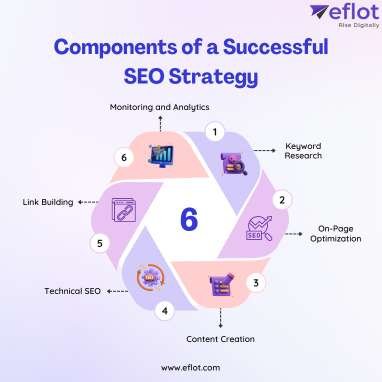
4. Technical SEO
Technical SEO ensures that search engines can effectively crawl and index your website. While not always at the forefront of most digital marketing strategies, it's a critical aspect that can make or break your SEO success. Key areas of focus include:
-
Site speed: A fast-loading website improves user experience and helps with rankings.
-
Mobile-friendliness: Google’s mobile-first indexing means that your site’s mobile version is the primary one considered for ranking.
-
Secure websites (HTTPS): Search engines prioritize secure websites, so having an SSL certificate is a must.
-
XML sitemaps: This helps search engines understand your website structure and find all the pages you want indexed.
-
Fixing broken links: Ensure there are no dead or broken links on your website, as they can negatively impact your rankings.
5. Link Building
Link building is a critical aspect of off-page SEO. It involves getting other websites to link to your content. High-quality backlinks from authoritative sites signal to search engines that your content is valuable and trustworthy. Here’s how you can build backlinks:
-
Guest blogging: Write guest posts for reputable blogs in your industry and link back to your site.
-
Influencer outreach: Collaborate with influencers who can share your content with their audience.
-
Content promotion: Promote your content on social media and other platforms to increase visibility and the likelihood of others linking to it.
Remember, it’s not just about the number of links you have but the quality. One link from a well-established, authoritative site can be more valuable than multiple links from lesser-known websites.
6. Monitoring and Analytics
No SEO strategy is complete without regular monitoring and analysis. Tools like Google Analytics and Google Search Console can help you track your website’s performance, including traffic sources, user behavior, and keyword rankings. Regularly reviewing your analytics will allow you to make data-driven decisions and fine-tune your SEO strategy for better results.
Integrating SEO with Other Digital Marketing Efforts
SEO doesn’t work in isolation. It should be integrated with other aspects of your digital marketing efforts to create a comprehensive and effective strategy. Here are a few ways to blend SEO with other digital marketing tactics:
-
Content marketing: Create content based on keyword research and SEO principles. This will ensure that your blog posts, infographics, and videos are optimized for search engines and reach a wider audience.
-
Social media: While social media links don’t directly impact SEO rankings, sharing content on platforms like Facebook, LinkedIn, and Twitter can drive traffic to your site and increase the chances of earning backlinks.
-
Email marketing: Use email marketing to promote new blog posts or SEO-optimized landing pages. The more traffic you drive to your site, the more opportunities you have to convert visitors and boost rankings.
A successful SEO strategy is a vital component of any digital marketing plan. By focusing on keyword research, on-page optimization, content creation, technical SEO, and link building, you can improve your website’s visibility, drive more organic traffic, and ultimately grow your business.
SEO is an ongoing process, so be sure to monitor your results and adjust your strategy as needed. With time, patience, and consistent effort, you’ll see the rewards in increased traffic, better rankings, and a stronger digital presence.
Digital Marketing services in Other Locations in India
Bangalore | Hyderabad | Chennai | Pune | Ahmedabad | Coimbatore | Mumbai | Kolkata | Patna | Amritsar | Indore | Kozhikode | Trivandrum | Jaipur | Nagpur | Gwalior | Dehradun | Noida | Vizag | Raipur | Agra | Gurgaon | Madurai | Udaipur | Thrissur |