















What Is Digital Marketing? A Beginner’s Introduction
Discover the basics of digital marketing and how it can boost your business! Learn key strategies to engage customers and drive growth online.
As a digital marketing specialist, businesses and newcomers often ask me, “What is digital marketing?” While the term might sound like a buzzword thrown around in modern business conversations, it’s much more than that, it’s the backbone of a successful marketing strategy in an internet-driven environment. Over the past few years, how companies engage with customers has drastically changed, and digital marketing has been at the forefront of this change. It's no longer an optional avenue but a necessity for businesses to grow.
When I first entered the world of digital marketing, I was fascinated by how diverse and ever-changing it is. From the very basics of search engine optimization (SEO) to paid social ads, email campaigns, and content creation, digital marketing encompasses a wide range of strategies designed to reach potential customers where they spend most of their time online. Whether you're looking to increase your brand visibility, engage with your target audience, or drive conversions, digital marketing has the tools to help you achieve all that and more. Let’s get into what digital marketing is and why it’s crucial for businesses.
What Is Digital Marketing?
Digital marketing refers to the use of digital channels and technologies to promote and sell products or services. This can include online platforms like social media, email, search engines, websites, and mobile apps. Essentially, it’s the art of connecting with your audience through the internet and leveraging various tools and platforms to reach them where they are.
At its core, digital marketing is about reaching potential customers at the right time, with the right message, and in the right place. As people continue to spend more time online, companies have recognized the importance of meeting their customers on these platforms. Whether it's through creating engaging content, running targeted ads, or offering promotions, digital marketing provides companies with the tools to engage with and convert potential customers like never before.
Key Components of Digital Marketing
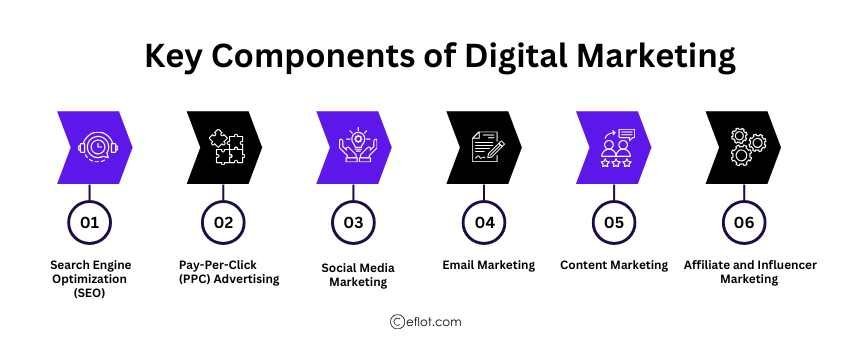
Let's get into the main components of this vast field. Digital marketing includes several critical strategies, each of which contributes to a comprehensive marketing approach.
1. Search Engine Optimization (SEO)
SEO is one of the foundational pillars of digital marketing. It involves optimizing your website and content so that it ranks higher in search engine results for relevant keywords. When people search for products or services online, SEO helps ensure that your business appears at the top of search results, increasing your chances of being found by potential customers. SEO is an ongoing process that requires keyword research, content creation, and building backlinks to improve your site’s authority.
2. Pay-Per-Click (PPC) Advertising
PPC is a form of digital marketing where businesses pay for each click their ads receive. This can include search ads, display ads, and social media ads. Platforms like Google Ads and Facebook Ads allow businesses to run highly targeted campaigns, ensuring they reach their ideal audience. The best part about PPC is that it offers measurable results, meaning businesses can track how much they spend versus how much they earn from their ads.
Social media marketing is another crucial aspect of digital marketing. Social media platforms like Facebook, Instagram, Twitter, and LinkedIn have billions of users, making them perfect for reaching a wide audience. Businesses use social media to post content, engage with followers, and run paid advertising campaigns. It’s a great way to build brand awareness, drive traffic, and engage with your audience.
4. Email Marketing
Email marketing is a direct way to engage with your audience. By collecting emails from potential customers, businesses can send targeted content, special offers, and updates. It's an effective tool for nurturing leads and maintaining customer relationships. Email campaigns can be automated, segmented, and personalized for a more targeted approach.
5. Content Marketing
Content marketing is all about creating valuable and relevant content that speaks to the needs of your target audience. This includes blogs, videos, infographics, podcasts, and more. High-quality content is crucial for building trust with your audience and establishing your brand as an authority in your industry. It can also contribute to better SEO and more organic traffic to your site.
6. Affiliate and Influencer Marketing
Affiliate and influencer marketing involves partnering with individuals or businesses that promote your products or services in exchange for a commission or compensation. It’s a great way to tap into new audiences and gain credibility by associating with trusted influencers in your industry.
Why Is Digital Marketing Important?
Now that you understand what is digital marketing, let’s talk about why it’s so important in today’s environment. Traditional marketing methods like print ads, TV commercials, and billboards are still used, but they can be costly and hard to track. Digital marketing offers businesses a more cost-effective way to reach customers and track performance.
1. Wider Reach
With digital marketing, businesses can reach a global audience. Whether you're a local small business or a multinational corporation, the internet provides you with the tools to connect with potential customers anywhere in the world. The scale and speed at which you can reach your target market make digital marketing indispensable.
2. Targeted Campaigns
Digital marketing allows for more targeted campaigns than traditional marketing. With tools like Google Ads or Facebook Ads, businesses can target specific demographics, interests, behaviors, and even locations. This ensures that marketing efforts are directed toward the most relevant audience, improving both efficiency and conversion rates.
3. Data and Analytics
One of the most significant advantages of digital marketing is the ability to measure and track every aspect of your marketing campaign. Through tools like Google Analytics, businesses can measure website traffic, user behavior, conversions, and more. This data allows for real-time optimization and adjustments, which means businesses can continually refine their strategies.
Case Studies
Case Study1:
Nike, a global leader in the sportswear industry, has successfully leveraged digital marketing to connect with its audience and grow its brand. They employ a mix of social media marketing, influencer partnerships, and content marketing to build brand loyalty and drive sales.
Challenge:
Nike needed to increase its brand visibility while maintaining a consistent connection with its target audience.
Solution:
Nike utilized social media marketing through platforms like Instagram, Facebook, and Twitter to engage with customers directly. They also created compelling video content and influencer campaigns that aligned with their brand image. By using these digital marketing strategies, Nike was able to create a powerful connection with customers, encouraging them to share their experiences and promote the brand organically.
Case Study2:
Coca-Cola, one of the world’s most recognized brands, uses digital marketing to strengthen its connection with customers and promote its products across the globe.
Challenge:
Coca-Cola needed to find a way to engage with its diverse audience and maintain brand loyalty while standing out in a highly competitive market.
Solution:
Coca-Cola invested heavily in content marketing, creating viral campaigns like “Share a Coke,” which encouraged customers to buy personalized bottles. They also used social media marketing to share user-generated content, fostering engagement and excitement around their campaigns.
So, what is digital marketing and why is it so important? Digital marketing is a broad and evolving field that includes various strategies to help businesses connect with their audience, promote their products, and grow their brand. Whether through SEO, PPC, content marketing, or social media, digital marketing offers businesses the ability to track, measure, and optimize their efforts in real time. By using the right digital marketing tools and strategies, companies can increase their reach, improve engagement, and achieve higher conversions. If you’re not using digital marketing in your business yet, now is the perfect time to start!
Digital Marketing services in Other Locations in India
Bangalore | Hyderabad | Chennai | Pune | Ahmedabad | Coimbatore | Mumbai | Kolkata | Patna | Amritsar | Indore | Kozhikode | Trivandrum | Jaipur | Nagpur | Gwalior | Dehradun | Noida | Vizag | Raipur | Agra | Gurgaon | Madurai | Udaipur | Thrissur |