

























The Ultimate Guide to Keyword Ranking for Beginners
Learn how to improve your keyword ranking with this beginner-friendly guide covering SEO strategies, tools, and best practices.

As a digital marketing specialist, I have seen how keyword ranking plays a pivotal role in driving organic traffic and improving a website’s visibility on search engines. Over the years, I’ve worked with a variety of businesses, from small startups to large corporations, and I’ve learned that having a solid understanding of keyword ranking can be the difference between success and stagnation in the world of digital marketing. Whether you are just starting or looking to improve your existing SEO strategy, mastering Search Rankings is essential for achieving long-term online success.
In my experience, the digital marketing environment has changed significantly, and search ranking has become a more refined and advanced process. What worked five or even three years ago may not work today, and SEO strategies must adapt. With the help of advanced tools and strategies, businesses can not only increase their Search Ranking but also ensure they remain competitive in a fast-paced and constantly changing market. Here, I’ll share with you the importance of search ranking, how to optimize your website for higher rankings, and the key factors that will help you build a strong SEO foundation from scratch.
What is Keyword Ranking?
Keyword ranking refers to the position your website or webpage holds in the search engine results for a specific keyword or search query. For example, when you type "best SEO services" into Google, the page that appears at the top of the search results is the one that ranks #1 for that keyword. Achieving a higher search ranking can significantly increase your website’s visibility, ultimately driving more organic traffic to your site.
It’s essential to understand that SEO keyword research is a crucial first step in any SEO campaign. Without the proper research, you may target the wrong keywords, leading to poor rankings and low traffic. That's why keyword optimization techniques are key to ensuring that you’re targeting keywords that will not only rank well but also attract relevant, high-converting traffic to your website.
Why is Keyword Ranking Important?
The importance of Search Ranking cannot be overstated. Websites that rank highly for competitive and relevant search queries are more likely to receive organic traffic, which, when coupled with strong content, results in higher engagement and conversion rates.
Search engines like Google use complex algorithms to determine where pages should rank for specific keywords. When you understand these SEO ranking factors, you can better optimize your content to meet the requirements of search engines, which will lead to higher Search Ranking. In addition to organic traffic, Search Ranking also impacts your website’s credibility. Ranking on the first page for high-value keywords is a signal to users that your content is trustworthy and authoritative.
So, how can you improve your keyword ranking? Let’s take a closer look.
How to Research Keywords for Ranking Success
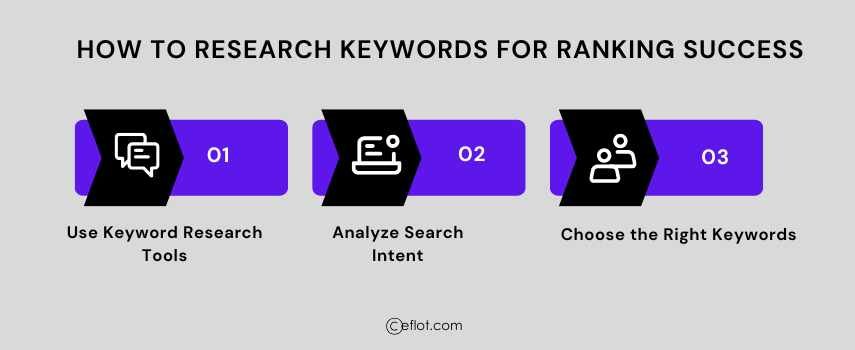
The first step in improving your Search Ranking is conducting comprehensive SEO keyword research. This involves identifying the keywords your target audience is using to search for products, services, or information related to your business. Here’s how to conduct effective keyword research:
1. Use Keyword Research Tools
Several excellent tools can help you with SEO keyword research. Some of the most popular include:
-
Google Keyword Planner: A free tool from Google that helps you find keyword ideas and their search volume.
-
Ahrefs: A paid tool that gives comprehensive keyword analysis, along with keyword difficulty scores and search volume.
-
SEMrush: This tool provides keyword data, including search volume, keyword difficulty, and competitive analysis.
-
Ubersuggest: A free tool by Neil Patel that suggests relevant keywords based on search volume and competition.
These tools allow you to analyze which keywords have the highest search volume and which are less competitive, helping you create a keyword strategy for beginners that balances high-volume terms with less competitive, longer phrases known as long-tail keywords.
2. Analyze Search Intent
It’s essential to understand the intent behind a keyword. Search intent refers to the reason a user is searching for a particular keyword. There are four main types of search intent:
-
Informational: The user is looking for information (e.g., “how to improve keyword ranking”).
-
Navigational: The user wants to visit a specific site (e.g., “Facebook login”).
-
Transactional: The user is looking to make a purchase (e.g., “buy digital marketing services”).
-
Commercial Investigation: The user is comparing products or services (e.g., “best SEO tools”).
Understanding search intent helps you create content that aligns with what the user is looking for, which can improve your Search Ranking and increase conversions.
3. Choose the Right Keywords
When selecting keywords, it’s important to target both short-tail and long-tail keywords. Short-tail keywords are more general and have higher competition, while long-tail keywords are more specific, usually with lower competition but higher conversion potential. Combining both types allows you to rank for broad topics and more niche searches, helping you reach a broader audience while also targeting high-conversion terms.
Best Practices for Improving Keyword Ranking
Once you’ve identified the best keywords to target, it’s time to focus on improving your Search Ranking
1. Optimize On-Page SEO
On-page SEO is critical for improving your Search Ranking. Make sure you optimize the following elements:
-
Title tags: Include the target keyword in the title of the page. Keep it under 60 characters.
-
Meta descriptions: Write clear and concise meta descriptions that include the keyword, which encourages users to click.
-
Headings (H1, H2, H3): Properly structure your content with headings that include the target keyword.
-
URLs: Create clean, keyword-rich URLs that are easy to read.
2. Create High-Quality Content
Content is still king in the world of SEO. To improve Search Ranking, create valuable content that answers the questions of your target audience. Avoid keyword stuffing; instead, focus on writing content that naturally incorporates the keyword while providing valuable insights.
Use a mix of different content types, including blog posts, videos, infographics, and guides, to engage your audience and improve your chances of ranking.
3. Use Internal and External Links
Internal linking helps with SEO ranking by making it easier for search engines to crawl and index your site. Linking to other relevant pages within your website can also boost your rankings for target keywords. Similarly, external links to authoritative sites can improve the credibility of your content.
4. Build Backlinks
Building high-quality backlinks is one of the most important factors for improving Search Ranking. Backlinks signal to search engines that your content is authoritative and trustworthy. Reach out to other websites in your niche for guest posts, collaborations, and mentions that will link back to your site.
5. Focus on User Experience (UX)
Google values websites that provide an excellent user experience. Ensure that your website is mobile-friendly, has fast loading times, and provides easy navigation. A positive user experience will keep visitors on your site longer and reduce bounce rates, which can improve your Search Ranking over time.
Tracking and Measuring Keyword Ranking
Once you’ve implemented your SEO strategies, it’s essential to track your search Ranking to see how well you’re performing. Some of the tools to track your rankings include:
-
Google Search Console: A free tool that provides detailed data about your site’s performance, including search rankings and impressions.
-
SEMrush: A paid tool that allows you to track your Search Ranking over time.
-
Ahrefs: Offers a rank tracker that allows you to monitor your rankings for multiple keywords.
By tracking your search ranking and analyzing the results, you can adjust your strategy and continue to improve your SEO performance.
Case Studies
Case Study1:
Moz, a leader in the SEO industry, wanted to improve its visibility for high-traffic keywords in the competitive search engine optimization space.
Challenge:
Moz faced intense competition and needed to boost its organic traffic by targeting both short-tail and long-tail keywords.
Solution:
Moz used a combination of SEO keyword research tools, content optimization, and on-page SEO to improve their rankings. They focused on creating comprehensive content that targeted user intent and
Case Study2:
Shopify, a leading e-commerce platform, wanted to improve its organic traffic by ranking for keywords related to online store setup and e-commerce solutions.
Challenge:
With numerous competitors in the e-commerce space, Shopify needed to rank higher for keywords like “how to set up an online store” and “e-commerce platform.”
Solution:
Shopify implemented a focused keyword strategy for beginners, using long-tail keyword ranking and creating high-quality, educational content targeting both beginners and advanced users. They also optimized product pages for SEO.
Keyword ranking is a crucial aspect of SEO and digital marketing success. By conducting thorough SEO keyword research, implementing best practices, and optimizing your website, you can improve your search ranking and drive more organic traffic to your site. Whether you're a beginner or a seasoned pro, mastering keyword ranking is essential for achieving long-term success in the digital environment.
Digital Marketing services in Other Locations in India
Bangalore | Hyderabad | Chennai | Pune | Ahmedabad | Coimbatore | Mumbai | Kolkata | Patna | Amritsar | Indore | Kozhikode | Trivandrum | Jaipur | Nagpur | Gwalior | Dehradun | Noida | Vizag | Raipur | Agra | Gurgaon | Madurai | Udaipur | Thrissur |