









The Role of Internal Linking in Content Strategy
Internal linking helps connect content, improve user experience, and boost visibility. Learn how internal linking supports content strategy and long-term growth now.
Content marketing is not just about creating content, but also about making it easy to find. Many websites have good content, but it doesn’t work well because pages are not linked properly. Internal linking helps connect pages and guide users.
Internal linking is an important part of content strategy. It links related content, improves user experience, and keeps visitors on the website longer. When used correctly, it helps content grow over time.
What Is Internal Linking?
Internal linking means adding links that connect pages within the same website. These links help users move easily between related content and understand a topic better. In Content Marketing, internal linking improves website structure and user experience.
Difference Between Internal Linking and External Linking
-
Link Destination: Internal links take users to another page on the same website. External links send users to a different website.
-
Main Purpose: Internal linking helps connect your own content and explain topics better. External linking is mainly used to share references or extra information from other sites.
-
User Engagement: Internal links help users stay longer on your website by exploring more pages. External links may lead users away from your site.
-
Control Over Links: Internal links can be edited or updated anytime because you own the website. External links depend on other websites and may stop working if those sites change.
Why Internal Linking Is More Than Just SEO
Many people think internal linking is only for search engines, but it plays a bigger role in Content Marketing. It improves user experience, content discovery, and engagement. Every professional Digital Marketing Agency uses internal linking as a growth tool, not just an SEO trick.
-
Improves User Navigation: Internal links guide users to related topics naturally. This keeps visitors engaged and helps them find answers faster. Content Marketing Services use this to create smooth reading journeys.
-
Supports Content Engagement: When users click internal links, they spend more time on the website. This improves engagement signals, which supports Digital Marketing performance beyond SEO.
-
Builds Content Relationships: Internal links show how content pieces relate to each other. This strengthens Content Marketing strategy by creating topic depth and clarity.
-
Encourages Conversions: Linking informational content to service or conversion pages helps move users closer to action. Digital Marketing Services rely on this flow to turn readers into leads.
-
Strengthens Brand Authority: Well-linked content positions the brand as knowledgeable and helpful. This is a key goal of Content Marketing for agencies and businesses.
How Internal Linking Supports Content Marketing Goals
Internal linking helps Content Marketing work as a connected system instead of isolated blog posts. It supports traffic growth, engagement, and conversions. A strong internal linking strategy is essential for scalable Digital Marketing Services.
-
Improves Content Discoverability: Internal links help users and search engines find more content easily. This ensures all Content Marketing efforts get visibility, not just top pages.
-
Increases Time on Site: By linking relevant content, users read multiple pages. This shows quality engagement, which benefits Digital Marketing campaigns.
-
Supports Lead Nurturing: Educational content can link to deeper guides or service pages. Content Marketing Services use this to move users through the buyer journey.
-
Strengthens Topic Authority: Linking related topics together builds expertise signals. Digital Marketing Agencies use this to dominate specific content themes.
-
Maximizes Content ROI: Old content continues to bring value when linked properly. This helps businesses get long-term results from Content Marketing.
Internal Linking as a Content Strategy Element
Internal linking should be planned as part of content strategy, not added randomly. It connects content pieces into a meaningful structure. Every advanced Digital Marketing Agency treats internal linking as a strategic asset.
-
Planned, Not Random: Strategic internal linking is based on goals, topics, and user intent. Content Marketing Services focus on relevance rather than quantity.
-
Supports Pillar Content: Pillar pages act as main hubs linked to supporting content. This structure strengthens Content Marketing authority and clarity.
-
Guides Content Creation: Knowing where content will be linked helps plan future blogs. Digital Marketing strategies become more organized and scalable.
-
Improves Content Flow: Internal links guide readers logically from one topic to another. This improves readability and trust in Content Marketing.
-
Aligns With Business Goals: Strategic links guide users toward important service pages. Digital Marketing Services benefit from higher-quality leads.
How Internal Linking Improves Content Visibility
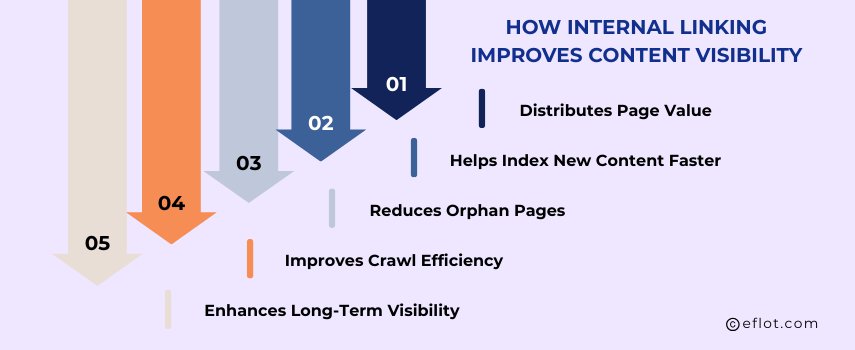
Internal linking helps content get noticed by users and search engines. It spreads visibility across pages instead of focusing on just one. This is important for growing Content Marketing Services.
-
Distributes Page Value: High-performing pages pass value to other pages through internal links. Digital Marketing Agencies use this to boost weaker content.
-
Helps Index New Content Faster: Search engines find new pages quicker when linked internally. This supports faster results for Content Marketing.
-
Reduces Orphan Pages: Orphan pages have no internal links pointing to them. Internal linking ensures all content contributes to Digital Marketing goals.
-
Improves Crawl Efficiency: A clear link structure helps search engines understand site structure. This supports better performance for Digital Marketing Services.
-
Enhances Long-Term Visibility: Content visibility improves over time with consistent internal linking. This supports sustainable Content Marketing growth.
Common Internal Linking Mistakes in Content Marketing
Many Content Marketing strategies fail due to poor internal linking. These mistakes reduce content impact and user experience. A professional Digital Marketing Agency avoids these issues through planning.
-
Over-Linking Content: Too many links confuse users and reduce clarity. Content Marketing Services focus on quality links, not quantity.
-
Using Generic Anchor Text: Words like “click here” add no value. Digital Marketing strategies require descriptive and meaningful anchor text.
-
Ignoring Deep Pages: Only linking to top pages limits growth. Internal linking should support deeper Content Marketing assets.
-
Linking Without Relevance: Irrelevant links harm user trust. Content Marketing should always prioritize contextual relevance.
-
Not Updating Old Links: Broken or outdated links hurt experience. Digital Marketing Agencies regularly audit internal links.
How to Build an Internal Linking Framework
A framework makes internal linking consistent and scalable. It helps Content Marketing teams maintain quality as content grows. Digital Marketing Services depend on frameworks for long-term success.
-
Audit Existing Content: Review current content and links. This helps identify gaps in Content Marketing structure.
-
Identify Pillar and Cluster Pages: Pillar pages cover broad topics, while clusters support them. This model is widely used by Digital Marketing Agencies.
-
Define Linking Rules: Set guidelines for anchor text and link placement. Content Marketing Services benefit from consistency.
-
Link New Content Strategically: Every new blog should link to existing relevant content. This strengthens Digital Marketing performance.
-
Maintain Documentation: Document linking rules for teams. This helps scale Content Marketing efforts smoothly.
Measuring the Impact of Internal Linking
Internal linking performance should be tracked like any Digital Marketing activity. Measurement shows what’s working and what needs improvement. Content Marketing Services depend on data-driven decisions.
-
Track User Engagement Metrics: Measure time on site, pages per session, and bounce rate. Internal linking directly impacts these Content Marketing metrics.
-
Monitor Content Performance: See which pages gain traffic after linking updates. Digital Marketing Agencies use this to optimize strategy.
-
Analyze Crawl and Indexing Data: Tools help track how search engines crawl content. This supports better Digital Marketing results.
-
Check Conversion Paths: See how users move from content to service pages. Content Marketing Services benefit from clearer funnels.
-
Review Link Click Behavior: Understanding which links users click helps refine Content Marketing strategy.
Internal Linking Best Practices for Long-Term Growth
Best practices ensure internal linking continues to support growth over time. They help Content Marketing remain effective and scalable. Digital Marketing Agencies rely on these principles.
-
Focus on Relevance First: Always link content that adds value. Content Marketing should serve users before algorithms.
-
Use Natural Anchor Text: Anchor text should flow naturally in content. This improves readability and trust.
-
Update Links Regularly: Refresh internal links during content updates. Digital Marketing Services benefit from ongoing optimization.
-
Link During Content Creation: Add internal links while writing new content. This keeps Content Marketing efficient.
-
Think Long-Term, Not Quick Wins: Internal linking works best over time. Sustainable Digital Marketing strategies prioritize consistency.
Internal Linking in Modern Content Marketing
Modern Content Marketing focuses on topic authority and user intent. Internal linking plays a key role in this evolution. Every future-ready Digital Marketing Agency prioritizes smart internal linking.
-
Supports Topic-Based Content: Content is organized around themes, not just keywords. Internal linking connects these themes clearly.
-
Works With AI and Automation: AI tools suggest linking opportunities, but strategy remains human-led. Content Marketing Services balance both.
-
Adapts to Changing Search Behavior: Search engines focus on content depth and relationships. Internal linking supports this shift.
-
Improves Content Experience: Users expect guided content journeys. Digital Marketing strategies use internal links to meet this expectation.
-
Strengthens Long-Term Authority: Well-linked content builds lasting trust and expertise. This is the core goal of modern Content Marketing.
Internal linking plays an important role in making content marketing effective and organized. It helps connect related content, improves user experience, and guides visitors to the right pages at the right time. By using internal links correctly, businesses and Digital Marketing Agencies can improve content visibility, keep users engaged, and support long-term growth. Overall, internal linking turns individual content pieces into a strong, connected content strategy.
Digital Marketing services in Other Locations in India
Bangalore | Hyderabad | Chennai | Pune | Ahmedabad | Coimbatore | Mumbai | Kolkata | Patna | Amritsar | Indore | Kozhikode | Trivandrum | Jaipur | Nagpur | Gwalior | Dehradun | Noida | Vizag | Raipur | Agra | Gurgaon | Madurai | Udaipur | Thrissur |