

















What is a Content Strategy?
Learn what a content strategy is, why it matters, and how it helps you create targeted content that boosts traffic and engages your audience effectively.

When it comes to online marketing, many people ask, "What is a content strategy?" Some might wonder if focusing on content strategy helps improve brand visibility. From my experience as a digital marketing specialist, I’ve seen how a well-planned content strategy can make a big difference in connecting with the right audience and boosting engagement. A content strategy is much more than creating random posts or articles. It’s about having a clear plan that aligns your content with your brand’s goals and your audience’s needs. Without it, you risk putting out content that doesn’t resonate or drive meaningful results. If you aim to attract steady and relevant traffic, understanding and implementing a strong content strategy is important. Ignoring it can lead to missed opportunities, wasted resources, and unfulfilled potential.
In simple terms, a content strategy ensures all your efforts have a purpose. It guides what you create, how you distribute it, and how you measure its success. It’s the difference between putting out random content and having a unified, well-thought-out plan that delivers real results. By focusing on creating valuable, consistent, and targeted content, a content strategy can take your brand from being just another name online to one that people recognize, trust, and engage with regularly.
Understanding What is Content Strategy?
Content strategy is the process of planning, creating, managing, and distributing content to achieve specific business goals. It’s about delivering the right message to the right audience through the right channels. A content strategy ensures your efforts are consistent, engaging, and aligned with your audience’s needs while supporting your organization’s objectives.
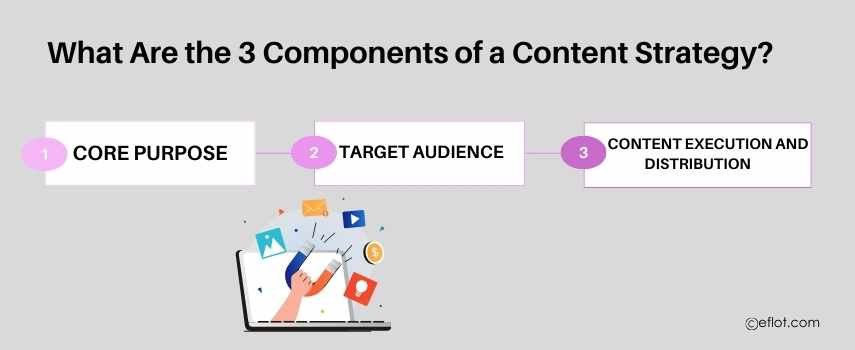
What Are the 3 Components of a Content Strategy?
-
Core Purpose
Define your content’s goal, Is it to educate, entertain, inspire, or convert? Align this purpose with your overall business objectives. -
Target Audience
Understand who you’re creating content for. Your audience’s preferences, problems, and search behaviors should shape your topics and tone. -
Content Execution and Distribution
This includes creating high-quality content that aligns with your strategy and distributing it effectively across chosen platforms. Ensure your content reaches the right people through SEO, social sharing, or paid promotions.
Why is Content Strategy Important?
-
Focus and Alignment
A well-crafted content strategy aligns your content with your brand’s goals and audience preferences. It ensures every piece of content serves a purpose, whether it's driving traffic, generating leads, or building brand awareness. -
Consistency
Without a strategy, your content might feel scattered. A strategy ensures consistency in tone, messaging, and frequency, which helps build trust and recognition. -
Efficiency
By identifying what works and focusing your efforts on those areas, a content strategy helps save time and resources while maximizing results. -
Improved Engagement
Content strategies are built around understanding your audience. By creating content that speaks directly to their needs and pain points, you increase engagement and loyalty.
How to Develop a Content Strategy
-
Set Goals
Clearly define what you want to achieve with your content whether it’s increasing website traffic, building an email list, or boosting product sales. -
Know Your Audience
Research your target audience’s demographics, interests, challenges, and preferences. Use tools like Google Analytics, surveys, or customer interviews to gather insights. -
Perform a Content Audit
Assess existing content to identify gaps, outdated material, or opportunities for repurposing. -
Choose Content Types and Channels
Decide on the types of content (blogs, videos, infographics) and platforms (social media, email, website) that resonate with your audience. -
Create a Content Calendar
Plan when and where your content will be published. A calendar ensures consistency and helps your team stay organized. -
Develop and Optimize Content
Produce high-quality, valuable content tailored to your audience’s needs. Optimize for SEO with relevant keywords, meta descriptions, and internal linking. -
Distribute and Promote
Share your content across multiple channels. Use social media, email campaigns, and collaborations to amplify its reach. -
Analyze and Refine
Regularly review performance metrics like engagement, traffic, and conversions. Use insights to improve your strategy over time.
The Difference Between a Content Strategy and a Content Plan Content Strategy
Here’s the difference between a content strategy and a content plan:
|
Aspect |
Content Strategy |
Content Plan |
|
Definition |
The overarching framework defines goals, audience, messaging, and content types. |
The actionable roadmap detailing topics, deadlines, and publishing schedules. |
|
Focus |
Answers the “why” and “what” behind content efforts. |
Focuses on the “how” and “when” of content creation. |
|
Purpose |
Aligns content with business objectives and audience needs. |
Organizes and executes the content strategy. |
|
Scope |
Broad and long-term guides overall direction. |
Specific and short-term; deals with day-to-day execution. |
|
Key Elements |
Goals, audience analysis, messaging, content types, distribution channels. |
Topics, publication dates, formats, and promotional steps. |
|
Responsibility |
Developed by strategists and decision-makers. |
Managed by content creators, marketers, and project managers. |
|
Output |
A clear vision for content’s role in achieving goals. |
A detailed calendar or checklist for content production. |
Case Studies
Case Study1:
MetroFit Gym, located in a busy commercial area, struggled with online visibility. They offered specialty fitness classes and state-of-the-art equipment but found few online leads.
Challenges
MetroFit faced tough competition from larger, well-established gyms with significant digital marketing budgets. Their website lacked optimized content, and their social media engagement was minimal. Additionally, their target audience was unaware of the unique benefits offered by MetroFit, like personalized fitness plans and flexible memberships.
Solution
The gym developed a content strategy focused on creating value-driven content. They introduced a blog section featuring practical workout guides, healthy meal plans, and testimonials from existing members. Each article targeted specific search queries such as “quick workouts for busy professionals” or “benefits of personal training.” To boost engagement, they launched short, relatable videos showcasing fitness tips and transformations on social media. Paid campaigns promoted their blog and services locally to drive leads.
Case Study2:
EcoHome Goods sells eco-friendly household products. While interest in green living was growing, their site lacked structure, and they had no consistent message.
Challenges
The brand lacked a unified content strategy, which resulted in scattered marketing efforts. Their website had minimal traffic, and existing content didn’t address the pain points or interests of environmentally conscious consumers. Competitors offering similar products dominated the search rankings, leaving EcoHome Goods overshadowed.
Solution
The company partnered with a digital marketing agency to create a robust content strategy. They focused on creating educational content, including blogs like “Top 5 Tips for Reducing Plastic Waste” and “Why Eco-Friendly Products Save You Money.” Engaging video content demonstrating product usage was shared on social platforms. A targeted SEO campaign improved keyword rankings, and collaboration with green-living influencers amplified their message.
What is a content strategy? It’s the framework that guides every element of your brand’s online communication. Instead of random content scattered across platforms, a well-planned strategy ensures each piece serves a purpose. By doing thorough research, targeting the right audience, and delivering consistent value, brands earn trust and loyalty in an ever-competitive digital realm. By steadily refining topics, styles, and promotional tactics, you stay fresh, relevant, and compelling. This commitment transforms your brand into a valued resource, not just another voice in a crowded online space. Ultimately, investing in a strong content strategy sets the stage for long-term impact. It’s how you stay visible, attract a loyal audience, and establish a reliable presence now and in the future.
Digital Marketing services in Other Locations in India
Bangalore | Hyderabad | Chennai | Pune | Ahmedabad | Coimbatore | Mumbai | Kolkata | Patna | Amritsar | Indore | Kozhikode | Trivandrum | Jaipur | Nagpur | Gwalior | Dehradun | Noida | Vizag | Raipur | Agra | Gurgaon | Madurai | Udaipur | Thrissur |