








Top Ways to Avoid Ad Fatigue
Learn top ways to avoid ad fatigue, maintain social media campaign performance, and keep audience engagement high with smart strategies and agency support.

People see ads everywhere on phones, apps, websites, and videos. Every day, the same ads appear again and again.
After some time, people get tired of seeing the same ad. They stop paying attention. They scroll past it. They do not click or respond.
When this keeps happening, ads become expensive. Costs go up, but interest goes down.
That is why ad fatigue is a serious problem for businesses right now.
Understanding How Ad Fatigue Develops
Ad fatigue does not appear suddenly. It grows step by step.
First, people notice the ad. Next, they remember it. After that, interest reduces. Later, irritation starts.
This happens when:
-
The same image repeats
-
The same headline shows again
-
The same offer follows users everywhere
This pattern is known as Ad Fatigue.
If action is delayed, results reduce without notice.
Key Signals That Indicate Ad Fatigue
1. Performance Indicators of Ad Fatigue
Campaign reports often show early warning signs. These signals appear before results drop sharply.
When reviewed regularly, performance data clearly reflects audience behavior.
The following indicators commonly point to Ad Fatigue.
2. Declining Click Engagement
A steady drop in click rate over time is an early signal. It shows that users are seeing the ad but choosing not to interact.
This usually means the message or creative no longer attracts attention.
3. Reduced Social Interaction
Lower reactions, shares, or comments indicate fading interest. Even if impressions remain stable, engagement may slow.
This reflects growing familiarity and reduced curiosity among viewers.
4. Ad Avoidance Behavior
When social media ads are skipped, hidden, or ignored, visibility loses value. Users may not consciously dislike the ad, but they no longer notice it.
This behavior often appears after repeated exposure.
5. Gradual Increase in Cost Metrics
A slow rise in cost per click or cost per result is a key data signal. Platforms require more spend to generate the same action.
This happens when relevance weakens due to repetition.
Top 5 Ways to Avoid Ad Fatigue
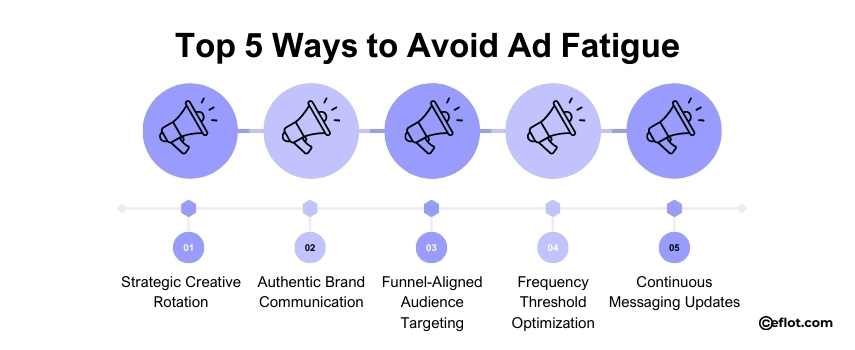
1. Strategic Creative Rotation
Running the same ad for a long time reduces attention.
Even strong ads lose impact when people see them repeatedly.
Strategic creative rotation means planning changes before performance drops.
This includes rotating images, headlines, formats, and layouts on a fixed schedule.
Small updates work well:
-
New visuals with the same message
-
New headline with the same design
-
New format using the same offer
Rotation keeps ads visible without confusing the audience. It also helps identify which elements work best over time.
Planned changes protect social media campaigns from fatigue and keep engagement steady.
2. Authentic Brand Communication
People respond better to brands that sound natural. Over-promotional language feels distant and easy to ignore.
Authentic communication focuses on clarity and honesty. It speaks in everyday language and addresses real problems.
Instead of selling aggressively:
-
Explain the value clearly
-
Acknowledge common doubts
-
Speak with a calm and respectful tone
When ads sound human, users feel more comfortable engaging. This builds trust and keeps attention longer.
Natural communication makes ads easier to remember and less repetitive.
3. Funnel-Aligned Audience Targeting
Not all users are ready to act at the same time. Each stage of the funnel needs a different message.
New users need understanding.
Returning users need confidence.
Warm leads need a reminder.
Aligning ads with funnel stages helps avoid showing the same message repeatedly.
A structured approach:
-
Awareness ads for new audiences
-
Proof-based ads for visitors
-
Action-focused ads for leads
When messages match intent, ads feel relevant. This reduces waste and improves response quality.
4. Frequency Threshold Optimization
Ad visibility is important, but too much exposure creates resistance.
When users see the same ad many times:
-
Interest drops
-
Clicks slow
-
The message loses meaning
Frequency threshold optimization controls how often ads appear to the same user.
By setting limits and monitoring exposure:
-
Ads remain noticeable
-
Irritation is reduced
-
Budget is used more effectively
Balanced frequency keeps ads present without overwhelming the audience.
5. Continuous Messaging Updates
Ad messaging should evolve with time. User behavior, market conditions, and expectations change.
Continuous updates mean improving messages regularly, not all at once.
This includes:
-
Adjusting opening lines
-
Updating calls to action
-
Refining tone and wording
Even small text changes can restart engagement. They help ads feel current and relevant.
Consistent message improvement supports long-term campaign stability and attention.
How a Social Media Marketing Agency Prevents Ad Fatigue in Campaigns
A social media marketing agency keeps your ads effective by preventing audience boredom.
-
Creative Refresh: Agencies rotate images, headlines, and formats to keep ads feeling new.
-
Targeted Messaging: They show different ads to new users, returning visitors, and leads, making content relevant to each group.
-
Frequency Control: Agencies limit how often users see an ad, avoiding irritation and wasted budget.
-
Continuous Updates: Copy, tone, and calls-to-action are refined regularly to maintain interest.
-
Performance Monitoring: Early signals like declining clicks or rising costs are spotted quickly, and adjustments are made immediately.
With strategy, creativity, and data, agencies help campaigns stay engaging and results-driven.
Ad fatigue can quietly reduce ad performance if ignored. Regular creative updates, targeted messaging, and careful monitoring keep campaigns effective. Working strategically ensures your ads stay engaging, relevant, and results-driven over time.
Digital Marketing services in Other Locations in India
Bangalore | Hyderabad | Chennai | Pune | Ahmedabad | Coimbatore | Mumbai | Kolkata | Patna | Amritsar | Indore | Kozhikode | Trivandrum | Jaipur | Nagpur | Gwalior | Dehradun | Noida | Vizag | Raipur | Agra | Gurgaon | Madurai | Udaipur | Thrissur |