






New to PPC? Start With This Simple Strategy
New to PPC? Learn a simple, step-by-step strategy to launch ads, choose keywords, control budget, and get better results without wasting money quickly and safely.
When I talk to business owners, one thing I hear again and again is, “I’m doing everything online, but I’m not getting enough leads.”
That’s exactly where PPC changes the game. Instead of waiting months for results, Pay-per-click services can start bringing the right people to your website almost instantly.
As a digital marketing expert, PPC is not about spending more money; it’s about spending it smartly. Here, I’ll show you how to start PPC the smart way and turn clicks into real business results.
What is PPC and Why It Matters for Businesses
PPC (Pay-Per-Click) is an online advertising model where businesses pay only when someone clicks on their ad. This means you are paying for actual interest, not just visibility.
For example, if someone searches for a service related to your business and clicks your ad, you pay a small amount. This makes PPC very cost-effective when done correctly.
Popular platforms include:
-
Google Ads
-
Meta Ads
-
Microsoft Advertising
Why PPC is Important for Business Growth
PPC plays a major role in modern Digital Marketing because it solves one big problem at a time.
Let’s understand its benefits clearly:
-
Immediate Results: Your ads go live instantly and start bringing traffic
-
Right Audience: You can target people based on their search, interest, or behavior
-
Full Control: You control your budget, audience, and timing
-
Easy Measurement: You can track everything. PPC has an average 7.5% conversion rate and 6.66% CTR, showing strong performance.
This is why many businesses prefer working with a Digital Marketing Agency to manage their PPC campaigns effectively.
Common Mistakes Beginners Make in PPC
Before learning what to do, it’s important to understand what NOT to do.
Many beginners make these mistakes:
-
Targeting Wrong Keywords: Choosing general keywords like “marketing” instead of specific ones like “digital marketing services near me”
-
No Clear Goal: Running ads without knowing whether they want leads, traffic, or sales
-
Ignoring Landing Page: Sending users to a homepage instead of a focused page
-
No Tracking Setup: Not using tools to measure performance
-
No Testing Strategy: Running one ad and expecting perfect results
These mistakes can waste a lot of money. Even businesses that invest in Digital Marketing services sometimes fail because they ignore these basics.
A Simple PPC Strategy for Beginners (Step-by-Step)
Step 1: Define Clear Business Goals
Every successful PPC campaign starts with a clear goal.
You need to decide:
-
Do you want more phone calls?
-
Do you want website form leads?
-
Do you want direct sales?
When your goal is clear, your strategy becomes simple.
For example:
-
Lead generation → Focus on form submissions
-
Sales → Focus on product pages
Without clear goals, even the best Pay-per-click services won’t give proper results because you won’t know what success looks like.
Step 2: Identify Your Target Audience
Targeting the right audience is the most important part of PPC.
Instead of showing ads to everyone, you should focus on people who are more likely to become your customers.
You should define:
-
Location: Where your customers are
-
Age group: Who needs your product
-
Interests: What they are searching or engaging with
For example, a local service business should target nearby users only. A professional Digital Marketing Agency helps businesses refine their audience for better results.
Step 3: Keyword Research (Focus on Intent)
Keywords are the words people type into search engines.
But not all keywords are equal. Some show buying intent, while others are just for information.
Types of keywords:
-
High Intent: “hire digital marketing agency”
-
Medium Intent: “best digital marketing services”
-
Low Intent: “what is digital marketing”
Use tools like:
-
Google Keyword Planner
-
SEMrush
Focus more on high-intent keywords because they bring users ready to take action. This improves the performance of your Pay-per-click services.
Step 4: Create High-Converting Ads
Your ad is what people see first. It decides whether they click or ignore.
A strong ad should:
-
Clearly explain your offer
-
Highlight benefits
-
Include a strong CTA
Example:
-
“Get Expert Digital Marketing Services – Contact Us Today”
Keep your message simple and clear. Good ads improve your click rate and reduce cost, making your Digital Marketing efforts more effective.
Step 5: Optimize Your Landing Page
Getting clicks is only the first step. Converting visitors into customers is the real goal.
A good landing page should:
-
Match your ad message
-
Be simple and easy to understand
-
Have a clear call-to-action
Important elements:
-
Headline
-
Benefits
-
Testimonials
-
Contact form
If your landing page is weak, even the best Pay-per-click services will fail.
Step 6: Set a Smart Budget and Bidding Strategy
Budget management is very important in PPC.
Start with:
-
A small daily budget
-
Focus on cost-per-click (CPC)
-
Test different campaigns
Avoid spending too much in the beginning. Increase your budget only when you see good results. This approach ensures your Digital Marketing services are cost-effective.
Step 7: Track and Measure Performance
Tracking helps you understand what is working and what is not.
Use tools like:
-
Google Analytics
-
Google Tag Manager
Track important metrics:
-
Clicks
-
Conversions
-
Cost per conversion
Without tracking, you are just guessing. Data helps you improve your Pay-per-click services performance.
Step 8: Optimize and Scale Campaigns
PPC is not a one-time activity. It requires regular improvement.
You should:
-
Test different ads
-
Remove low-performing keywords
-
Improve landing pages
-
Increase budget for winning campaigns
This is where expert Digital Marketing services play a big role in scaling campaigns successfully.
Best PPC Campaign Structure for Businesses
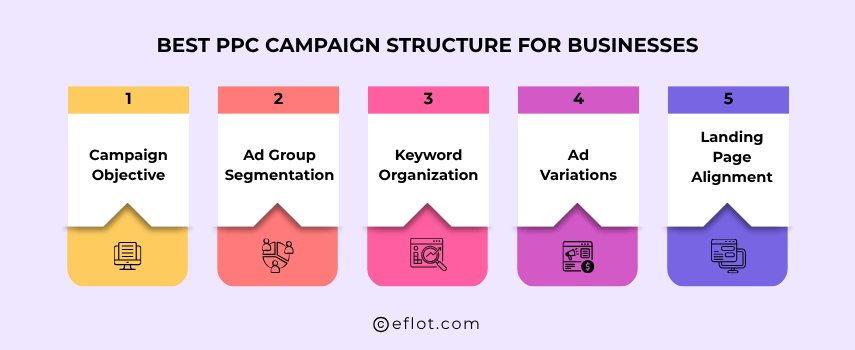
A good structure improves performance and reduces cost, making your Pay-per-click services more efficient.
-
Campaign Objective: Set a clear goal like leads, sales, or website traffic, before creating campaigns. This helps in aligning your strategy with business outcomes and measuring success properly.
-
Ad Group Segmentation: Divide campaigns into smaller ad groups based on specific keywords or services. This improves targeting accuracy and ensures your ads are more relevant to user searches.
-
Keyword Organization: Use closely related keywords in each ad group for better performance. Proper keyword grouping increases Quality Score and reduces cost per click.
-
Ad Variations: Create multiple versions of ads with different headlines and descriptions. Testing variations helps identify which ad performs best and improves results over time.
-
Landing Page Alignment: Ensure each ad directs users to a relevant landing page with matching content. This increases conversion rates and enhances the effectiveness of your Pay-per-click services.
PPC Tips for Small Businesses and Startups
Small businesses often have limited budgets, so using PPC wisely is very important. A focused and simple strategy can help generate strong results without overspending. With the right approach, even startups can compete using Digital Marketing.
-
Focus on Local Targeting: Target users in your specific location to reduce competition and increase relevance. This helps attract potential customers who are more likely to convert.
-
Use Long-Tail Keywords: Choose specific keyword phrases with lower competition and higher intent. These keywords usually bring better quality traffic and higher conversion rates.
-
Start with a Small Budget: Begin with a limited budget and test campaign performance before scaling. This approach minimizes risk and helps you learn what works best.
-
Run Ads at Peak Times: Schedule ads during hours when your target audience is most active. This improves visibility and ensures better use of your advertising budget.
-
Track and Optimize Regularly: Monitor campaign performance and make necessary improvements consistently. Regular optimization helps improve ROI and overall campaign success.
PPC vs SEO: What Should Businesses Choose?
Both PPC and SEO are important parts of Digital Marketing, but they serve different purposes.
|
Factor |
PPC (Pay-Per-Click) |
SEO (Search Engine Optimization) |
|
Definition |
A paid advertising method where you pay for each click on your ad. |
An organic strategy to rank your website naturally on search engines. |
|
Speed of Results |
Gives instant results and traffic as soon as ads go live. |
Takes time (weeks or months) to show results. |
|
Cost |
You pay for every click, so it requires a continuous budget. |
No cost per click, but requires time and effort investment. |
|
Traffic Type |
Paid traffic from ads. |
Organic (free) traffic from search engines. |
|
Sustainability |
Stops when you stop spending money on ads. |
Long-lasting results even after optimization. |
|
Targeting |
Highly targeted (location, keywords, interests, behavior). |
Limited targeting, mostly based on keywords and content. |
|
Control |
Full control over budget, audience, and ad timing. |
Less control, depends on search engine algorithms. |
|
Conversion Rate |
Usually higher due to high-intent targeting. |
Lower initially but improves over time with trust. |
|
Best For |
Quick leads, promotions, and immediate visibility. |
Long-term brand growth and consistent traffic. |
|
Strategy Recommendation |
Ideal for short-term goals and fast results. |
Best for long-term growth and credibility. |
When Should a Business Invest in PPC?
PPC is important for businesses that want fast results and targeted reach. It helps generate leads quickly and supports business growth during important phases. Knowing when to invest in Pay-per-click services can make a big difference.
-
Launching a New Business: PPC helps new businesses gain visibility and attract customers quickly. It allows you to compete with established brands from the beginning.
-
Entering a Competitive Market: PPC helps you appear in top search results even in highly competitive industries. This increases your chances of getting noticed by potential customers.
-
Promoting Seasonal Offers: PPC is perfect for limited-time promotions and special campaigns. It ensures your offers reach the right audience at the right time.
-
Generating Quick Leads: If your business needs immediate inquiries or sales, PPC is the best option. It delivers faster results compared to organic methods.
-
Testing New Products or Services: PPC allows you to test market response before making large investments. This helps in understanding customer demand and refining your strategy.
PPC is a simple and effective way for businesses to get quick visibility, leads, and sales when used properly. Instead of spending money without a plan, it’s important to set clear goals, target the right people, choose the right keywords, and keep improving your ads. Even beginners can get good results by following a basic and clear strategy. If you want faster results without wasting budget, working with an experienced Pay-per-click agency can help you plan, execute, and scale campaigns effectively. The right strategy can turn every click into real business growth.
Digital Marketing services in Other Locations in India
Bangalore | Hyderabad | Chennai | Pune | Ahmedabad | Coimbatore | Mumbai | Kolkata | Patna | Amritsar | Indore | Kozhikode | Trivandrum | Jaipur | Nagpur | Gwalior | Dehradun | Noida | Vizag | Raipur | Agra | Gurgaon | Madurai | Udaipur | Thrissur |