




















Does Bounce Rate Directly Affect Google Rankings?
Bounce rate does not directly affect Google rankings, but high bounce rates can signal poor user experience and hurt SEO performance over time for business websites.
Bounce rate often makes website owners nervous because many think it directly affects Google rankings. This confusion has made bounce rate one of the most misunderstood terms in SEO and Digital Marketing.
Bounce rate actually shows how visitors behave on a website, not how Google ranks it. It helps identify user experience or content issues, so businesses can focus on real SEO improvements instead of worrying about one metric.
What Is Bounce Rate?
Bounce rate shows the percentage of users who leave a website after viewing one page. It is commonly tracked in SEO tools and analytics platforms. Bounce rate helps Digital Marketing teams understand visitor behavior.
-
Single-Page Visit Meaning: A bounce happens when users leave without interaction. It does not mean dissatisfaction always. Some queries need only one page.
-
Bounce Rate Calculation: Bounce rate is calculated based on sessions. One-page sessions count as bounces. SEO tools display it as a percentage.
-
Bounce Rate vs Exit Rate: Bounce rate is not exit rate. Exit rate applies to the last page. SEO analysis must separate both metrics.
-
Role in SEO Analysis: Bounce rate helps identify content mismatch. It supports SEO audits. Digital Marketing Agencies use it for insights.
How Google Measures User Behavior
Google uses multiple signals to understand user satisfaction. These signals go beyond basic metrics like bounce rate. SEO success depends on how well content meets search intent.
-
Search Intent Signals: Google checks whether users find answers. Intent satisfaction matters more. SEO focuses on relevance and clarity.
-
Engagement Indicators: Time spent, scrolling, and interaction matter. Bounce rate alone is incomplete. Digital Marketing Services look at full behavior.
-
Click Behavior Patterns: Google observes search result interactions. Users returning to search can signal dissatisfaction. This is indirect, not direct ranking.
-
Quality Over Metrics: Google prioritizes content usefulness. SEO Services focus on experience. Metrics support decisions, not control rankings.
Does Bounce Rate Directly Impact Google Rankings?
Bounce rate does not directly affect Google rankings. Google has confirmed it does not use Analytics bounce rate as a ranking factor. SEO performance depends on broader quality signals.
-
Google Does Not Use Bounce Rate for Rankings: Google does not check bounce rate from analytics tools. These tools are meant for website owners only. SEO rankings depend on other search-related signals.
-
Bounce Rate Is Only an Analytics Metric: Bounce rate is shown inside Google Analytics. It helps understand how visitors behave on a site. It is not part of Google’s ranking system.
-
User Intent Is More Important Than Bounce Rate: Sometimes users leave after getting the right answer. This means their purpose is completed successfully. SEO Services focus more on intent than page views.
-
High Bounce Rate Is Not Always Bad: Some pages naturally have high bounce rates. Blog posts, FAQ pages, and contact pages are examples. Digital Marketing Agencies judge pages based on purpose.
-
Bounce Rate Works as an Indirect Indicator: A high bounce rate may show content or design problems. Poor experience can affect SEO over time. Digital Marketing Services use it only for analysis.
-
Content Quality Matters More for Rankings: Google prefers helpful and clear content. Pages that solve problems rank better. SEO Services focus on improving content value.
-
Engagement Is Bigger Than One Metric: Google looks at overall user satisfaction. Time spent, relevance, and usefulness matter more. Digital Marketing focuses on full experience.
-
SEO Depends on Many Factors Together: No single metric controls SEO rankings. SEO works through content, experience, and trust. Digital Marketing Agencies optimize everything together.
Bounce Rate as an Indirect SEO Signal
Bounce rate acts as an indirect signal of content relevance. It helps marketers understand problems but does not control rankings. Smart Digital Marketing uses it as a diagnostic tool.
-
Content Relevance Indicator: High bounce may show mismatched intent. Content may not answer queries. SEO improvements fix relevance gaps.
-
UX Quality Signal: Poor design increases bounce. Slow loading frustrates users. Digital Marketing Services improve usability.
-
Audience Targeting Clue: Wrong traffic causes high bounce. Keyword mismatch is common. SEO Services refine targeting.
-
Optimization Insight Tool: Bounce rate guides content updates. It supports SEO audits. Agencies use it wisely.
Bounce Rate vs Dwell Time vs Engagement
Bounce rate alone cannot explain user satisfaction. Dwell time and engagement offer deeper insights. SEO performance improves when all metrics align.
-
Bounce Rate Meaning: Bounce rate shows single-page visits. It lacks depth. SEO requires context.
-
Dwell Time Importance: Dwell time shows how long users stay. Longer time suggests value. SEO benefits indirectly.
-
Engagement Metrics: Clicks, scrolls, and interactions matter. GA4 focuses on engagement. Digital Marketing Services follow this shift.
-
SEO Interpretation Balance: No single metric defines success. SEO Services analyze combined signals. This improves strategy accuracy.
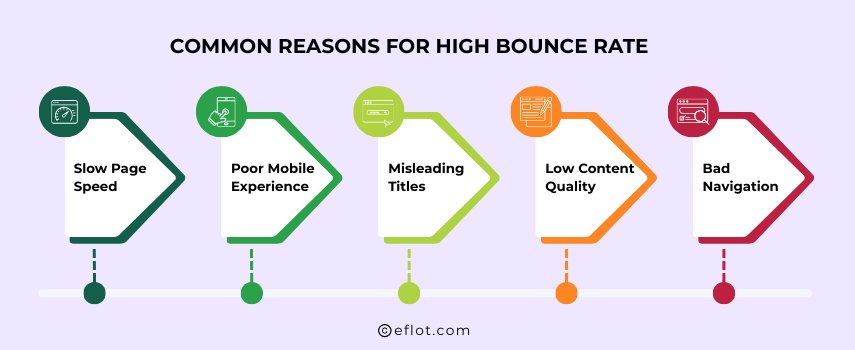
Common Reasons for High Bounce Rate
High bounce rate often comes from technical or content issues. It does not always mean failure. Digital Marketing Agencies diagnose root causes carefully.
-
Slow Page Speed: Slow pages frustrate users quickly. Visitors leave without reading. SEO Services prioritize speed optimization.
-
Poor Mobile Experience: Mobile traffic dominates searches. Non-responsive sites increase bounce. SEO must be mobile-first.
-
Misleading Titles: Clickbait titles disappoint users. Content mismatch increases bounce. Digital Marketing focuses on honest messaging.
-
Low Content Quality: Thin content fails expectations. Users exit quickly. SEO Services improve depth and clarity.
-
Bad Navigation: Confusing layouts confuse users. They cannot find next steps. UX optimization reduces bounce.
How High Bounce Rate Can Hurt SEO Performance
Bounce rate does not directly hurt rankings, but its causes can. Poor experience impacts SEO growth over time. Digital Marketing Services address root issues.
-
Reduced Engagement Signals: When visitors leave quickly, it shows low interaction on your site. Google values engagement more than just clicks for SEO performance. The average bounce rate is around 37%, meaning many users don’t engage further.
-
Lower Conversion Opportunities: High bounce reduces lead flow. SEO traffic becomes less valuable. Conversion optimization matters.
-
Brand Trust Loss: Users leaving quickly reduces trust. SEO success needs credibility. Digital Marketing Agencies build trust signals.
-
Long-Term Traffic Decline: Poor experience reduces return visits. Organic growth slows. SEO Services improve retention.
How to Reduce Bounce Rate for Better SEO
Reducing bounce rate improves user experience and SEO outcomes. The goal is relevance, not forcing interaction. Digital Marketing Services focus on helpful improvements.
-
Improve Content Relevance: Match content with search intent. Answer questions clearly. SEO benefits naturally.
-
Enhance Page Speed: Fast loading keeps users engaged. Speed affects experience. SEO Services optimize performance.
-
Better Internal Linking: Guide users to related content. This increases engagement. Digital Marketing Agencies structure pages well.
-
Clear Call-to-Actions: Strong CTAs guide next steps. Users stay longer. Conversion-focused SEO works better.
-
Mobile Optimization: Mobile-friendly design is essential. Poor mobile UX increases bounce. SEO must prioritize mobile users.
Bounce Rate in Google Analytics 4 (GA4)
GA4 measures bounce rate differently than older versions. It focuses more on engagement. Digital Marketing Agencies adapt their SEO analysis accordingly.
-
GA4 Bounce Rate Definition: Bounce rate is inverse of engagement rate. It reflects non-engaged sessions. SEO interpretation has changed.
-
Engagement-Based Tracking: GA4 tracks scrolls and time. This improves accuracy. Digital Marketing Services rely on engagement.
-
Better User Insights: GA4 shows deeper behavior patterns. SEO audits become smarter. Data quality improves.
-
Correct Interpretation Needed: Old benchmarks no longer apply. SEO teams adjust strategies. Agencies educate clients.
When a High Bounce Rate Is Not a Problem
High bounce rate is not always bad. Some pages are designed for quick answers. SEO success depends on intent fulfillment.
-
Single-Answer Pages: Users get answers fast. They leave satisfied. SEO still performs well.
-
Blog Posts and Guides: Informational content may not need clicks. Bounce rate remains high. Digital Marketing understands this.
-
Contact or Location Pages: Users get details and leave. This is success. SEO goals are met.
-
Landing Pages: Clear CTA may lead users off-site. Bounce rate rises. Conversions still happen.
Role of a Digital Marketing Agency in Bounce Rate Optimization
A Digital Marketing Agency analyzes bounce rate correctly. The focus is on experience and SEO growth. Agencies balance metrics with business goals.
-
SEO Audits: Agencies analyze bounce contextually. They identify real issues. SEO Services fix root problems.
-
UX Improvements: Design and navigation upgrades reduce friction. User flow improves. SEO performance benefits.
-
Content Optimization: Agencies refine content quality. Intent alignment improves. Digital Marketing Services increase engagement.
-
Performance Monitoring: Continuous tracking ensures improvement. SEO strategies evolve. Agencies guide long-term growth.
Bounce rate does not directly affect Google rankings, but it gives useful insight into how users experience a website. A high bounce rate often points to issues like poor content relevance, slow loading pages, or weak user experience, which can indirectly impact SEO performance over time. Instead of focusing only on bounce rate, businesses should improve content quality, page speed, and usability, as these user-focused improvements support stronger SEO results and long-term Digital Marketing success.
Digital Marketing services in Other Locations in India
Bangalore | Hyderabad | Chennai | Pune | Ahmedabad | Coimbatore | Mumbai | Kolkata | Patna | Amritsar | Indore | Kozhikode | Trivandrum | Jaipur | Nagpur | Gwalior | Dehradun | Noida | Vizag | Raipur | Agra | Gurgaon | Madurai | Udaipur | Thrissur |