























Simplify SEO with Smart Meta Keywords
Learn how to enhance SEO by effectively using smart meta keywords to improve website visibility and search engine performance.

As a digital marketing specialist, I've had my honest share of successes and challenges in the world of SEO. When I first started, the concept of Meta keywords seemed like a simple trick to boost rankings instantly. Back then, everyone was taken by them. Just load your meta tag with keywords, and you’ll see your site rise on search engines. It felt like a hack but as time went on, things changed dramatically. Google and other major search engines began prioritizing quality content and user experience over keyword tags, which left many questioning whether meta keywords still matter.
Here’s the thing, Meta keywords might not be the powerhouse they once were, but they aren’t entirely useless either. In SEO, they play a quieter but still significant role. Meta tags are like a guide they help organize your content, support internal SEO practices, and can even be useful for platforms or search engines beyond Google. While it’s true they don’t directly influence rankings for the big players anymore, they can still enhance your overall strategy when used correctly. If you’ve been wondering how to use meta tags in a way that adds value to your site, keep reading. Here, I will share with you why they still matter, how to use them effectively, and the pitfalls you need to avoid. With a smart approach, you can simplify your SEO strategy and make meta keywords work for you.
What Are Meta Keywords?
Meta keywords are a type of HTML tag used to define the key topics or themes of a webpage. Essentially, they’re a way to tell search engines what your content is about by listing specific words or phrases relevant to the page. For example, if you have a blog about "SEO tips," your meta keyword might include terms like “SEO strategies,” “meta keyword,” and “on-page optimization.”
In the early days of search engines, meta keywords were a critical ranking factor. Website owners would include them in thetag of their webpage’s HTML, and search engines would use them to determine a site’s relevance to a search query. However, as SEO changed, major search engines like Google stopped depending on meta keywords as a ranking signal due to keyword stuffing.
Why Meta Keywords Still Matter
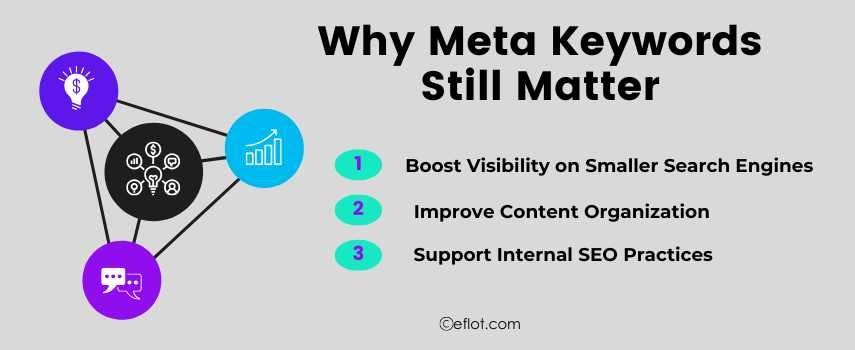
You might wonder, “If Google doesn’t use meta keywords, why bother?” That’s a valid question and one I often hear as a digital marketer. While it’s true that Google no longer factors meta keywords into its ranking algorithm, dismissing them entirely would be a missed opportunity. Meta keywords still offer value in several important ways, especially when approached with the right mindset.
1. Boost Visibility on Smaller Search Engines
Although Google dominates the search engine landscape, there are many smaller search engines and directories still in use today. Platforms like DuckDuckGo, Yandex, and some industry-specific search tools often depend on meta tags to categorize and rank content. Including meta keywords strategically can help you gain visibility where others might not.
2. Improve Content Organization
Meta keywords force you to think critically about the focus of your content. By deciding on a set of keywords for each page, you’re creating a blueprint for your messaging. This process ensures that your content stays on-topic and aligns with what users are searching for. Even if search engines don’t prioritize them, meta keywords can be a great way to maintain clarity and direction.
3. Support Internal SEO Practices
Think of meta tags as an internal checklist. They help ensure that your target keywords are consistently reflected in the title tags, headers, and body content of your webpage. This consistency improves overall on-page SEO and helps you maintain focus when creating new content or optimizing existing pages.
How to Use Meta Keywords the Smart Way
1. Start with Thorough Keyword Research
Everything begins with understanding your audience’s search behavior. Use tools like Google Keyword Planner, Ahrefs, or SEMrush to identify relevant keywords. Focus on keywords that align with your target audience’s search intent.
For example, if your blog is about "meta keywords," you might also include terms like "SEO basics," "meta tags," and "on-page SEO."
2. Keep It Relevant
A common mistake is stuffing irrelevant or excessive keywords into the meta tag. This not only confuses search engines but also dilutes your content’s focus. Stick to 5-10 highly relevant meta tags per page, depending on its content.
3. Place Meta Keywords Strategically
While meta tags go in the HTML code, they should also align with the content on your page. Ensure that your chosen meta tags naturally appear in the title tag, meta description, and throughout the body of your content.
4. Monitor and Update Regularly
SEO isn’t a one-and-done task. Monitor your site’s performance and adjust your meta tags as search trends evolve. Tools like Google Analytics and Search Console can provide insights into which keywords drive traffic.
How Do You Implement Meta Keywords?
Implementing meta keywords is a straightforward process, but it requires strategy and attention to detail to ensure they’re effective. Here’s a step-by-step guide to help you do it the right way:
1. Conduct Keyword Research
Before adding meta keywords, you need to identify the right ones. Use tools like Google Keyword Planner, Ahrefs, SEMrush, or Ubersuggest to find keywords relevant to your content. Focus on:
-
High-relevance keywords: Ensure they align with your web page’s topic.
-
Search intent: Choose keywords that match what your audience is searching for.
-
Long-tail keywords: Use specific phrases that have less competition.
2. Limit the Number of Keywords
Avoid keyword stuffing. Most experts recommend including no more than 5-10 meta keywords per page. Focus on quality over quantity to keep the list concise and targeted.
3. Add Keywords to Your HTML Code
Once you’ve selected your keywords, include them in the HTMLtag within the section of your webpage. Here’s an example of how it should look:
html
Place this snippet in the section of your HTML document, typically alongside the title tag and meta description.
4. Align Keywords with Page Content
Your meta keyword should reflect the content on your page. Use the same keywords naturally in your headings, subheadings, and body text. This alignment improves on-page SEO and ensures your content matches the expectations of search engines and users.
5. Review and Update Regularly
Search trends and user behaviors change over time. Monitor your website’s performance using tools like Google Analytics or Search Console, and update your meta tags as necessary to keep them relevant.
Does Google Use Meta Keywords?
No, Google does not use meta keywords as a ranking factor. This decision was made over a decade ago when Google officially announced that their search algorithms no longer consider meta keywords in determining a webpage's ranking. The primary reason for this change was the widespread misuse and abuse of meta keywords. Website owners often stuffed their meta tags with irrelevant or excessive keywords to manipulate rankings, leading to poor user experiences.
While Google ignores meta keywords, it’s worth noting that other search engines, such as Bing and Yandex, may still take them into account in certain cases. Additionally, meta keywords can still serve as an internal organizational tool to maintain focus and consistency in your content strategy.
So, while meta keywords don’t influence your Google rankings, using them wisely in niche contexts or for your internal SEO workflow can still add value to your overall strategy.
Should You Use Meta Keywords?
Meta keywords were once a cornerstone of SEO, but their importance has drastically declined over the years, especially since Google officially stopped using them as a ranking factor. However, they still have some niche uses, and whether you should use them depends on your specific needs. Let’s break it down:
When You Should Use Meta Keywords
-
For Smaller Search Engines or Directories
While Google ignores meta tags, some smaller or niche search engines, like Yandex or certain industry-specific directories, may still rely on them. If your target audience uses these platforms, implementing meta tags can provide an edge. -
To Stay Organized Internally
Meta tags can act as a guide for you or your team when creating or optimizing content. They help ensure you stay focused on your main topics and avoid straying off course. -
To Complement Other SEO Efforts
When used alongside optimized meta descriptions, title tags, and high-quality content, meta tags can be a minor but useful tool to support your broader SEO strategy.
When You Shouldn’t Use Meta Keywords
-
If You’re Targeting Google Primarily
Since Google doesn’t use meta tags in its ranking algorithms, they won’t directly improve your rankings on the world’s most popular search engine. -
If You’re Overstuffing Keywords
Using too many irrelevant keywords can harm your site’s credibility, even if they’re only in the meta tag. Keyword stuffing, even in meta tags, may lead to search engines penalizing your site.
Case Studies
Case Study1:
EcoNest, an e-commerce business selling eco-friendly household products, aimed to increase online visibility and drive traffic to its website. While EcoNest performed decently on major search engines like Google, they struggled to gain traction on smaller, niche search engines like DuckDuckGo and Ecosia, which catered to eco-conscious users. These platforms aligned with their target audience, but the company lacked a specific strategy to reach these users effectively.
Challenges:
-
High Competition on Mainstream Search Engines: Competing with larger brands for broad keywords like "eco-friendly products" was costly and challenging.
-
Low Traffic from Alternative Search Engines: The company had a minimal presence on smaller platforms that prioritized niche audiences.
-
Underutilization of Meta Keywords: Their site didn’t utilize meta tags, limiting their ability to rank well on platforms that still consider them.
Solutions:
To address these challenges, EcoNest began by conducting thorough keyword research. They identified long-tail keywords that their eco-conscious audience was actively searching for, such as “biodegradable kitchen products” and “zero-waste cleaning supplies.” By targeting these highly specific terms, they reduced competition and ensured their meta tags aligned with user intent.
Background:
TaskFlow, a SaaS company offering project management tools for remote teams, faced a lack of organic traffic to their blog and product pages. Despite having a feature-rich platform, their content wasn’t targeted or optimized to capture search traffic effectively. They wanted to create a structured content strategy to attract users searching for specific project management solutions.
Challenges:
-
Unfocused Content Strategy: Blog posts covered overly broad topics, leading to poor engagement and low traffic.
-
Minimal Organic Search Traffic: TaskFlow wasn’t ranking for relevant terms like “remote project management software” or “team collaboration tools.”
-
Inconsistent SEO Framework: Without a clear plan, their content lacked consistency and relevance for their audience’s needs.
Solutions:
To tackle their unfocused content, TaskFlow implemented a meta-keyword strategy to serve as an internal guide. They chose keywords like “remote collaboration tools,” “task tracking software,” and “online project management” that were specific to their audience’s needs and search intent. This provided a blueprint for their content team to follow.
By conducting thorough research, staying relevant, and avoiding outdated practices like keyword stuffing, you can use meta tags to simplify your approach to SEO without falling into common traps. Remember, SEO success comes from working smarter, not harder. Meta tags, though no longer a ranking factor for search giants like Google, can still help you structure your strategy and ensure your content serves your target audience effectively. So, don’t dismiss them use them thoughtfully to strengthen your overall SEO game and guide your content toward meaningful results.
Digital Marketing services in Other Locations in India
Bangalore | Hyderabad | Chennai | Pune | Ahmedabad | Coimbatore | Mumbai | Kolkata | Patna | Amritsar | Indore | Kozhikode | Trivandrum | Jaipur | Nagpur | Gwalior | Dehradun | Noida | Vizag | Raipur | Agra | Gurgaon | Madurai | Udaipur | Thrissur |