




















Why SEO is Needed for Ranking?
Understand why SEO is essential for improving search rankings, driving organic traffic, and increasing online visibility effectively.

Every day, millions of searches are conducted on search engines by people looking for information, products, and services. This immense volume of internet activity highlights just how crucial Search Engine Optimization (SEO) is for any business aiming to capture the attention of potential customers. Why SEO is needed? It strategically positions your website in search engine results, making it visible to those searching for what you offer. As a digital marketing specialist with extensive experience, I've observed how effective SEO strategies can elevate a business's online presence, attracting quality traffic that often converts into sales.
SEO is more than just driving traffic, it’s about attracting the right kind of visitors those who are interested and ready to engage or make a purchase. This targeted approach is what makes SEO an indispensable tool for businesses aiming to enhance their digital area. Without it, even well-designed websites might remain hidden in the crowded online space, missing opportunities to connect with potential customers. Understanding and implementing strong SEO strategies for any business looking to improve its visibility and succeed in the competitive online market.
What Is Search Engine Optimization (SEO)?
Search Engine Optimization, or SEO, is a process aimed at enhancing a website’s visibility in search engines like Google, Bing, and Yahoo. The main goal is to improve the website's ranking in search results when users search for specific keywords related to the website’s content. SEO involves optimizing various aspects of a website, including its content, technical setup, and link profile, to make it more attractive to search engines. The better optimized a site is, the higher it ranks, making it more likely that people will find it when searching for relevant topics.
How Does SEO Work?
SEO works by adjusting or optimizing various elements of a website to meet the criteria set by search engines for quality and relevance. Key components include:
-
Keyword Optimization: Identifying and using relevant keywords throughout a site’s content to match the search queries potential visitors might use.
-
Content Quality: Creating high-quality, useful, and informative content that meets the needs of those searching for related information.
-
Technical SEO: Ensuring the website is structured in a way that search engines can easily crawl and index the content. This includes optimizing site speed, mobile-friendliness, and URL structure.
-
Backlinks: Building a profile of quality backlinks from other reputable websites, which act as endorsements or votes of confidence in the eyes of search engines.
What Are the Main Elements of Search Engine Optimization?
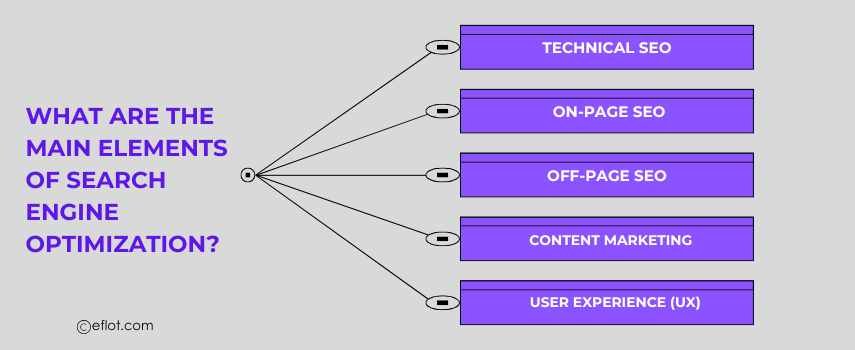
Search Engine Optimization (SEO) consists of multiple components that work together to improve the visibility and ranking of a website on search engines. Understanding these elements is crucial for effectively optimizing any site. Here are the main elements of SEO:
1. Technical SEO
Technical SEO refers to the process of optimizing the infrastructure of a website so that search engines can crawl and index it effectively. Key aspects include:
-
Site Speed: Faster sites provide a better user experience and are favored by search engines.
-
Mobile-Friendliness: With the increasing use of mobile devices, having a mobile-responsive website is essential.
-
Secure Socket Layer (SSL): Secure websites (https) are ranked higher than non-secure (http) sites.
-
XML Sitemaps: This helps search engines find and understand your site’s structure.
-
URL Structure: Clean and descriptive URLs are more effective both for users and search engines.
2. On-Page SEO
On-page SEO involves optimizing individual web pages to rank higher and earn more relevant traffic. This includes:
-
Content Quality: High-quality, original content optimized for your target audience and keywords.
-
Keywords: Using relevant keywords naturally throughout the text, especially in the title, headers, and early in the content.
-
Meta Tags: Title tags and meta descriptions should be descriptive, include relevant keywords, and encourage clicks.
-
Header Tags: Organizing content with subheadings (H1, H2, H3) helps readers and search engines understand the structure and relevance.
-
Alt Text for Images: Describing images using alt text can improve SEO as it helps search engines understand the content of the images.
3. Off-Page SEO
Off-page SEO refers to actions taken outside of your website to impact your rankings within search engine results pages. This includes:
-
Backlinks: Earning backlinks from reputable sites can significantly impact your domain authority and thus rankings.
-
Social Signals: Engagement metrics from social media can influence rankings indirectly by driving traffic.
-
Local SEO: For businesses with a physical location, local SEO is critical. This involves managing local listings and citations.
Content is at the heart of most SEO strategies. Effective content marketing involves:
-
Creating valuable content that answers questions, solves problems, or entertains.
-
Keyword-rich content that signals to search engines what the page is about.
-
Consistent content updates signal to search engines that your site is regularly updated with fresh content.
5. User Experience (UX)
SEO isn't just about catering to search engines, it's also about how users interact with your site:
-
User Engagement: High engagement rates (time on site, low bounce rates, etc.) can signal to search engines that your site is providing valuable content.
-
Site Architecture and Navigation: Easy navigation helps users and search engines find content within your website more effectively.
6 Reasons Why SEO is Needed for Ranking
-
Increased Visibility: SEO helps your site appear in relevant search results, which increases your visibility to potential customers who are actively searching for your products or services.
-
Cost-Effectiveness: Compared to paid advertising, SEO is a cost-effective strategy because it targets users who are actively looking for your offerings online, leading to more qualified leads.
-
Better User Experience: SEO involves optimizing the website to not only be more search engine friendly but also more user-friendly. Improved site speed, navigation, and content clarity enhance overall user experience.
-
Higher Credibility and Trust: Websites that appear higher in search results are often considered more credible and trustworthy by users. SEO can elevate your brand’s credibility by improving its rank.
-
Competitive Advantage: Ranking higher than your competitors in search results can give you a significant advantage, making it more likely that potential customers will click on your site first.
-
Sustainable Results: While SEO takes time to implement and see results, it offers long-term benefits. Once you achieve a high ranking, it's easier to maintain over time compared to continuously paying for advertising.
Case Studies
Case Study1:
HealthWave Supplements, a newly launched brand in the nutritional supplements market, struggled to gain visibility in a highly competitive industry dominated by well-established brands.
Challenge:
Despite offering superior products, HealthWave's online visibility was low, with its product pages buried under pages of search results, leading to poor sales performance.
Results:
-
Organic Traffic Increase: Within six months, organic traffic to the website increased by 80%.
-
Enhanced Rankings: Product pages began ranking on the first page for targeted keywords, some even reaching the top three results.
-
Sales Growth: The improved visibility and authority translated into a 60% increase in sales, with significant improvements in customer engagement and repeat purchases.
Case Study2:
Vintage Home Decor, an online retailer specializing in retro and vintage-style home accessories, faced challenges in reaching its target audience amidst a cluttered market space.
Challenge:
The brand’s unique products were not reaching potential customers due to poor visibility and ranking for key search terms related to vintage home decor.
Results:
-
Ranking Improvement: Saw a dramatic rise in search engine rankings, with multiple product pages appearing in the top ten search results.
-
Traffic Increase: The website experienced a 50% increase in user visits, largely driven by improved SEO.
-
Revenue Uplift: Direct correlation between SEO efforts and a 40% increase in revenue, bolstered by enhanced brand recognition.
Why is SEO needed? It's not just about being seen, it's about being recognized as the best in your field. Effective SEO doesn't just lead to better rankings, it builds a foundation of trust, credibility, and customer engagement that can transform your business. By investing in SEO, you're not only ensuring your digital presence is optimized but also setting up a sustainable strategy that can yield results well into the future. The question isn't why is SEO needed, but how quickly can you start maximizing its benefits.
Digital Marketing services in Other Locations in India
Bangalore | Hyderabad | Chennai | Pune | Ahmedabad | Coimbatore | Mumbai | Kolkata | Patna | Amritsar | Indore | Kozhikode | Trivandrum | Jaipur | Nagpur | Gwalior | Dehradun | Noida | Vizag | Raipur | Agra | Gurgaon | Madurai | Udaipur | Thrissur |