











Maximizing Your ROI with PPC Advertising
Discover how to improve your return on investment through effective pay-per-click advertising strategies and campaign management.

If you're looking to increase website traffic, generate leads, or boost conversions, Pay-Per-Click (PPC) advertising is one of the most direct and effective strategies available. While SEO builds long-term growth, PPC offers instant visibility and results when managed strategically.
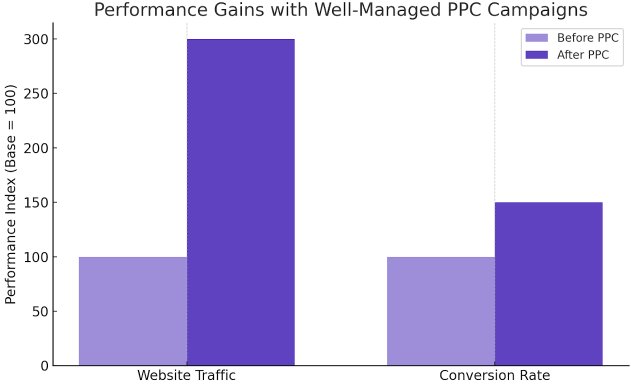
On average, businesses see a 200% increase in website traffic and a 50% higher conversion rate with well-managed PPC campaigns.
Amazon started as an online bookstore and soon grew into a huge marketplace selling almost everything. As more sellers joined, Amazon used digital ads like Google Ads and sponsored listings to stay ahead. They knew paid ads were important to get more visitors and increase sales for many products. Today, Amazon spends billions on these ads.
But with so many products, some ads didn’t work well. They wasted money on keywords that didn’t bring buyers or showed ads to the wrong people. Also, with many sellers competing, it became more important to have strong ads on Amazon and other sites.
To fix this, Amazon built a smart system that uses real sales data to pick the best keywords, set bids automatically, and show ads for the right products. This helped them appear first in search results for phrases like “buy laptop online” or “best sports shoes.” Because of this, more people bought from Amazon, ad costs went down, and their ads helped grow the business. This shows that even a big company needs careful planning and constant updates to get the best results from paid ads.
What Is PPC Advertising?
PPC (Pay-Per-Click) advertising is a way of promoting your business through paid ads on platforms like Google Ads and social media. You pay only when someone clicks on your ad, making it a cost-effective method to get quick visibility.
It involves choosing the right keyword, writing clear and attractive ads, and setting a budget to show your ads to the right people. You can manage PPC advertising yourself, use tools to help, or work with a marketing agency.
The main goal is to bring more visitors to your website, generate leads, or increase sales. When managed properly, PPC advertising can help your business grow by turning ad spend into real results.
How PPC Advertising Works
-
Ad Creation and Keyword Selection
Start by creating ads and selecting keywords that match what your business offers.
-
Ad Display Based on Searches
Your ads show up when people search using those specific keywords or related terms.
-
Pay-Per-Click Model
You only pay when someone clicks on your ad, making it a cost-effective way to attract visitors.
-
Audience Targeting Options
You can target your ads by location, device, time of day, and other factors to reach the right people.
-
Goal of PPC
The main goal is to drive interested users to your website, increasing the chance of leads or sales.
Core Elements of a Successful PPC Strategy
To get real results from your PPC campaigns, you need a strong plan that’s clear and flexible. Below are the essential components of a well-structured PPC strategy:
-
Clear campaign structure: Organize your campaigns and ad groups to maintain relevance and make performance tracking easier.
-
Effective keyword selection: Choose search terms that reflect what your target audience is actively looking for.
-
Smart targeting and bidding: Show your ads to the right users, at the right time, while staying within your budget.
-
Strong, action-driven ad copy: Write clear and persuasive ads that make users want to click.
-
Performance tracking and analysis: Use data to measure what’s working and spot areas for improvement.
-
Regular A/B testing: Test different versions of your ads (like headlines or calls to action) to increase clicks and conversions.
-
Budget planning aligned with business goals: Allocate spend based on performance and the specific outcomes you want to achieve.
Together, these elements create a framework for PPC campaigns that are cost-effective, goal-focused, and built for continuous growth.
PPC Advertising as a Business Investment
-
Investment Over Expense: View PPC advertising as a strategic investment with measurable financial returns, not merely a marketing cost.
-
Revenue Generation Potential: Properly executed PPC campaigns can drive significant revenue growth and customer acquisition.
-
Increasing Global Ad Spend: The consistent rise in global advertising budgets underscores PPC’s expanding role in competitive business environments.
-
Critical Success Factors: Precise keyword research and selection. Accurate audience segmentation and targeting. Dynamic bidding strategies aligned with campaign goals
-
Ongoing Campaign Optimization: Continuous data analysis and refinement are crucial to enhance campaign performance and maximize ROI.
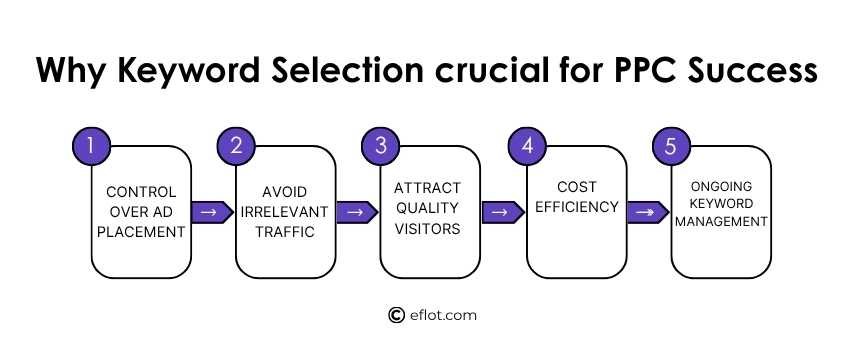
Why is Keyword Selection crucial for PPC Success
-
Control Over Ad Placement
The keywords you choose determine where and when your ads appear to potential customers.
-
Avoid Irrelevant Traffic
Picking the wrong keywords can cause your ads to show to people who are not interested, wasting your budget.
-
Attract Quality Visitors
Using the right keywords helps bring visitors who are more likely to take action, like making a purchase or filling out a form.
-
Cost Efficiency
Effective keyword choices help lower your cost-per-click by targeting only relevant searches.
-
Ongoing Keyword Management
Regularly reviewing and updating your keyword list ensures your campaign stays effective and competitive.
Common Mistakes in PPC Campaigns
Even effective PPC campaigns can do poorly if common problems are ignored. Here are some usual issues and simple ways to fix them.
-
Targeting Too Many People
Trying to reach a wide audience often results in irrelevant clicks and low conversion rates.
How to avoid it:
Define your target audience clearly. Use targeting options such as location, interests, devices, and demographics. Focus on users who are most likely to convert.
-
Using Irrelevant or Weak Keywords
Bidding on high-volume keywords without matching user intent can waste budget and reduce ROI.
How to avoid it:
Prioritize long-tail keywords that closely reflect what your customers are actually searching for. Regularly update your keyword list based on performance data.
-
Ignoring Negative Keywords
Without excluding certain terms, your ads might appear for irrelevant searches, leading to poor-quality traffic.
How to avoid it:
Use tools like Google’s Search Terms Report to identify non-converting queries and add them as negative keywords to refine your targeting.
-
Writing Weak Ad Copy
Unclear or generic ad messaging fails to grab attention or drive clicks.
How to avoid it:
Write direct, benefit-focused copy with a clear call-to-action. Focus on what makes your product or service valuable. Test different versions to find what works best.
-
Not Optimizing for Mobile
A landing page that doesn’t work well on smartphones can drive users away, even if your ad was effective.
How to avoid it:
Make sure your website is mobile-friendly, loads quickly, and provides a smooth user experience across all devices. Test your landing pages regularly.
-
Neglecting Campaign Optimization
Leaving a campaign running without adjustments often leads to poor performance over time.
How to avoid it:
Monitor your ads consistently. Analyze the data, adjust your bids, test new creatives, and pause what’s not working. Regular updates can significantly improve results.
PPC advertising helps your business get more visitors, leads, and sales quickly. Success comes from choosing the right keywords, writing clear ads, and targeting the right audience. Regularly reviewing your campaigns and making improvements is important for better results.
Avoid common issues like targeting too broad an audience, using irrelevant keywords, or having a website that works poorly on mobile devices. Think of PPC as an investment with measurable returns and use data to guide your decisions.
With careful planning and consistent effort, PPC can deliver strong results and support business growth.
Want more people to notice your business? Looking to get better results with your ads?
Email us at [email protected] , and we’ll help you run PPC campaigns that bring real results.
Digital Marketing services in Other Locations in India
Bangalore | Hyderabad | Chennai | Pune | Ahmedabad | Coimbatore | Mumbai | Kolkata | Patna | Amritsar | Indore | Kozhikode | Trivandrum | Jaipur | Nagpur | Gwalior | Dehradun | Noida | Vizag | Raipur | Agra | Gurgaon | Madurai | Udaipur | Thrissur |