









How to Use Inbound Marketing to Increase Leads?
Learn how to use inbound marketing strategies to attract, engage, and convert leads effectively for sustainable business growth.

Are you finding it hard to attract customers who actually want your product? Many businesses try advertising blindly, wasting money on ads that don’t work. The main challenge is attracting people who are genuinely interested and ready to make a purchase, without having to chase them.
Inbound marketing is the key here. It helps pull the right audience toward your business by providing useful content and clear information.
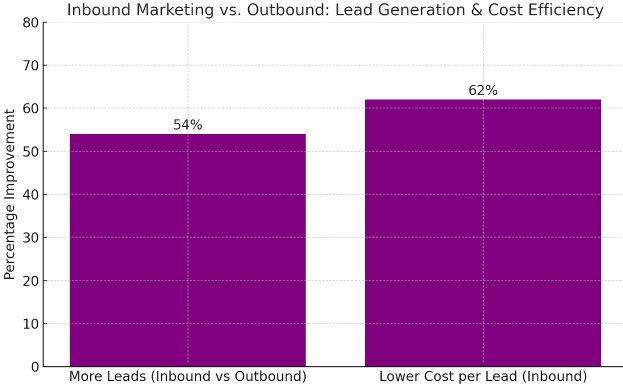
Inbound marketing generates 54% more leads than traditional outbound methods, and costs up to 62% less per lead.
HubSpot is a well-known company that provides marketing, sales, and customer service software. Their mission was to change how businesses attract and connect with customers by using inbound marketing, which focuses on offering helpful content instead of pushing ads.
HubSpot faced a big challenge: they needed to find a way to get more qualified leads in a crowded market. Traditional advertising methods were expensive and less effective because customers were starting to research products on their own before talking to sales teams.
To fix this, HubSpot created useful content like blog posts, ebooks, webinars, and free tools that answered customers’ questions. They also made their website easy to find through search engines. By offering valuable content in exchange for contact information, they grew their email list and kept in touch with potential customers through targeted emails. This approach helped HubSpot attract millions of visitors and generate many leads, making it a leader in inbound marketing software.
What Is Inbound Marketing?
Inbound marketing is a strategic approach that attracts potential customers by delivering valuable, relevant content and meaningful experiences aligned with their needs. Rather than interrupting audiences with unsolicited ads, it draws customers in by addressing their questions and providing solutions to their challenges.
This method includes creating well-researched blog posts, engaging videos, optimizing websites for search engines (SEO), and maintaining an active presence on social media platforms, all designed to build trust, establish authority, and foster lasting customer relationships. By focusing on value and relevance, it helps convert prospects into loyal clients while supporting sustainable business growth.
Types of Inbound Marketing
-
Content Marketing
Developing and distributing valuable, relevant, and consistent content such as articles, blogs, videos, and whitepapers to attract and engage a clearly defined audience.
-
Search Engine Optimization (SEO)
Optimizing website structure and content to improve visibility and ranking on search engine results pages, driving organic traffic from users searching for related topics.
-
Social Media Marketing
Use social media platforms to share informative content, engage with the audience, and build brand awareness and trust.
-
Email Marketing
Nurturing leads and maintaining customer relationships by delivering personalized, informative, and timely emails that encourage engagement and conversions.
-
Webinars and Online Events
Hosting live or recorded online presentations and workshops that provide educational value, foster interaction, and generate qualified leads.
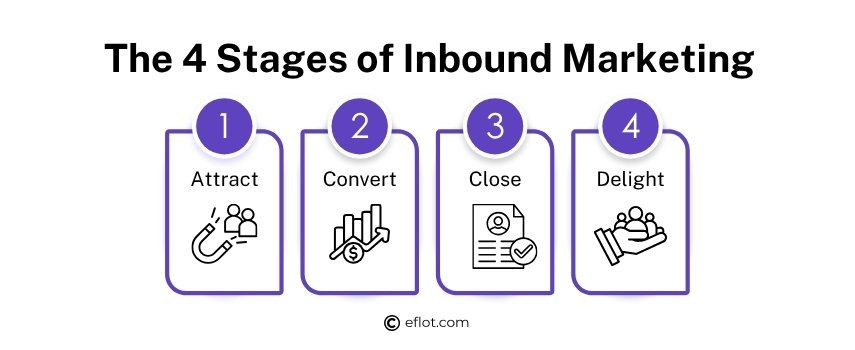
The 4 Stages of Inbound Marketing
-
Attract: Use SEO and content to bring visitors to your website or social media.
-
Convert: Turn visitors into leads by offering forms, newsletters, or free guides.
-
Close: Use email follow-ups and offers to turn leads into customers.
-
Delight: Keep customers happy with great service and useful info, so they stay loyal.
Inbound vs. Outbound Marketing
|
Inbound Marketing |
Outbound Marketing |
|
Attracts people by sharing helpful content |
Sends ads to lots of people at once |
|
Talks to people who are already interested |
Interrupts people who might not want it |
|
Uses blogs, social media, and emails |
Uses TV ads, cold calls, and flyers |
|
Usually costs less and grows naturally |
It can be expensive and feel pushy |
|
Builds trust and long-term relationships |
Can annoy people and feel less personal |
How to Start Using Inbound Marketing to Get More Leads
1. Understand Your Audience
Start by figuring out who your ideal customers are. What problems do they face? What do they want to learn? Use surveys or social media insights to gather this info.
2. Create Helpful Content
Write blog posts, make videos, or design infographics that answer common questions your audience has. Keep your content clear and easy to read.
3. Optimize for Search Engines
Use keywords related to your business and audience so your content shows up in Google searches. This helps attract people actively looking for your product or service.
4. Use Clear Calls to Action
Make sure every blog or page invites visitors to take the next step, like signing up for your newsletter or contacting you for a free consultation.
5. Follow Up with Leads
Set up automated emails that remind your leads about your services or offer helpful tips. This keeps your business top of mind.
Top 5 Inbound Marketing Strategies to Fuel Business Growth
1. Gather Feedback Through Surveys
Understanding your customers’ needs starts with asking the right questions. Use surveys to uncover their biggest challenges and preferences. This direct feedback helps improve your content and products to meet their specific demands, making your marketing more effective.
2. Boost SEO with Keywords
Optimize your content using targeted keywords, especially long-tail phrases. These keywords improve your search rankings and attract visitors who are closer to making a purchase. Strategic keyword use increases organic traffic and brings in highly qualified leads.
3. Use Storytelling
Stories create emotional connections that data alone can’t achieve. Incorporate storytelling into your content to engage readers, build trust, and improve brand recall. Sharing relatable experiences helps turn prospects into loyal customers.
4. Build Quality Backlinks
Backlinks from reputable sites boost your authority and improve SEO rankings. Promote your content to influencers and relevant websites to earn valuable backlinks. This amplifies your reach and drives more traffic to your site.
5. Create Email Campaigns
Convert visitors into leads with targeted email campaigns. Offer valuable content like reports or guides in exchange for contact details. Personalized emails nurture relationships and guide prospects smoothly through the sales funnel.
Inbound marketing helps attract customers by sharing helpful content and building trust. It brings better leads without pushing ads. By understanding your audience, creating useful content, and staying connected with emails, you can grow your business steadily. Using strategies like SEO, storytelling, and backlinks will make your marketing more effective and bring in more leads.
For more information, Email [email protected].
Digital Marketing services in Other Locations in India
Bangalore | Hyderabad | Chennai | Pune | Ahmedabad | Coimbatore | Mumbai | Kolkata | Patna | Amritsar | Indore | Kozhikode | Trivandrum | Jaipur | Nagpur | Gwalior | Dehradun | Noida | Vizag | Raipur | Agra | Gurgaon | Madurai | Udaipur | Thrissur |