










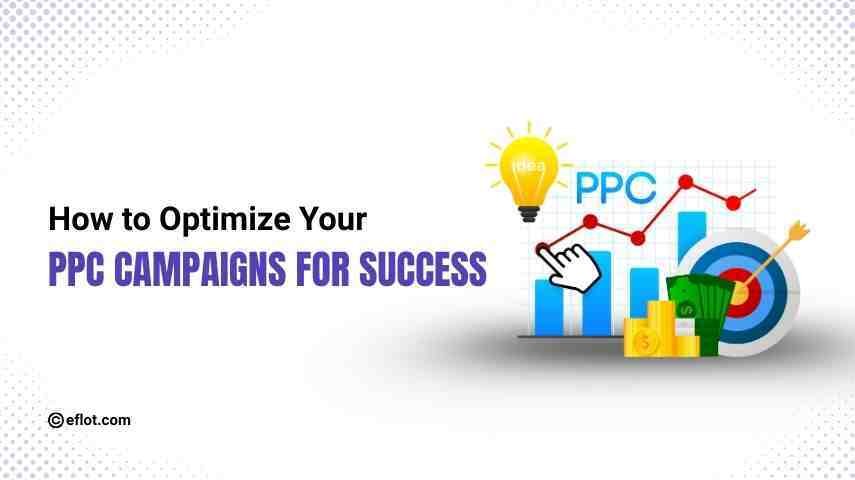
How to Optimize Your PPC Campaigns for Success
Learn effective strategies to improve your PPC campaigns, enhance ad performance, and achieve better ROI with actionable optimization tips.
With my years of experience in digital marketing, I know that running a successful PPC (Pay-Per-Click) campaign is both an art and a science. Getting your ads in front of the right audience at the right time and within the right budget can make all the difference in reaching your marketing goals. But with so many factors to consider, such as keywords, bidding, ad copy, landing pages, and more, it’s easy to feel overwhelmed or miss out on potential wins that could take your campaign to the next level.
I’ll share with you some proven strategies I use to optimize PPC campaigns for success. Whether you’re just starting or looking to fine-tune an existing campaign, these practical tips can help you drive more clicks, boost conversions, and ultimately, improve your ROI.
What is PPC?
PPC, or Pay-Per-Click, is an online advertising model where businesses pay a fee each time their ad is clicked. Essentially, it’s a way of buying visits to your site rather than earning them organically. PPC can work for any business, from small startups to large corporations, and provides precise targeting options, making it easier to reach specific audiences.
Popular PPC platforms include Google Ads, Bing Ads, and social media networks like Facebook, Instagram, and LinkedIn. Each platform offers unique targeting, ad types, and pricing models, allowing businesses to tailor their strategies to meet their needs.
Why Invest in PPC?
PPC offers numerous benefits for businesses, including
-
Immediate Results: Unlike SEO, which can take months, PPC allows businesses to appear at the top of search engine results almost immediately after launching a campaign.
-
Targeted Audience Reach: PPC campaigns can be tailored to reach specific demographics, locations, and even device types, ensuring that your ads reach the people most likely to convert.
-
Budget Control: With PPC, you set the budget, making it a flexible solution for businesses of all sizes.
-
Measurable ROI: PPC platforms provide detailed analytics, allowing you to track performance and measure ROI accurately.
-
Enhanced Brand Visibility: Even if users don’t click on your ads, seeing them at the top of search results increases brand recognition.
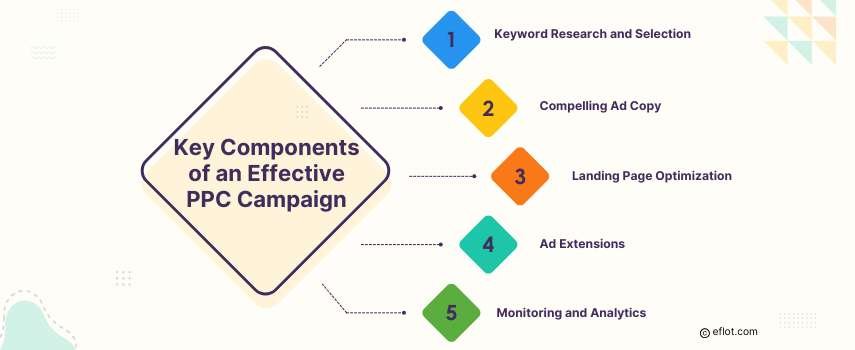
Key Components of an Effective PPC Campaign
To leverage PPC effectively, it's essential to understand the components that make up a successful campaign.
1. Keyword Research and Selection
The foundation of any PPC campaign is keyword research. Keywords are the terms or phrases that users type into search engines when looking for products or services. Selecting the right keywords is critical to ensuring your ads reach the right audience.
-
Use Tools: Google Keyword Planner, SEMrush, and Ahrefs are excellent tools for finding high-volume, relevant keywords.
-
Focus on Long-Tail Keywords: Long-tail keywords (e.g., “affordable organic dog food”) have lower competition, cost less, and are more likely to convert since they target specific user intent.
-
Negative Keywords: Identify and exclude irrelevant keywords to prevent your ads from showing to users who aren’t likely to convert. This practice helps in optimizing your budget.
2. Compelling Ad Copy
The ad copy should grab attention and make users want to click. With limited character space, your message needs to be clear, persuasive, and compelling.
-
Use a Strong Call to Action (CTA): Phrases like “Buy Now,” “Learn More,” or “Get a Free Quote” can increase click-through rates (CTR).
-
Highlight Unique Selling Points (USPs): Mention your product’s features, benefits, or discounts to stand out from competitors.
-
Include Keywords in the Ad Copy: Incorporating keywords into your ad copy helps improve relevance and Quality Score, which can lower costs and improve ad placement.
3. Landing Page Optimization
The landing page is where users arrive after clicking on your ad. It should be optimized to provide a seamless experience and encourage conversions.
-
Relevance: Ensure the landing page matches the ad content and user expectations.
-
Clear CTA: Like in the ad, a strong CTA on the landing page guides users toward the next action, such as making a purchase or signing up for a newsletter.
-
Fast Loading Speed: A slow-loading page can lead to high bounce rates. Ensure your landing page loads quickly on all devices.
-
Responsive Design: Make sure your landing page is optimized for both desktop and mobile users, as mobile traffic is substantial.
4. Ad Extensions
Ad extensions provide additional information, such as location, phone number, or links to specific pages on your site. They enhance your ad’s visibility and can improve CTR and Quality Score.
-
Site Link Extensions: Direct users to specific pages, such as “Contact Us” or “Special Offers.”
-
Call Extensions: Allow users to call directly from the ad, which is especially useful for mobile users.
-
Location Extensions: If your business has a physical location, a location extension can help users find your store easily.
5. Monitoring and Analytics
Monitoring the performance of your PPC campaigns is essential to understand what works and what doesn’t. Most platforms offer in-depth analytics, showing metrics like impressions, clicks, CTR, conversion rate, and ROI.
-
A/B Testing: Test different versions of your ads, landing pages, and keywords to see what performs best.
-
Track Conversions: Set up conversion tracking in Google Analytics or directly within the PPC platform to measure actions like sales, sign-ups, or downloads.
-
Optimize Based on Data: Use data-driven insights to adjust your budget, ad copy, keywords, and targeting to improve performance.
Advanced PPC Strategies for Maximum ROI
Once you've mastered the basics, consider implementing advanced strategies to further enhance your PPC performance.
1. Remarketing
Remarketing targets users who have previously visited your website but didn’t convert. These ads appear as they browse other sites, reminding them of your product or service.
-
Increase Conversions: Remarketing is effective because it targets users who are already familiar with your brand and are more likely to convert.
-
Tailored Ads: Customize remarketing ads to feature products users previously viewed or offer exclusive discounts.
2. Geotargeting
Geotargeting allows you to tailor ads based on the user’s location. This is especially useful for businesses with a physical location or those targeting a specific region.
-
Increase Relevance: Targeting users in a specific location increases the likelihood that they’ll find your ad relevant.
-
Cost Efficiency: Focusing your budget on the areas most likely to convert improves ROI.
3. Bid Adjustments for Time and Device
Not all clicks have the same value. Adjusting your bids based on device, time of day, and location can help you reach users at the right moment.
-
Device-Specific Bidding: If your audience mostly converts to mobile, adjust bids accordingly to maximize budget efficiency.
-
Time-Specific Bidding: Use analytics to determine when your target audience is most active and adjust bids during those peak times.
4. Dynamic Search Ads (DSAs)
DSAs are particularly effective for businesses with large inventories. They dynamically generate ads based on your website’s content, ensuring that users see ads for relevant products or services.
-
Effortless Ad Creation: DSAs reduce the time needed to create ads by automatically matching user searches with content from your site.
-
Improved Targeting: Because DSAs are based on your site content, they are often more relevant and lead to higher CTR.
5. Conversion Rate Optimization (CRO)
Conversion Rate Optimization is the process of refining your landing pages to increase the percentage of visitors who convert.
-
User Testing: Continuously test elements like layout, text, and CTA to see what resonates with users.
-
Reduce Friction: Streamline forms, reduce distractions, and make the conversion process as simple as possible.
Common PPC Mistakes to Avoid
Here are some common pitfalls in PPC marketing to steer clear of:
-
Not Defining Clear Goals: Without specific goals, it’s hard to measure the success of your campaign.
-
Neglecting Negative Keywords: Failing to use negative keywords can waste your budget on irrelevant clicks.
-
Ignoring Mobile Users: Many users browse on mobile, so optimizing ads and landing pages for mobile is essential.
-
Overlooking Regular Maintenance: PPC campaigns need regular monitoring and optimization to ensure optimal performance.
PPC advertising is a powerful tool that can significantly boost your business by driving targeted traffic and increasing conversions. By focusing on keyword research, ad copy, landing page optimization, and ongoing performance analysis, you can create a PPC campaign that delivers solid returns. With advanced strategies like remarketing and geotargeting, you can refine your approach and continue to improve your results over time.
Investing in a well-structured PPC strategy can transform your business’s online presence, reaching new audiences and delivering measurable results. Remember, PPC is not a “set-it-and-forget-it” strategy, it requires constant monitoring, analysis, and adjustment to maximize its potential.
Digital Marketing services in Other Locations in India
Bangalore | Hyderabad | Chennai | Pune | Ahmedabad | Coimbatore | Mumbai | Kolkata | Patna | Amritsar | Indore | Kozhikode | Trivandrum | Jaipur | Nagpur | Gwalior | Dehradun | Noida | Vizag | Raipur | Agra | Gurgaon | Madurai | Udaipur | Thrissur |