












How to Optimize for LLMs and Get Cited in AI Results
Discover how LLMs select content, why structure matters, and simple steps to help your blogs, guides, and FAQs appear in AI answers with clear intent.

Are AI Systems Ignoring Your Content?
Do you spend time writing blogs, guides, or FAQs, but they rarely appear in AI tools or chat results?
You create content, post on social media, and even invest in ads, yet your articles don’t get referenced. This happens because LLMs, large language models which read the web differently. They pick sources that are structured, clear, and reliable.
Let’s Understand LLM Citation and How It Works
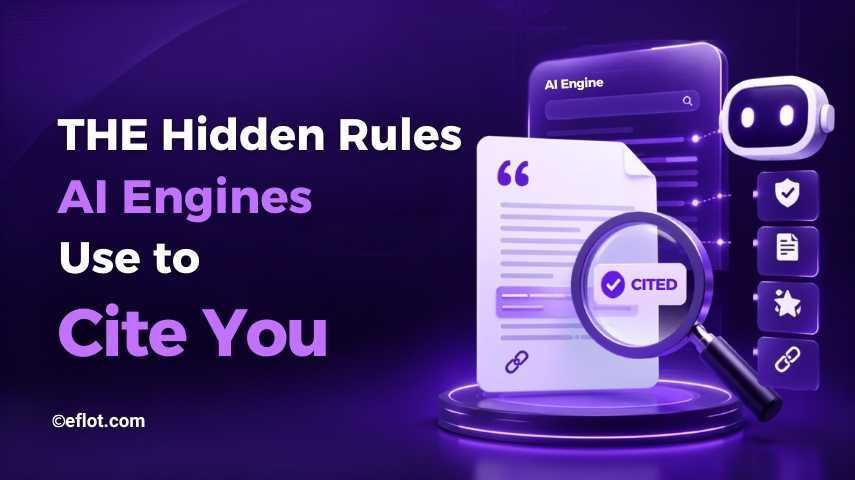
What is an LLM citation?
Think of it as AI referring to your content. LLMs scan the web and select sources that are:
-
Clear and organized
-
Factual and accurate
-
Structured for easy understanding
When an AI references your blog, guide, or FAQ, it appears in AI-powered tools, search summaries, and voice assistants.
How to get cited:
-
Use clear headings and subheadings
-
Break long content into short, digestible paragraphs
-
Include statistics, examples, and references to trusted sources
For example, businesses with guides on finance, travel, or technology often appear in AI answers because their content is structured and informative.
Common Challenges Businesses Face with LLMs
Some content creators produce excellent material, yet AI often ignores it. Why does this happen?
Challenges include:
-
Articles don’t get cited by LLMs
-
Content gets lost in the sea of online information
-
AI systems struggle to parse long, unstructured content
-
Difficulty tracking which pieces are referenced
-
Using overly technical language that AI can’t interpret easily
-
Missing clear answers to common questions
Many still follow traditional SEO rules, focusing on keywords or backlinks, but forget that AI looks for clarity, structure, and factual content. Without these, even well-written articles may not appear in AI summaries or recommendations.
Simple approach: Treat your content like a clear guide.
-
Organize ideas into headings and bullet points
-
Keep paragraphs short and easy to read
-
Answer questions directly and factually
-
Include references from trusted sources
For example, a travel blog with a structured FAQ section is more likely to be cited by AI than a long, unorganized article.
Small changes in how content is presented can significantly improve chances of being noticed and cited by LLMs.
How LLM Citation Can Improve Your Online Visibility
When an LLM cites your content, visibility changes in meaningful ways.
Your information starts showing up where people are already searching and asking questions.
What changes when your content gets cited:
-
Appears in AI chat tools used for quick answers
-
Gets picked up in voice search responses
-
Shows in knowledge panels and content suggestions
-
Gets referenced in AI-driven research and enterprise tools
-
Builds familiarity without relying only on ads
This kind of visibility feels natural. People see your brand while searching for answers, not while scrolling past promotions.
Examples:
Travel platforms such as MakeMyTrip and Yatra publish clear guides, tips, and FAQs.
Their content is structured and easy to read. Because of this, LLMs often reference these pages in AI tools. The result is steady attention from users who are already planning trips.
Food platforms like Zomato share blogs on dining trends, city food guides, and restaurant insights.
AI tools reference this content when users ask about food choices or local recommendations. Over time, this builds familiarity and trust.
Why this works:
-
Content answers common questions clearly
-
Information is broken into short sections
-
Data and examples support each point
-
Pages are easy for AI to scan and understand
Simple way to approach it:
-
Write content that solves one problem at a time
-
Use headings, bullets, and short paragraphs
-
Add facts, numbers, and trusted references
-
Keep language clear and direct
When content is organized and informative, LLM citation becomes more likely. And when AI references your work, visibility follows naturally.
Which LLMs Work Best for SEO and Brand Authority
Not all LLMs have the same impact. Some play a bigger role in how content gets noticed and cited.
|
LLM Platform |
Where It Is Commonly Used |
Why It Matters for Visibility |
|
OpenAI GPT models |
Chatbots, writing tools, research assistants |
Often reference structured and factual content |
|
Google Bard |
Search results, knowledge panels, AI summaries |
Closely connected with search-based visibility |
|
Anthropic Claude |
Enterprise tools, research platforms |
Preferred for clear and well-explained content |
|
Meta LLaMA |
AI applications, analytics tools |
Growing reach across AI-driven systems |
Focus on the platforms your audience interacts with most. When content is clear, structured, and informative, the chances of LLM citation and brand strength increase naturally.
Strategies to Optimize Content for LLMs
Here’s how to make AI recognize and cite your content:
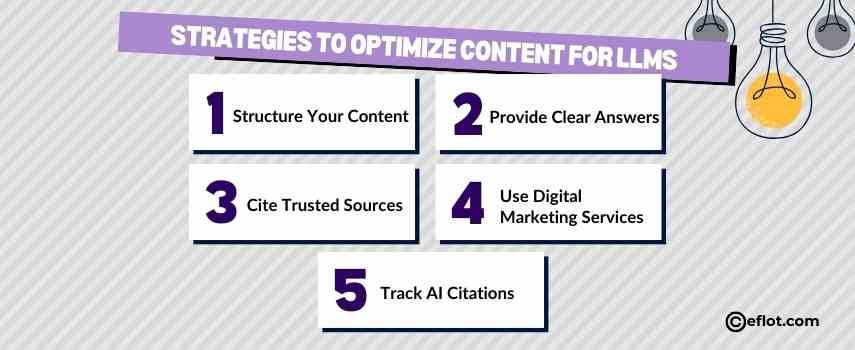
Step 1: Structure Your Content
-
Use headings, subheadings, and bullets
-
Break complex ideas into short paragraphs
-
Include numbered lists for processes or steps
Step 2: Provide Clear Answers
-
Use FAQs or “How-to” sections
-
Answer questions directly in simple language
-
Include examples wherever possible
Step 3: Cite Trusted Sources
-
Reference Google, HubSpot, Statista, Moz, or research reports
-
Link studies, statistics, and authoritative articles
-
Make your sources easy to find
Step 4: Use Digital Marketing Services
-
SEO: Optimize metadata, headings, and keywords
-
Content Marketing: Content Marketing services helps to publishes blogs, guides, and resources
-
Social Media Marketing: Share content to increase visibility
-
Email Marketing: Share insights that link back to authoritative content
Step 5: Track AI Citations
-
Monitor which pages get cited
-
Adjust content strategy based on performance
-
Use analytics tools to identify patterns in AI references
Clear, structured content helps LLMs understand and reference your ideas more often.
When information is easy to read, factual, and organized, AI is more likely to cite it and show it to the right audience.
Digital Marketing services in Other Locations in India
Bangalore | Hyderabad | Chennai | Pune | Ahmedabad | Coimbatore | Mumbai | Kolkata | Patna | Amritsar | Indore | Kozhikode | Trivandrum | Jaipur | Nagpur | Gwalior | Dehradun | Noida | Vizag | Raipur | Agra | Gurgaon | Madurai | Udaipur | Thrissur |