






















Voice Search and Its Impact on Digital Marketing in India
Discover how voice search is reshaping digital marketing strategies in India with insights into trends, SEO, and consumer behavior.

Voice search has quickly emerged as a game changer in the world of digital marketing. Having worked in the industry for several years, I’ve seen trends come and go, but voice search is a transformative force that’s here to stay. The ability to simply ask a question and receive immediate, relevant answers has revolutionized how users interact with technology. As a digital marketing specialist, I’ve observed how businesses must adapt their strategies to use this shift, especially in a market as diverse and swift as India.
In the world of digital marketing in India, the rise of voice search is altering the way consumers find information, make purchases, and engage with brands. With the growth of smart devices and affordable data plans, voice search is no longer a modern concept, it’s now a fundamental aspect of modern consumer behavior.
Understanding Voice Search in Digital Marketing
Voice search has revolutionized how people interact with technology, and its influence on digital marketing in India is undeniable. With the widespread use of smart devices like smartphones, smart speakers, and voice assistants (such as Alexa, Google Assistant, and Siri), voice search has become a key part of the online experience. For marketers, this means a shift in strategy to serve to how users are now searching for information.
Why Voice Search Matters in India
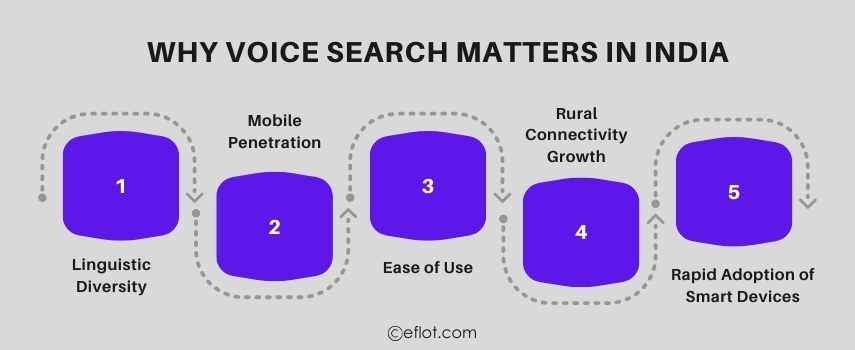
India is one of the fastest growing digital economies in the world, and voice search plays a significant role in this transformation. Here’s why
-
Linguistic Diversity: India is a Multiple languages country with over 22 official languages and numerous dialects. Voice search allows users to interact in their native languages, making it more inclusive and accessible.
-
Mobile Penetration: With affordable smartphones and data plans, a majority of India’s internet users access the web through mobile devices, where voice search is a natural choice for queries.
-
Ease of Use: For users less familiar with typing or those in rural areas, voice search offers a more intuitive way to search for information.
-
Rural Connectivity Growth: With the government and private companies driving digital initiatives in rural India, voice search is empowering first-time internet users to access information effortlessly. It bridges the literacy gap by allowing users to search in spoken language, which is especially beneficial in less tech-savvy regions.
-
Rapid Adoption of Smart Devices: The increasing affordability of smart speakers, such as Amazon Echo and Google Nest, has driven voice assistant usage across urban and semi-urban households. These devices enable seamless integration of voice search into daily routines, further popularizing this technology in India.
Impact on Digital Marketing Strategies
Voice search is changing the way businesses approach digital marketing in India. It has led to the evolution of strategies to accommodate natural language queries and localized content.
-
Conversational Keywords
Unlike typed searches, voice queries are more conversational and long-tail. For example, instead of typing "best restaurants in Bangalore," users might say, "What are the best restaurants near me in Bangalore?" Marketers need to optimize their content with natural language and question-based phrases to match these queries. -
Local SEO Optimization
A significant portion of voice searches are location-based, like "nearest grocery store" or "ATM near me." Businesses in India must focus on local SEO by optimizing their Google My Business profiles, maintaining accurate location data, and encouraging customer reviews. -
Regional Language Content
Voice search in India has seen rapid adoption in regional languages like Hindi, Tamil, Telugu, and Bengali. This makes creating multilingual content a priority for businesses aiming to reach diverse audiences. -
Featured Snippets
Search engines often pull answers for voice queries directly from featured snippets. This means businesses need to provide concise, structured, and authoritative content to increase their chances of being highlighted. -
Mobile-Friendly Design
With most voice searches happening on mobile devices, ensuring websites are mobile-optimized, fast-loading, and user-friendly is crucial.
Industries Benefiting from Voice Search in India
-
E-commerce: Voice search simplifies product searches and enhances the shopping experience for users, driving conversions.
-
Healthcare: Patients can quickly find hospitals, clinics, or doctors near them through voice search.
-
Food & Hospitality: Restaurants and hotels gain visibility through local, voice-driven queries like "best biryani restaurant in Hyderabad."
-
Education: Institutions providing online courses can optimize for queries like "best digital marketing course in India."
Challenges of Voice Search in India
-
Linguistic Complexity: While voice search supports multiple languages, creating high-quality localized content for so many languages and dialects is resource-intensive.
-
Data Privacy Concerns: Users are becoming increasingly cautious about how their voice data is collected and used by companies.
-
Adoption Curve for Businesses: Small businesses in India often lack the resources or knowledge to adapt to voice search trends.
-
Accuracy of Voice Recognition: While voice assistants are improving, they often struggle with accurately understanding accents, pronunciation variations, and colloquial terms commonly used in India. This can lead to irrelevant search results, frustrating users and reducing the effectiveness of voice search.
-
Limited Integration with Regional Businesses: Many local businesses in India lack a strong digital presence or proper online listings, making it difficult for voice search algorithms to deliver accurate and relevant results. This limits the potential of voice search for hyper-local queries like “best tailor near me” or “local grocery shop open now.”
Effectiveness of Digital Strategies for Voice Search
The graph above represents the effectiveness of various digital strategies for optimizing voice search. Here's a breakdown of the strategies and why they are crucial:
-
Optimize for Conversational Keywords (85%): Voice searches are often phrased as natural language queries. Tailoring content with long-tail and conversational keywords helps match these queries, making it a high-impact strategy.
-
Focus on Local SEO (90%): A majority of voice searches are location-specific, like "restaurants near me." Optimizing for local SEO, including Google My Business, ensures visibility for local queries.
-
Implement Structured Data (Schema) (80%): Schema markup helps search engines better understand website content, making it more likely to appear in featured snippets or voice search results.
-
Enhance Mobile Usability (88%): Most voice searches happen on mobile devices. Ensuring fast, mobile-friendly websites enhances user experience and improves rankings.
-
Create Multilingual Content (75%): Catering to regional languages and dialects in markets like India is essential for voice search, which often reflects local linguistic preferences.
-
Invest in Voice Ads (70%): Emerging platforms like Alexa and Google Assistant offer opportunities for brands to run voice-specific ads, directly engaging users in their search journey.
Case Studies
Case Study1:
Haldiram’s, a renowned Indian snacks and sweets brand, has a large presence across urban and rural India. With growing competition from new players in the FMCG sector, Haldiram wanted to enhance its digital presence and connect more effectively with customers searching for their products online.
Challenges
Haldiram’s faced the challenge of catering to a linguistically diverse customer base. Many of their target customers preferred searching for snacks, sweets, and recipes in regional languages, especially in tier-2 and tier-3 cities. Additionally, voice search queries like “best namkeen near me” or “Haldiram’s sweets shop nearby” did not lead to their website or store information due to a lack of voice-focused optimization.
Solutions
To address this, Haldiram collaborated with a digital marketing agency to optimize their content for voice search. They implemented regional language SEO to ensure search queries in Hindi, Tamil, Bengali, and Telugu would lead users to their pages. They also updated their Google My Business listings with voice-friendly descriptions and FAQs, such as “Where is the nearest Haldiram’s store?” and “What are the most popular Haldiram’s snacks?”
Case Study2:
Dr. Batra’s, a leading homeopathy clinic chain in India, has always focused on offering accessible and personalized healthcare services. As healthcare-related searches grew increasingly specific and voice-driven, Dr. Batra identified an opportunity to position itself as a go-to solution for health concerns in India.
Challenges
Patients were increasingly using voice search to find immediate answers to their health concerns. Queries like “homeopathy clinic near me” or “best homeopathy treatment for hair loss” were common, but Dr. Batra’s wasn’t capturing these searches due to unoptimized content. The brand also struggled with addressing location-specific voice queries for its numerous clinics across India.
Solutions
Dr. Batra’s partnered with a digital marketing agency to revamp their digital strategy with a focus on voice search. They integrated voice-friendly long-tail keywords into their content, such as “What are the benefits of homeopathy for skin problems?” They also localized their SEO efforts by optimizing individual clinic pages for voice-driven queries, ensuring accurate information like clinic timings and services was available via Google Assistant and Siri.
Voice search is certainly transforming digital marketing in India, offering businesses an incredible opportunity to engage with customers in new and innovative ways. By optimizing for conversational keywords, local SEO, and regional languages, brands can tap into a massive audience that relies on voice technology for their daily searches. The future of digital marketing in India lies in embracing voice search as an integral part of your strategy. Businesses that prioritize this trend will not only enhance their customer experience but also solidify their position as leaders in their respective industries. It’s time to speak up and let your brand be heard.
Digital Marketing services in Other Locations in India
Bangalore | Hyderabad | Chennai | Pune | Ahmedabad | Coimbatore | Mumbai | Kolkata | Patna | Amritsar | Indore | Kozhikode | Trivandrum | Jaipur | Nagpur | Gwalior | Dehradun | Noida | Vizag | Raipur | Agra | Gurgaon | Madurai | Udaipur | Thrissur |