

























How Mobile-First Indexing Works for SEO
Unlock better SEO rankings! Learn how mobile-first indexing prioritizes mobile content to boost your site’s visibility and drive more traffic today.

Is your website slow or hard to use on a phone? That could cause your site to lose ranking on Google. This happens because of mobile-first indexing, where Google looks at your mobile site before the desktop one.
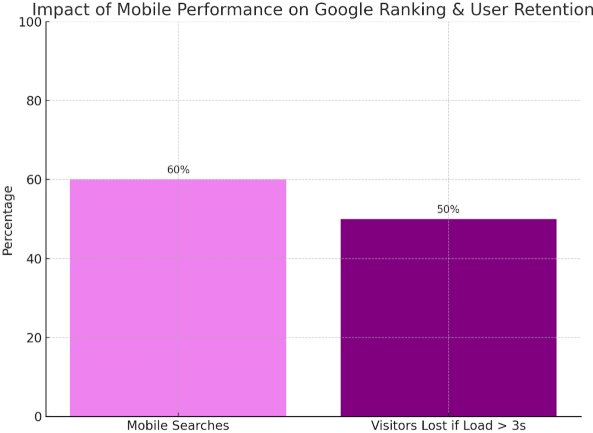
Over 60% of Google searches now come from mobile devices, and sites that load slower than 3 seconds lose more than 50% of visitors.
Shopify is a popular platform where many people create online stores. At first, most stores focused on how their site looked on computers. But as more people started shopping on phones, Shopify knew it was important to make sure their stores worked well on mobile.
When Google started using Mobile-First Indexing, it looked mainly at the mobile version of websites to decide search rankings. Some Shopify stores had slower or incomplete mobile sites, so their search rankings went down. This meant fewer customers found their stores.
Shopify fixed this by helping store owners improve their mobile sites. They made sure mobile sites were fast, easy to use, and had the same content as desktop sites. After these changes, many stores saw better rankings and more visitors.
What Is Mobile-First Indexing?
It means Google mainly uses your website’s mobile version to decide how to rank and show it in search results. Instead of focusing on the desktop version, Google looks at your mobile site first. This change happened because more people use their phones to browse the internet now.
Why is it Important for Your Website
Since Google uses the mobile version to rank pages, your site’s mobile experience directly affects your SEO. If your mobile site is slow, missing information, or hard to use, Google might rank your site lower. So, it pushes website owners to build mobile-friendly sites that work well on any device.
How Mobile-First Indexing Affects SEO
Google’s shift means your SEO success depends on your mobile site’s quality. Google reads and indexes the mobile site content to decide rankings. If your mobile site has less content or fewer links than your desktop site, this can hurt your rankings. So, making sure your mobile site has the full content and a good user experience is key.
How to Prepare Your Website for Mobile-First Indexing
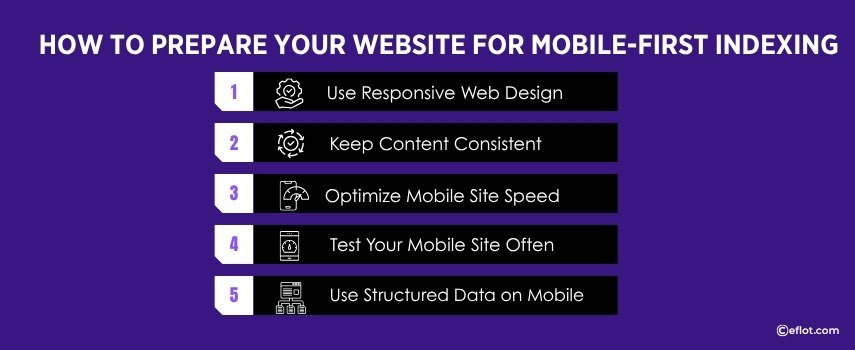
1. Use Responsive Web Design
A responsive website adjusts itself for all screen sizes, from phones to large monitors. This helps ensure your content looks and works well on any device.
2. Keep Content Consistent
Make sure the mobile version has the same important content as the desktop version. If you hide text, images, or videos on mobile, Google might not see them, which can affect your SEO.
3. Optimize Mobile Site Speed
Speed is very important for mobile users. Compress images, reduce code, and use caching to help your pages load quickly. A fast mobile site improves SEO and keeps visitors on your page.
4. Test Your Mobile Site Often
Use tools like Google’s Mobile-Friendly Test and PageSpeed Insights regularly.
5. Use Structured Data on Mobile
If you use structured data (like reviews, events, or product info), make sure it appears on the mobile version too. This helps Google understand your content better.
Common Mistakes That Hurt SEO
-
Ignoring Mobile Usability: If buttons are too small or text is hard to read on mobile, users leave quickly, and Google notices.
-
Hiding Content on Mobile: Sometimes, webmasters remove content from mobile versions to save space. This reduces your site’s value in Google’s eyes.
-
Slow Mobile Pages: A slow mobile site causes users to leave and can lower your search rankings.
-
Separate Mobile URLs Without Proper Setup: If you use separate URLs for mobile (like m.example.com), improper redirects or missing metadata can confuse Google.
Effective Keywords for Mobile-First Indexing
To rank well, include related SEO keywords naturally in your content, such as:
-
Mobile SEO
-
Mobile-friendly website
-
Google mobile-first indexing
-
Mobile site speed
-
Responsive web design
-
Mobile usability tips
Including these phrases can help your content match what users search for and improve your SEO.
How Mobile-First Indexing Helps Search Engines and Users
Google’s focus on mobile-first indexing makes search results better for users. Since most people search on phones, Google wants to show websites that work well on mobile. This means sites with easy navigation, fast loading, and full content on mobile rank higher. For website owners, this is a chance to improve site quality and reach more people.
Google now uses the mobile version of your website to decide search rankings. Having a mobile site that is easy to use, fast, and complete with the same content as your desktop site helps your website rank higher. Focusing on your mobile site will improve your SEO and bring more visitors to your site.
Need more people to find your business on mobile? Want to connect with local customers and improve your presence?
Visit https://eflot.com/ or email us at [email protected] to learn more.
Take the first step. Make your business mobile-friendly, trusted, and easy to find with our best strategies
Digital Marketing services in Other Locations in India
Bangalore | Hyderabad | Chennai | Pune | Ahmedabad | Coimbatore | Mumbai | Kolkata | Patna | Amritsar | Indore | Kozhikode | Trivandrum | Jaipur | Nagpur | Gwalior | Dehradun | Noida | Vizag | Raipur | Agra | Gurgaon | Madurai | Udaipur | Thrissur |