










Why Content Marketing Services Are Important for SMEs
Content marketing services help SMEs boost visibility, generate qualified leads, build authority, and drive sustainable growth through SEO and strategic content.
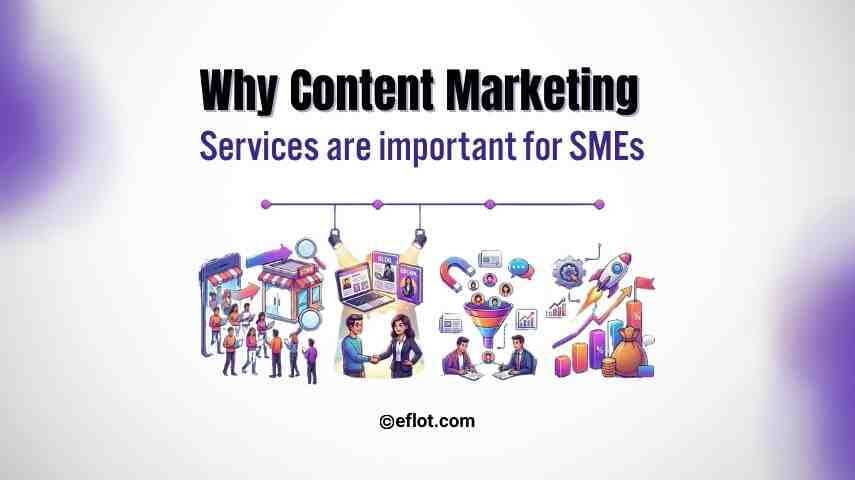
In today’s competitive marketplace, small and medium enterprises (SMEs) cannot rely solely on traditional advertising to grow brand visibility and attract customers. High-quality content fuels every stage of the customer journey, from discovery and research to purchase and loyalty. For SMEs with limited budgets, content marketing services unlock consistent audience engagement, improve search performance, and establish credible brand authority that supports sustainable business growth.
What Is Content Marketing and Why It Matters for SMEs
Content marketing refers to the creation, publication, and distribution of relevant materials such as blog posts, videos, guides, newsletters, and case studies that inform, engage, and influence a target audience. Unlike paid ads that stop generating traction once the budget runs out, good content continues to drive traffic, leads, and conversions over time.
For SMEs, the value of content marketing lies in its ability to:
-
Showcase expertise in a niche or service area
-
Build trust with potential customers
-
Improve visibility on search engines through SEO content writing
-
Nurture prospects through email newsletters and educational content
According to industry research, businesses that publish consistent, strategic content see higher organic traffic and better lead conversion rates compared with those that rely exclusively on paid channels.
Use Cases and Benefits of Content Marketing
1. Boost Organic Visibility and Search Rankings
Effective content marketing services help SMEs improve search performance by targeting high-intent keywords and aligning articles with user search intent. When optimized for SEO, website content can rank on search engines, increasing visibility without ongoing ad spend.
Use Case: A brand that publishes helpful how-to articles on common customer problems can appear in search results when prospects are actively researching solutions.
Business impact: More organic traffic leads to lower customer acquisition costs and consistent lead generation.
2. Build Brand Authority and Trust
Customers are more likely to engage with brands that educate, answer questions, and share thoughtful insights. High-quality content that ranks on Google positions SMEs as trusted authorities and reduces friction in decision-making.
Use Case: A well-structured blog that explains product benefits and use cases can help customers feel confident in choosing a brand over competitors.
Business impact: Trust drives higher conversion rates and repeat business.
3. Enhance Customer Engagement and Retention
Content marketing services extend beyond acquiring customers to keeping them engaged. Formats like email newsletters, video content marketing, and guest posting on industry platforms keep your audience connected and informed.
Use Case: SMEs that distribute curated educational content via newsletters see higher interaction rates and increased return visits.
Business impact: Engaged customers are more likely to convert, purchase again, or refer others.
4. Support Sales and Lead Nurturing
Content acts as a bridge between marketing and sales efforts. Case studies, whitepapers, and service pages crafted around buyer intent help move prospects down the funnel.
Use Case: A downloadable guide that addresses specific industry challenges can be used by sales teams to nurture leads more effectively.
Business impact: Better-qualified leads and shorter sales cycles.
Compared with expensive paid advertising, content marketing delivers cumulative value. Evergreen content continues to attract visitors long after it’s published.
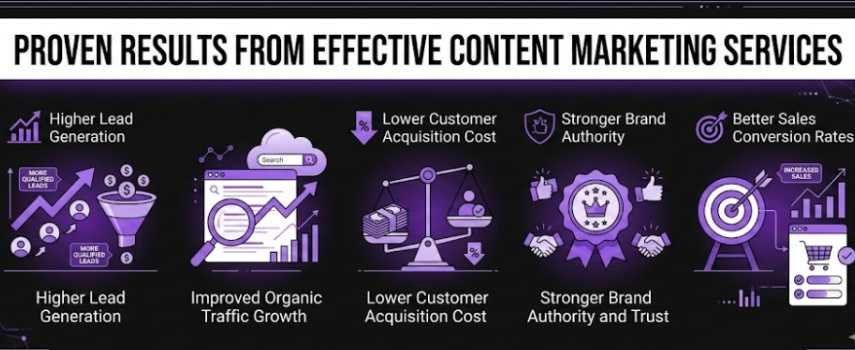
Proven Results from Effective Content Marketing Services
-
Higher Lead Generation
Companies that prioritize blogging generate 67% more leads per month compared to those that do not maintain an active blog. In addition, businesses with 30+ landing pages generate up to 7 times more leads than those with fewer pages. A structured content strategy directly influences inbound lead flow.
-
Improved Organic Traffic Growth
Research shows that marketers who actively invest in SEO content writing are significantly more likely to report higher ROI. Websites that consistently publish optimized content experience compounding organic traffic growth, with many seeing measurable increases within 6–9 months.
-
Lower Customer Acquisition Cost (CAC)
Content marketing generates 3 times more leads than traditional outbound marketing while costing 62% less. Because evergreen content continues attracting visitors over time, the cost per acquisition decreases as content assets mature.
-
Stronger Brand Authority and Trust
Around 81% of consumers conduct online research before making a purchase decision. Businesses that publish informative guides, case studies, and thought leadership content build credibility during this research phase, increasing conversion probability.
-
Better Sales Enablement and Conversion Rates
Content marketing delivers conversion rates nearly 6 times higher than businesses that rely on traditional marketing alone. When content aligns with buyer intent, it shortens sales cycles and improves close rates through informed decision-making.
These outcomes demonstrate that well-executed content marketing services function as a measurable growth driver rather than a branding exercise.
A Comprehensive Guide to Content Marketing Services
Content marketing services should function as a structured growth system, integrating strategy, production, distribution, and performance optimization into one measurable framework.
Below is how each component actually works in practice.
1. Content Marketing Strategy Development
A content marketing strategy is a revenue planning document, not a publishing schedule. It aligns business goals (lead generation, brand positioning, sales enablement) with audience intent and search demand.
Professional services typically include:
-
Market and SERP analysis to identify content gaps competitors are ranking for
-
Mapping content to buyer journey stages (awareness, consideration, decision)
-
Keyword clustering based on commercial, informational, and transactional intent
-
Topic authority building through pillar pages and supporting clusters
-
Quarterly roadmap aligned with sales targets
Instead of randomly producing blogs, SMEs gain a structured plan that connects content themes to revenue opportunities and industry positioning.
2. SEO Content Writing Built for Search Intent
SEO content writing goes beyond inserting keywords. It requires understanding why users search, what outcome they expect, and creating AI-optimized content that aligns with search intent.
Advanced SEO writing services include:
-
Search intent classification (informational vs. commercial)
-
Competitive content depth benchmarking
-
On-page optimization (headers, semantic keywords, schema guidance)
-
Internal linking architecture planning
-
Conversion-oriented content structuring
For SMEs, this means ranking for terms that attract decision-ready prospects rather than vanity traffic. High-quality SEO content builds domain authority over time, strengthening overall search performance.
3. Strategic Content Creation Across Formats
Different audiences consume information differently. Content marketing services therefore extend beyond blog writing.
Execution-level services include:
-
Long-form thought leadership articles to establish expertise
-
Case studies that demonstrate ROI with measurable outcomes
-
Industry guides and downloadable assets to capture leads
-
Video content marketing for higher engagement and retention
-
Sales-enablement content that supports business development teams
The goal is to build a cohesive content ecosystem where each asset supports another, increasing engagement depth and brand recall.
4. Distribution and Authority Building
Even strong content requires amplification. Distribution strategies ensure visibility beyond owned channels.
Effective services may involve:
-
Guest posting on high-authority industry platforms
-
Strategic backlink outreach for domain growth
-
Email newsletters segmented by audience interest
-
Repurposing content into multiple formats for broader reach
-
Social media distribution based on platform-specific behavior
This expands reach while strengthening domain credibility and referral traffic.
5. Performance Tracking and Revenue Attribution
SMEs need clarity on ROI. Content marketing services therefore integrate analytics frameworks that connect traffic to revenue.
Advanced tracking includes:
-
Conversion path analysis
-
Assisted conversions from blog and resource pages
-
Keyword movement and topical authority growth
-
Lead source attribution
-
Engagement depth metrics (scroll depth, time on page)
Rather than measuring vanity metrics, businesses gain insight into how content influences pipeline growth and customer acquisition.
Ultimately, content marketing services are more than a promotional tactic; they form a strategic foundation for sustainable SME growth. By aligning content with customer needs and search intent, businesses can attract targeted prospects, build brand credibility, and nurture relationships across platforms. Whether through SEO content writing, video content marketing, email newsletters, or strategic distribution, a structured content approach generates measurable business outcomes that stand the test of time.
If your business aims to increase visibility, improve engagement, and grow leads consistently, investing in professional content marketing services is a decision that pays dividends.
Frequently Asked Questions
1. What are content marketing services?
Content marketing services involve planning, creating, optimizing, and distributing valuable content to attract and convert a defined audience. These services typically include content strategy, SEO content writing, blog production, video content marketing, email newsletters, and performance tracking.
2. How do content marketing services help SMEs grow?
They improve organic visibility, generate qualified leads, strengthen brand credibility, and support sales efforts. With the right content strategy, SMEs can reduce dependency on paid ads and build sustainable inbound traffic.
3. How long does it take to see results from content marketing?
Most SMEs begin seeing measurable improvements in traffic and engagement within 3–6 months. Strong search rankings and consistent lead generation typically require sustained effort over 6–12 months.
4. What is the difference between content marketing and SEO?
SEO focuses on improving search visibility through optimization techniques, while content marketing focuses on creating valuable, audience-focused content. SEO content writing combines both to attract relevant traffic aligned with search intent.
5. How much should SMEs invest in content marketing services?
Investment varies based on goals, industry competition, and content volume. SMEs typically allocate a percentage of their marketing budget toward content creation, SEO, and distribution to ensure consistent growth and measurable returns.
Digital Marketing services in Other Locations in India
Bangalore | Hyderabad | Chennai | Pune | Ahmedabad | Coimbatore | Mumbai | Kolkata | Patna | Amritsar | Indore | Kozhikode | Trivandrum | Jaipur | Nagpur | Gwalior | Dehradun | Noida | Vizag | Raipur | Agra | Gurgaon | Madurai | Udaipur | Thrissur |