










AI on Social Media: Automate Content and Ads
AI on social media automates content, personalizes messaging, and optimizes ads using real-time data to boost engagement, conversions while reducing manual effort.
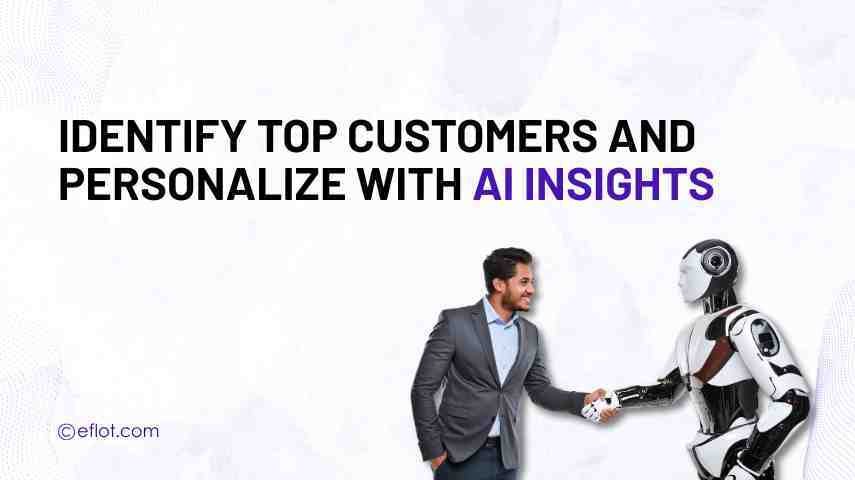
Artificial intelligence is transforming how brands plan, create, publish, and optimize social media campaigns. In 2026, AI social media tools help businesses produce high-quality content at scale, personalize messaging for different audiences, and run highly efficient advertising campaigns driven by real-time data.
Organizations ranging from startups to global enterprises use AI on social media to increase reach, engagement, and conversions while reducing manual effort. Marketing teams gain the ability to analyze large datasets, predict performance, automate routine tasks, and deliver consistent brand experiences across platforms.
Let’s explore how AI is used across social media content creation and advertising, which tools and techniques deliver optimal results, and how businesses can implement AI safely and effectively.
What Is AI Social Media?
AI social media refers to the use of artificial intelligence technologies to automate, analyze, and optimize activities across social platforms. It combines machine learning, natural language processing, and generative AI to create content, personalize messaging, schedule posts, monitor sentiment, and improve ad targeting. By analyzing large volumes of user data, AI helps businesses deliver relevant experiences, increase engagement, and make faster, data-driven marketing decisions at scale.
Common capabilities of AI for Social Media include:
-
Automated content generation for captions, posts, and scripts
-
Smart scheduling based on engagement patterns
-
Social listening and sentiment analysis
-
Chatbots for customer interaction
-
Predictive analytics for campaign performance
-
Automated ad optimization
These features allow teams to maintain a strong presence across multiple platforms without increasing headcount or workload.
Benefits of Using AI on Social Media
Companies adopt AI on social media services to improve efficiency and outcomes simultaneously. Manual social media management struggles to keep pace with the speed and volume required in modern digital marketing.
Higher productivity
AI tools handle repetitive tasks such as drafting posts, resizing images, and scheduling content. Teams can focus on strategy, creativity, and brand positioning.
Improved engagement
Algorithms analyze user behavior to determine what content resonates most with each audience segment. This leads to more relevant posts and higher interaction rates.
Better decision-making
Predictive insights identify trends early, allowing brands to respond quickly to changes in consumer interests.
Cost efficiency
Automation reduces the need for large teams while improving campaign performance, resulting in stronger return on investment.
Consistency across channels
AI ensures brand voice, posting frequency, and visual style remain consistent across platforms such as Instagram, LinkedIn, Facebook, X, and YouTube.
How to Use AI in Social Media
Using AI in social media begins with aligning tools to clear marketing objectives such as brand awareness, engagement, lead generation, or sales. AI systems perform best when guided by defined goals and reliable data. Businesses first analyze their audience demographics, behavior patterns, and content preferences, then deploy AI solutions that support those insights.
Plan data-driven content strategies
AI tools analyze past performance across posts, formats, and topics to identify what resonates with specific audience segments. Marketers can discover high-engagement themes, optimal posting frequency, and platform preferences. This replaces guesswork with evidence-based planning.
Generate and refine content efficiently
Generative AI can produce captions, post ideas, short videos, scripts, and visuals tailored to brand tone and audience interests. Teams typically use AI for first drafts, then refine outputs to ensure accuracy, creativity, and compliance. This approach accelerates production while maintaining quality.
Personalize messaging at scale
AI enables micro-targeting by adapting content for different segments based on location, interests, purchase history, or engagement patterns. Personalized posts feel more relevant, which improves interaction rates and customer trust. For global brands, AI also supports multilingual content creation.
Optimize posting schedules automatically
Machine learning models analyze when followers are most active and schedule posts accordingly. This increases visibility without manual monitoring. AI can also adjust schedules dynamically as engagement patterns change with the help of social media agency.
Monitor conversations and brand sentiment
Social listening tools powered by AI track mentions, keywords, and competitor activity across platforms. Sentiment analysis determines whether conversations are positive, neutral, or negative. Early detection of issues allows brands to respond quickly and protect reputation.
Automate customer interaction
AI chatbots handle common inquiries through direct messages, providing instant responses about products, services, pricing, or support. Complex queries can be routed to human agents. This improves response time and customer satisfaction while reducing workload.
Improve advertising performance
AI optimizes ad targeting, bidding, and creative variations using real-time performance data. Campaigns continuously adjust to reach users most likely to convert, improving return on ad spend.
Successful implementation combines automation with human oversight. Teams should review outputs, maintain brand voice consistency, protect user privacy, and measure results regularly. When used strategically, AI transforms social media from a manual task into a scalable, insight-driven growth channel.
How AI Optimizes Social Media Advertising
Advertising is one of the most powerful applications of AI social media technology. Platforms already rely heavily on machine learning to deliver ads efficiently.
Smart Audience Targeting
AI analyzes vast datasets to identify users most likely to convert. Targeting parameters may include behavior, interests, demographics, location, and previous interactions.
Lookalike modeling allows advertisers to reach new audiences similar to existing customers, expanding reach without sacrificing relevance.
Automated Ad Creative Optimization
AI tests multiple variations of headlines, visuals, and calls-to-action. Underperforming combinations are replaced automatically with higher-performing ones.
This continuous optimization improves click-through rates and conversion rates over time.
Budget Allocation and Bidding
Machine learning algorithms adjust bids and budget distribution based on performance signals. Campaign funds flow toward ads that generate the strongest results.
This reduces wasted spend and improves overall return on ad investment.
Predictive Performance Insights
AI forecasts expected outcomes before campaigns launch, helping marketers refine strategy early. Insights may include estimated reach, engagement, and conversion potential.
Best Practices for Using AI Social Media Tools
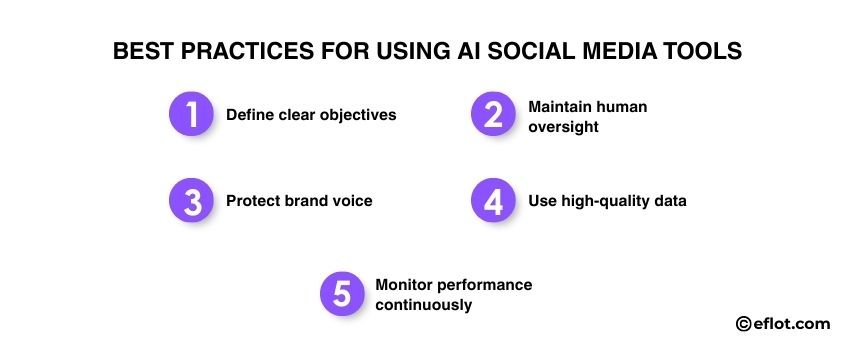
Define clear objectives
Identify whether the goal is brand awareness, engagement, lead generation, or sales. AI systems perform best when guided by measurable outcomes.
Maintain human oversight
Review AI-generated content for accuracy, tone, and compliance. Human creativity and judgment remain essential.
Protect brand voice
Customize AI outputs to match established messaging guidelines. Consistency builds trust.
Use high-quality data
Accurate insights depend on reliable data sources. Clean datasets improve performance.
Monitor performance continuously
Track metrics such as engagement rate, CTR, conversion rate, cost per acquisition, and customer sentiment.
Challenges and Ethical Considerations
Despite its advantages, AI on social media introduces several risks that organizations must address.
-
Potential bias in algorithms
-
Privacy concerns related to data usage
-
Over-automation leading to impersonal communication
-
Misinformation risks if content is not reviewed
-
Platform policy compliance requirements
Responsible use includes transparency, data protection practices, and human supervision.
The Future of AI on Social Media
Advancements in multimodal AI, real-time analytics, and autonomous agents will further enhance social media marketing capabilities. Future systems may generate complete campaigns, adapt messaging dynamically during live events, and deliver hyper-personalized experiences to individual users.
Brands that adopt AI digital marketing strategically can gain a significant competitive advantage through faster execution, deeper insights, and stronger customer relationships.
AI social media technology has become an essential component of modern social media marketing services. By automating content creation, scheduling, customer engagement, and advertising optimization, AI enables organizations to operate efficiently while delivering highly relevant experiences to audiences.
Successful adoption requires a balanced approach that combines advanced tools with human expertise, ethical practices, and clear strategic goals. Businesses that implement AI on social media effectively can achieve sustained growth, improved engagement, and stronger returns on marketing investment.
Now It's Your Turn
Ready to turn AI social media into profitable business results? Partner with Eflot to design data-driven strategies that automate content creation, optimize ad performance, and scale engagement across platforms. Our experts combine advanced AI tools with human creativity to deliver campaigns that attract qualified leads and maximize ROI.
Get a free strategy consultation today and discover how AI-powered social media marketing can accelerate your growth. Eflot builds tailored solutions aligned with your industry, audience behavior, and revenue goals, so every post, ad, and interaction moves your business forward.
Digital Marketing services in Other Locations in India
Bangalore | Hyderabad | Chennai | Pune | Ahmedabad | Coimbatore | Mumbai | Kolkata | Patna | Amritsar | Indore | Kozhikode | Trivandrum | Jaipur | Nagpur | Gwalior | Dehradun | Noida | Vizag | Raipur | Agra | Gurgaon | Madurai | Udaipur | Thrissur |