

























What Is Long Tail Keyword and Why You Need It
Discover why long tail keywords are crucial for SEO success! Drive targeted traffic, improve rankings, and boost conversions with this powerful strategy.

As a digital marketing specialist, I’ve had the chance to see just how critical long tail SEO can be in growing a website’s traffic and improving rankings. Early in my career, like many marketers, I focused heavily on broad, high-volume keywords, thinking they would drive the most traffic. Over time, however, I discovered that this wasn’t necessarily the case. While broad keywords have the potential to attract more visitors, they also bring a lot of competition and are often too general to convert effectively. That’s when I started paying more attention to long tail keywords, which are key to targeting the right audience.
When you search for the answer to "What is long tail keyword?" you’ll likely find various explanations, but simply put, long tail keywords are longer, more specific phrases that users type into search engines. Over time, I’ve learned that long tail keywords can have a much higher conversion rate than shorter, more competitive keywords. Here I’ll walk you through the steps to develop an effective SEO content strategy using long tail keywords and offer practical advice on how to use long tail keywords to increase website traffic and improve your SEO ranking. Let’s get started!
What Is Long Tail Keyword?
Simply put, a long tail keyword is a keyword phrase that’s usually three or more words long and highly specific to what someone is searching for. For example, while “shoes” is a broad keyword, “women’s running shoes for flat feet” would be a long-tail keyword example. The key benefit of using long-tail keywords is that they are highly specific and allow you to target users who are already looking for exactly what you offer. Long tail SEO is vital because it allows you to rank for keywords with lower competition and higher conversion rates, as these users are more likely to be ready to purchase or engage.
SEO keyword research is an essential step to identify long tail keywords that are relevant to your business. Instead of focusing on keywords with millions of searches, you can target long-tail keywords with less search volume but greater specificity. These long tail keywords often have more conversion potential because they match user intent more accurately. For example, someone searching for “buy running shoes for flat feet in NYC” is more likely to purchase than someone simply searching for “running shoes.”
Why You Need Long Tail Keywords in Your SEO Strategy
1. Targeted Traffic with Long Tail SEO
One of the biggest advantages of long-tail SEO is its ability to bring targeted traffic to your website. Long tail keywords reflect more specific search intent, meaning that users searching for these terms know exactly what they’re looking for. This increases the likelihood that they’ll engage with your website, sign up for a newsletter, or make a purchase. For example, if you target a long-tail keyword like “best vegan restaurants in downtown San Francisco,” you’re targeting a specific group of people who are already looking for what you provide.
By focusing on these highly specific terms, you can attract people who are actively looking for your product or service, rather than casting a broad net with general terms. This is why SEO keyword strategy should always include long tail keywords for maximum efficiency.
2. Lower Competition, Easier to Rank
Unlike short, broad keywords, long tail keywords face much less competition. Ranking for highly competitive keywords like “SEO” or “digital marketing” can be extremely difficult, especially for smaller websites with fewer resources. However, long tail keywords are much more attainable because fewer businesses are competing for them. This allows you to improve your SEO ranking and drive relevant traffic without needing massive SEO budgets.
The key to success here is to optimize for search intent. By carefully targeting long tail keywords, you can capture search traffic that is more likely to convert into actual customers.
3. Improved Conversion Rates
The more specific the search query, the more likely the person is to convert. Users searching with long tail keywords are closer to making a decision, so your chances of turning them into customers are much higher. For example, a user searching for “how to build an online store for handmade products” is more likely to engage with content that addresses exactly that question than someone who simply searches for “online store.”
The specificity of long-tail keywords means your content can be much more tailored to the needs of these users, increasing the chances of conversion. With long tail keyword examples, you’re able to meet the exact needs of users in search of detailed information or products.
4. SEO Ranking Tips with Long Tail Keywords
There are several SEO ranking tips when it comes to long-tail keywords:
-
Incorporate them naturally: Make sure your long tail keywords are seamlessly integrated into your content, especially in titles, headers, and meta descriptions.
-
Optimize for search intent: Focus on what the user is trying to achieve with their search. Are they looking for information? Are they ready to make a purchase?
-
Create high-quality content: Ensure that the content surrounding your long tail keywords is valuable and relevant to users.
-
Use variations: Since long tail keywords are often more specific, consider using variations or related phrases throughout your content to reach a wider audience.
By following these tips, you can create content that’s optimized for long tail keywords while also delivering value to your audience.
5. Build a Sustainable Traffic Flow
By ranking for long tail keywords, you can build a sustainable traffic flow that doesn’t rely on short, competitive keywords. While these longer terms might not generate as much volume, they can continue to drive targeted traffic over time. As you build content around these long tail keywords, you’re increasing your site’s authority on specific topics, making it easier to rank for even more long tail keywords in the future.
How to Find and Use Long Tail Keywords Effectively
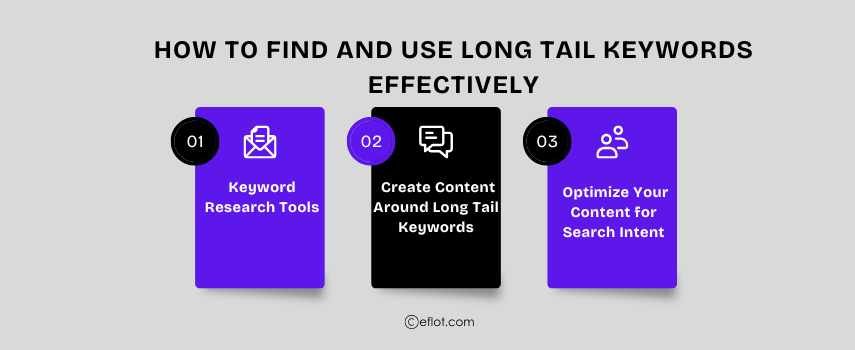
1. Keyword Research Tools
The first step in identifying the right long tail keywords is conducting thorough SEO keyword research. There are several great tools you can use, including:
-
Google Keyword Planner: This free tool can help you find keyword ideas based on your business and offers valuable data on search volume and competition.
-
SEMrush: A paid tool that gives you access to detailed keyword research, competition analysis, and more.
-
Ahrefs: Another excellent tool for finding long tail keyword examples, analyzing competitors, and tracking keyword rankings.
-
Ubersuggest: A user-friendly tool that provides keyword suggestions and related terms based on your initial query.
These tools will help you identify high-value long tail keywords that have low competition but are highly relevant to your audience.
2. Create Content Around Long Tail Keywords
Once you’ve identified your target long tail keywords, create content that’s specifically designed to answer those queries. Write blog posts, articles, and landing pages that speak directly to the search intent behind those keywords. For example, if you’re targeting the long-tail keyword “how to improve website ranking with SEO,” create a detailed, actionable guide that answers that exact question.
3. Optimize Your Content for Search Intent
When using long tail keywords, it’s crucial to optimize for search intent. Think about why someone is using that specific phrase, what information are they looking for? Ensure that your content is highly relevant, answers their question, and provides value. This helps improve your SEO ranking and increases your chances of converting visitors into customers.
Case Studies
Case Study1:
Shopify, an e-commerce platform, has successfully used long tail keywords to increase traffic and boost sales for its users. By focusing on highly specific product-related searches, Shopify helps sellers reach the right audience.
Challenge:
Shopify faced intense competition in the e-commerce space, and ranking for broad keywords like “online store” was difficult.
Solution:
By targeting long-tail keywords like “how to build an online store for handmade products” or “best e-commerce platform for small businesses,” Shopify’s platform became more visible to a highly targeted audience.
Case Study2:
Zappos, a leading online retailer, used long tail keywords to drive targeted traffic to its site and improve visibility for niche products.
Challenge:
Zappos needed to stand out in a competitive market and differentiate itself from other retailers.
Solution:
Zappos optimized their product pages with long tail keywords such as “comfortable women’s boots for winter” and “best running shoes for flat feet.”
Long tail keywords are a powerful SEO tool that helps businesses rank for more specific, less competitive search terms. Incorporating long tail keywords into your SEO keyword strategy can drive targeted traffic, improve conversion rates, and outrank competitors. With the right tools, content creation, and focus on search intent optimization, you can use long tail keywords to increase website traffic and boost your SEO ranking over time. Start targeting those long tail keywords and see how they can help grow your online presence!
Digital Marketing services in Other Locations in India
Bangalore | Hyderabad | Chennai | Pune | Ahmedabad | Coimbatore | Mumbai | Kolkata | Patna | Amritsar | Indore | Kozhikode | Trivandrum | Jaipur | Nagpur | Gwalior | Dehradun | Noida | Vizag | Raipur | Agra | Gurgaon | Madurai | Udaipur | Thrissur |