

















Storytelling Techniques in Content Marketing for Trust
Learn storytelling techniques in content marketing to build trust, engage audiences, and create memorable brand experiences effectively.

Grabbing audience attention in a crowded digital space is challenging. Many brands focus on features, offers, or discounts, but fail to connect on an emotional level. Generic content is often ignored, leaving marketing efforts unnoticed and engagement low. In fact, 92% of consumers prefer ads that feel like stories.
Storytelling in content marketing provides a solution. By sharing relatable experiences, highlighting real problems, and creating emotional connections, brands can capture attention, build trust, and make their message memorable.
Building Consumer Trust: Amul’s Storytelling Strategy
Amul is a well-known Indian dairy brand, famous for its "Amul Girl" ads. These ads use humor, puns, and references to current events, making them relatable and memorable. The brand focuses on emotional storytelling that connects with everyday life and Indian culture.
Even with strong recognition, Amul needed to stay relevant in a competitive market. The brand wanted to connect more deeply with consumers and move beyond just promoting products, aiming to build trust and loyalty through meaningful stories.
Amul told stories about everyday life and shared experiences.
-
Showed unity and resilience
-
Made the brand feel part of the community
-
Went beyond products to build trust
Role of Storytelling in Content Marketing
Storytelling in content marketing is key to connecting with audiences. Customers don’t just buy a product, they buy the meaning behind it.
The role of storytelling includes:
-
How it makes a brand human and relatable
-
How it turns facts into emotion that sticks
-
How it demonstrates solutions to real problems
-
How it keeps audiences engaged and attentive
-
How it focuses on experiences, not just features
-
How it builds trust faster than traditional ads
-
How it leaves a lasting impression
These points highlight why storytelling matters and how it can transform marketing. They show practical ways to connect with audiences and build lasting trust.
Simple Storytelling Techniques to Build Trust
You don’t need complex scripts to connect with your audience. Simple storytelling techniques can create a strong impact, build credibility, and contribute to your brand strength.
The role of storytelling in building trust includes:
-
Start with a real problem: Highlight the challenges your audience faces to make your story relevant
-
Show a relatable character: Create situations your audience can see themselves in
-
Add a solution or transformation: Demonstrate how your product or service resolves the problem
-
Use honest language: Avoid hype or exaggerated claims to maintain authenticity
-
Share customer examples: Real experiences resonate more than generic promises
-
Include small everyday stories: Even simple moments make your brand feel human
-
Focus on emotions: Connect through hope, relief, or achievement to leave a lasting impression
-
Keep the story clear and concise: Simple stories are easier to remember and share
By following these techniques, brands can demonstrate empathy, show value, and make audiences feel understood. Trust grows when stories are authentic, relatable, and consistently delivered.
How to Keep Your Story Consistent Across Platforms
A story loses impact when it sounds different on each platform. Consistency makes your brand memorable and trustworthy.
The role of consistent storytelling includes:
-
Use the same brand voice: Keep tone and language uniform across all channels
-
Repeat the core message: Reinforce your key point, even if the format changes
-
Align visuals, tone, and values: Make every post, video, or email feel like one cohesive story
-
Keep promises clear: Show exactly what your brand delivers and the change it brings
-
Train your team: Everyone shares stories in the same style and intent
-
Adapt for each platform: Tailor content for Instagram, Twitter, or blogs without changing the core message
-
Post regularly: Frequent storytelling strengthens recognition
-
Use platform features: Match content style to the platform, short text for Twitter, visuals for Instagram, detailed stories for blogs
Whether it’s a reel, blog, email, or ad, your story should feel like it comes from a single source. Consistency builds trust, loyalty, and audience engagement.
Psychology Behind Effective Storytelling
People connect with emotions before logic. That is why stories work. The brain reacts to characters, tension, and resolution, making narratives memorable.
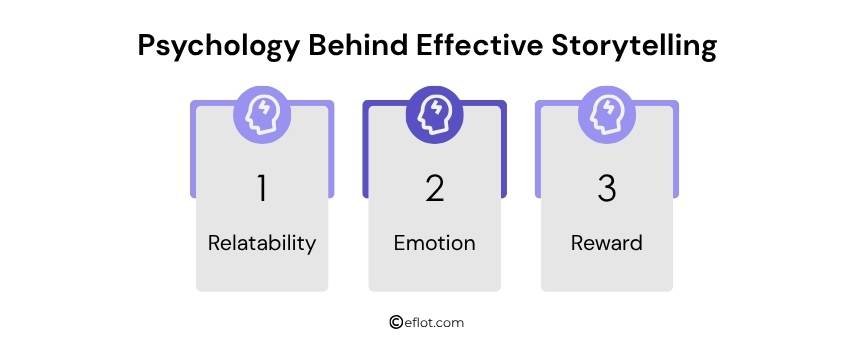
Assume your audience sees themselves in a story. They immediately relate, pay attention, and remember the experience longer. Three key psychological triggers make storytelling effective:
-
Relatability: People trust brands that reflect their reality and understand their challenges
-
Emotion: Joy, fear, hope, or struggle hold attention and make messages stick
-
Reward: A satisfying outcome creates a sense of closure and reinforces memory
Stories also help audiences imagine possibilities. When they watch a character overcome a challenge, they picture themselves achieving similar results. This connection builds trust naturally.
Using relatable characters, emotional arcs, and clear resolutions makes stories not just entertaining, but a powerful tool to guide decisions and create lasting audience loyalty.
AI’s Role in Scaling Content Storytelling
AI does not replace stories, it helps brands create them faster, smarter, and more effectively.
Understanding the Audience
-
Finds customer pain points through data
-
Identifies patterns in audience behavior
-
Highlights topics that resonate most
Generating Story Ideas
-
Suggests story concepts based on current trends
-
Provides inspiration from successful examples
-
Helps prioritize ideas with the most potential impact
Personalizing Content
-
Adjusts stories for different audience segments
-
Adapts tone, format, or focus based on preferences
-
Makes messages feel relevant to each group
Repurposing and Optimizing Stories
-
Converts one story into multiple formats, blogs, videos, or social posts
-
Tracks which story style performs best
-
Offers insights to improve future content
AI allows brands to save time while keeping originality intact. It supports creativity by simplifying production and giving clear direction, without replacing the human touch that makes stories meaningful.
Digital Marketing services in Other Locations in India
Bangalore | Hyderabad | Chennai | Pune | Ahmedabad | Coimbatore | Mumbai | Kolkata | Patna | Amritsar | Indore | Kozhikode | Trivandrum | Jaipur | Nagpur | Gwalior | Dehradun | Noida | Vizag | Raipur | Agra | Gurgaon | Madurai | Udaipur | Thrissur |