








How Integrated Marketing Communication work in 2026?
Integrated Marketing Communication helps align all marketing channels into one clear message, improving consistency, trust and brand recall across platforms.
Sometimes you spend a lot of time creating content, running ads, sending emails, and updating your website, but the results don’t match your effort. Traffic may increase, but sales and engagement stay low. This usually happens when different marketing channels don’t work together.
Integrated Marketing Communication (IMC) connects all your messages so your audience sees the same story everywhere. It helps people understand your brand and remember it better.
What Is Integrated Marketing Communication?
Integrated Marketing Communication is a strategy that aligns all marketing messages across every platform. It combines social media, email, website, PR, and offline campaigns into one cohesive story.
Why It Works
-
Audiences interact with brands across multiple channels.
-
Conflicting messages create confusion and reduce engagement.
-
Consistent messaging builds recognition and trust.
Why is it Important
-
Social media posts, emails, and advertisements share the same message.
-
Website content continues the story without breaking the flow.
-
Offline campaigns, such as events or posters, follow the same visuals and tone.
The goal is to provide a clear and familiar experience for the audience, making your brand easier to understand and remember.
4 C's of Integrated Marketing Communication
The 4 C’s guide IMC and help brands communicate clearly across platforms:
|
4C’s |
Description |
Why It Works |
|
Consistency |
Messages, visuals, and tone are aligned across channels |
Builds recognition and trust |
|
Clarity |
Communication is simple and easy to understand |
Reduces confusion and guides action |
|
Connection |
Messages relate to audience needs or interests |
Makes the brand relatable |
|
Continuity |
Campaigns flow naturally over time |
Keeps the brand visible and memorable |
-
Consistency: All posts, emails, website pages, and ads should feel like they come from the same source. This alignment strengthens recognition and credibility.
-
Clarity: Messages should be straightforward. Avoid complex language or conflicting statements. Clear communication makes it easy for audiences to understand the brand and decide what to do next.
-
Connection: Communication should relate to the audience’s goals, challenges, or interests. When content aligns with what the audience cares about, engagement and trust increase.
-
Continuity: Social Media Campaigns should feel linked, not isolated. Continuous messaging keeps your brand visible and reinforces the overall story.
Why IMC Is Important in 2026
In 2026, people will interact with brands through social media, email, websites, and offline channels. Each interaction shapes how the audience perceives your brand.
-
Audiences Move Across Channels: Users jump between Instagram, YouTube, email, and websites in a single session. If messages are not aligned, the brand feels inconsistent. This can confuse the audience and reduce engagement.
-
Competition Is Everywhere: Competing for attention is challenging. A campaign with disconnected messaging makes it easier for others to stand out. IMC helps for your brand strength.
-
Limited Attention: People skim content and have short attention spans. Messages that are unclear or inconsistent are ignored. Linked messaging keeps the story simple and easy to follow.
-
Coordinated Insights: Monitoring interactions across channels shows what resonates with the audience. IMC helps use this information to adjust messaging naturally, without breaking the flow of communication.
Using IMC makes your brand easier to follow and more memorable. When every message works together, your audience pays attention and connects with your story.
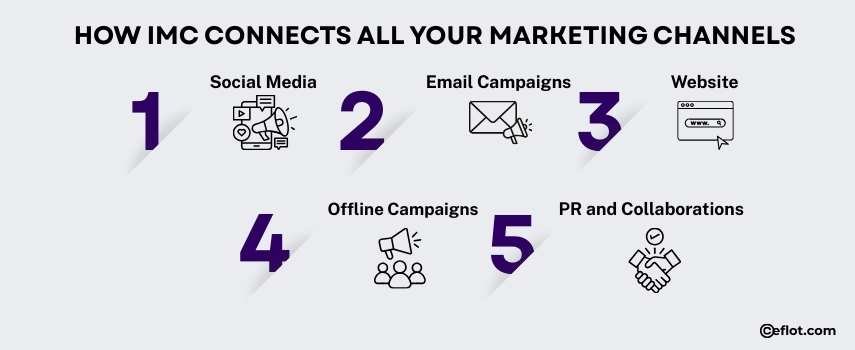
How IMC Connects All Your Marketing Channels
IMC links all channels so each one supports the others. Every interaction a customer has contributes to a single brand story.
-
Social Media: Posts, stories, and videos introduce ideas that appear consistently across emails and website content.
-
Email Campaigns: Email Automation reflects the same tone, visuals, and key points as social media. They guide audiences toward product pages, sign-ups, or events while keeping the story unified.
-
Website and Landing Pages: The website continues the campaign story. Visuals, content, and calls-to-action match what audiences have already seen elsewhere.
-
Offline Campaigns: Events, flyers, and in-store displays follow the same messaging. Every interaction reinforces the same story.
-
PR and Collaborations: Media coverage, partnerships, and influencer mentions support the same campaign themes, expanding reach and credibility.
Assume: A new product teaser on social media should match the email sent to subscribers, the landing page visuals, and any offline advertisements. This makes the story clear and easy to follow at every step.
Steps to Set Up Integrated Marketing Communication
Building an IMC strategy can be broken down into simple, actionable steps:
Step 1: Map Channels
Identify all the places your audience interacts with your brand: social media, emails, website, PR, and offline campaigns. Knowing every touchpoint is the first step.
Step 2: Define the Core Message
Decide what your brand stands for and the story to share. This central message will guide every campaign and communication.
Step 3: Align Content Across Channels
Make sure every post, email, ad, and web page uses the same tone, visuals, and message. Alignment keeps communication clear.
Step 4: Coordinate Timing
Plan campaigns so messages across channels support each other rather than overlap. Sequencing helps audiences follow the story naturally.
Step 5: Track Engagement
Observe how audiences respond to content across channels. Adjust messaging according to what resonates, while keeping the story connected.
Step 6: Keep Teams Connected
Marketing, PR, social media, and sales teams should update each other regularly using an internal chat tool. Regular communication prevents campaigns from drifting apart and maintains clarity across all channels.
Examples of IMC in Action
-
Product Launch: Social media posts announce the product → Emails provide details → Landing pages match visuals and content → Offline posters and events follow the same theme → Media coverage supports the story.
-
Event Promotion: Social ads create awareness → Emails share registration → Website provides full details → Offline materials follow the same messaging.
This approach gives audiences a clear and unified experience, building recognition and confidence in the brand.
Integrated Marketing Communication helps your brand speak with one clear voice across all channels. It makes messages easier to follow, builds trust, and keeps your audience engaged. By connecting every touchpoint, your marketing becomes more effective and memorable.
Digital Marketing services in Other Locations in India
Bangalore | Hyderabad | Chennai | Pune | Ahmedabad | Coimbatore | Mumbai | Kolkata | Patna | Amritsar | Indore | Kozhikode | Trivandrum | Jaipur | Nagpur | Gwalior | Dehradun | Noida | Vizag | Raipur | Agra | Gurgaon | Madurai | Udaipur | Thrissur |