

















Why Every Business Needs a Strong Social Media Strategy
Discover the essential reasons why businesses benefit from a solid social media strategy to enhance engagement, reach, and brand growth.
Social media is more than just a place to share personal updates and images, it's also an effective tool for businesses to increase brand awareness, engage with their audience, and drive growth. With billions of customers active on social media platforms daily, organizations that manage to take advantage of social media miss out on incredible chances for engagement and growth. A well-developed social media strategy helps businesses maintain visibility, engage directly with customers, and generate a loyal following that leads to long-term success.
As a digital marketing strategist with years of experience guiding brands through the world of technology, I've seen the transforming power of a great social media strategy. I worked with a small e-commerce company that first treated social media as inconvenient. Their reach and engagement increased by more than 300% in just six months after they implemented an organized social media strategy that focused on engaging content, regular updating, and targeted audience interaction. This event highlighted the importance of a strong social media strategy and its ability to enhance a business.
The Importance of a Social Media Strategy for Businesses
-
Brand Visibility and Awareness: One of the primary benefits of social media is increasing brand visibility. With consistent, relevant content and targeted messaging, social media allows businesses to stay top-of-mind for potential customers. For instance, a local bakery sharing daily photos of fresh pastries or running seasonal promotions on social media keeps it visible to nearby customers. When they’re in the mood for a treat, they’ll likely think of that bakery first.
-
Customer Engagement and Loyalty: Social media allows businesses to interact with customers directly, creating a two-way communication channel that fosters relationships and builds loyalty. Unlike traditional advertising, social media provides real-time interaction, enabling businesses to respond to customer inquiries, address complaints, and acknowledge positive feedback. This engagement helps humanize the brand and makes customers feel valued, leading to greater loyalty.
-
Competitive Advantage: In a competitive environment, businesses with a defined social media presence can outperform those without one. With a clear plan for creating engaging content, reaching target audiences, and leveraging analytics, companies can capture market share, even in competitive industries. A strong social media presence signals to potential customers that a business is modern, relevant, and accessible.
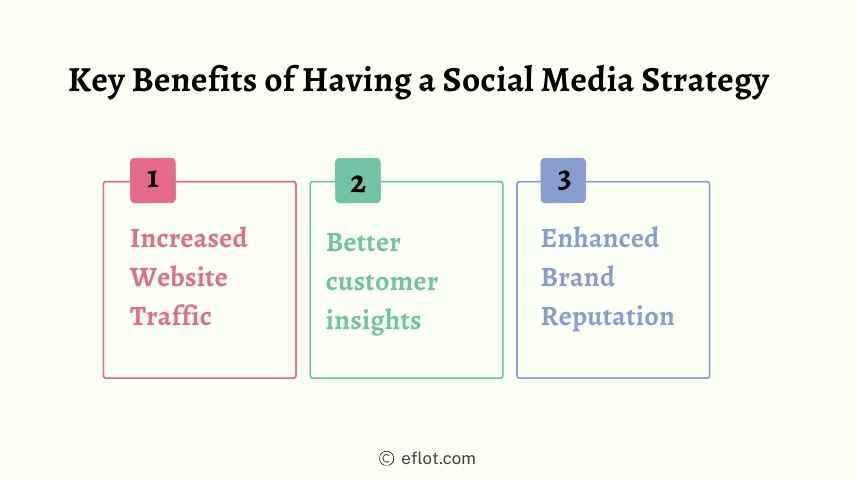
Key Benefits of Having a Social Media Strategy
-
Increased Website Traffic: One significant advantage of social media is its ability to drive traffic to a business’s website. By sharing content that links back to the site, businesses can guide social media followers to explore products, learn more about services, or read blog articles. Increased traffic to the website means higher chances of conversions, whether it’s a purchase, a subscription, or a lead capture.
-
Better customer insights: social media offers valuable insights into customer preferences, behaviors, and engagement patterns. Platforms like Facebook, Instagram, and LinkedIn provide built-in analytics tools that reveal which posts perform best when followers are most active and what types of content drive the most engagement. This data can guide content creation and campaign planning, allowing businesses to better meet their audience’s needs.
-
Enhanced Brand Reputation: Proactive social media helps businesses shape their brand image and manage their reputation. By consistently sharing valuable content, engaging with followers, and responding to customer feedback, companies can establish themselves as trusted authorities in their industry. In the event of a negative comment or complaint, a well-managed social media presence also allows businesses to address issues transparently, minimizing potential reputational harm.
Essential Components of a Strong Social Media Strategy
Building a social media strategy that delivers results requires several critical components that align with business goals and audience expectations.
-
Clear Goals and Objectives: The foundation of any social media strategy is setting clear, measurable goals. These objectives help businesses focus their efforts, allocate resources, and track progress. Goals can vary widely depending on the business, ranging from increasing brand awareness and growing followers to driving website traffic and generating leads. Defining these goals upfront makes it easier to tailor content and strategies accordingly.
-
Audience Targeting: Knowing who you’re speaking to on social media is essential for creating content that resonates. Audience targeting involves understanding the demographics, interests, and online behavior of your ideal customers. For instance, a B2B company might focus on LinkedIn to reach professionals, while a fashion retailer could find success on Instagram by targeting younger, visually-driven users.
-
Content Planning and Scheduling: Creating a content calendar is a vital part of maintaining consistency on social media. By planning posts and scheduling them, businesses ensure regular engagement with their audience, even during busy periods. A good content calendar includes a mix of post types, such as product updates, educational content, user-generated content, and promotional offers, keeping the feed engaging and informative.
-
Performance Metrics: Tracking performance metrics allows businesses to measure the effectiveness of their social media efforts and make data-driven adjustments. Key performance indicators (KPIs) such as engagement rate, reach, impressions, and click-through rate provide insights into what’s working and what isn’t, helping refine the strategy over time. Regularly reviewing these metrics is essential for maintaining a successful social media presence.
Steps to Build an Effective Social Media Strategy
Crafting an effective social media strategy involves a series of steps that ensure alignment with business objectives and audience expectations.
-
Identify Your Unique Brand Voice: A distinctive brand voice helps businesses stand out and remain consistent in their messaging. Brand voice reflects the personality of the business, whether it’s professional, friendly, humorous, or inspirational, and should resonate with the target audience. For example, a tech company might adopt an informative and innovative tone, while a fitness brand might focus on motivational language.
-
Choose the Right Platforms: Not all social media platforms are suitable for every business, so it’s important to choose channels that align with your target audience and business goals. Instagram and TikTok are popular among younger audiences and are well-suited for visually driven content, while LinkedIn is ideal for B2B brands and professional services. Choosing the right platforms ensures that content reaches the intended audience.
-
Create engaging, value-driven content: content is at the heart of any social media strategy. To engage followers and attract new ones, businesses must produce content that offers value, whether through entertainment, education, or inspiration. Interactive content such as polls, quizzes, live videos, and user-generated content (UGC) fosters engagement and makes followers feel involved with the brand.
A well-developed social media strategy is no longer optional for businesses; it’s essential for achieving growth, building customer loyalty, and staying competitive. By increasing brand visibility, driving website traffic, and fostering customer relationships, social media has become a powerful tool that can transform a business’s online presence. The benefits of a strategic approach to social media are evident in improved engagement, greater credibility, and stronger customer insights, all of which contribute to sustainable success. For businesses aiming to reach their full potential in the digital environment, creating a comprehensive social media presence is a critical step.
Digital Marketing services in Other Locations in India
Bangalore | Hyderabad | Chennai | Pune | Ahmedabad | Coimbatore | Mumbai | Kolkata | Patna | Amritsar | Indore | Kozhikode | Trivandrum | Jaipur | Nagpur | Gwalior | Dehradun | Noida | Vizag | Raipur | Agra | Gurgaon | Madurai | Udaipur | Thrissur |