












How to Create Effective Pay-Per-Click Ads That Convert
Learn practical strategies to create Pay-Per-Click ads that convert, driving traffic and boosting conversions for your business.

Pay-per-click (PPC) advertising has become an essential part of modern digital marketing. With billions of people using search engines and social media daily, companies are leveraging PPC campaigns to capture the attention of potential customers. But not every ad is successful. Some campaigns perform far better than others. What separates the winners from the losers? It comes down to creating highly effective ads that convert.
We will explore the principles and best practices for crafting PPC ads that not only drive traffic but also convert clicks into tangible results, such as sales, sign-ups, or inquiries. From targeting the right audience to writing compelling ad copy, optimizing landing pages, and choosing the right keywords, this guide covers everything you need to know.
Understanding Pay-Per-Click Advertising
Pay-per-click (PPC) ads are a model where advertisers pay a fee each time someone clicks on their ad. Essentially, it’s a way to buy visits to your website rather than earning them organically. PPC is widely used on platforms like Google Ads, Bing Ads, and social media channels like Facebook and Instagram.
The goal of PPC is to generate leads and sales by capturing the attention of users actively searching for products or services similar to what you offer. However, for PPC ads to be successful, you need to do more than just get clicks—you need those clicks to convert into meaningful actions.
Why Conversion Matters in PPC Advertising
While many advertisers focus on getting high click-through rates (CTR), the real success of a PPC campaign lies in its conversion rate. Conversion refers to the action a user takes after clicking the ad, such as making a purchase, signing up for a newsletter, or filling out a contact form.
A campaign with a high CTR but a low conversion rate is not an efficient use of your ad spend. This is why optimizing your PPC ads for conversions is key to ensuring you get the highest possible return on investment (ROI).
Targeting the Right Audience
Effective PPC ads begin with a clearly defined target audience. Without a strong understanding of your ideal customer, your ads may reach people who are not interested in your product or service.
Identifying Buyer Personas
Buyer personas are fictional representations of your ideal customers. Creating detailed buyer personas helps you understand who your ads should target, what their needs are, and what motivates them to take action.
Some factors to consider when building buyer personas include:
-
Demographics (age, gender, income level, location)
-
Interests and hobbies
-
Online behavior (what sites they visit, what content they consume)
-
Purchasing habits
Behavioral Targeting
Behavioral targeting uses data on past consumer behavior to show relevant ads. This can include browsing history, past purchases, and online searches. Tools like Google Ads allow you to set specific behaviors to target so you can show your ads to those most likely to convert.
Choosing the Right Keywords
Keywords are the backbone of any PPC campaign. When you choose the right keywords, you increase the chances of your ad being seen by users searching for exactly what you offer. However, keyword selection needs to be strategic.
-
Long-Tail Keywords vs. Short-Tail Keywords
Long-tail keywords are more specific and usually have lower search volume but higher conversion potential. For example, instead of bidding on “shoes,” you may bid on “women’s running shoes size 8.” Long-tail keywords often attract more qualified leads who are closer to making a purchase.
-
Short-tail keywords, on the other hand, are broader and more competitive. While they can drive large volumes of traffic, they may not result in conversions because the user’s intent may not be as clear.
-
Negative Keywords
Negative keywords are terms you don’t want your ads to show for. Including negative keywords helps filter out irrelevant traffic, saving your ad spend for users who are more likely to convert. For example, if you sell premium watches, you might want to exclude keywords like “cheap watches.”
Crafting Compelling Ad Copy
The ad copy is the most visible part of your PPC ad, and it needs to grab attention quickly. However, simply getting a click isn't enough—you need to motivate users to take further action.
Use of Action-Oriented Language
Successful PPC ads often use strong calls-to-action (CTAs) to encourage users to act immediately. Phrases like “Buy Now,” “Get a Free Quote,” or “Start Your Free Trial” create a sense of urgency and push users toward conversion.
Addressing Pain Points
People are more likely to click on ads that solve a problem they’re facing. Your ad copy should highlight the benefits of your product or service in a way that addresses your audience’s pain points. If you sell accounting software, for example, your ad might read, “Simplify Your Tax Filing in Minutes.”
Optimizing Landing Pages for Conversion
Your PPC ad’s job isn’t finished once someone clicks on it. The landing page they are directed to is crucial in determining whether that click turns into a conversion.
-
Ensuring Relevance
The landing page should directly correspond to the ad. If your PPC ad promotes a discount on shoes, the landing page should feature the same offer and product. A mismatch between ad copy and landing page content can lead to a high bounce rate and low conversions.
-
Fast Load Times
Speed matters. A slow-loading page will lead to high abandonment rates. Ensure your landing page is optimized for speed by minimizing large images, reducing redirects, and using a reliable hosting service.
-
Clear Calls-to-Action
Like your ad copy, your landing page must have a strong CTA. The CTA should be easy to find and visually stand out. Whether it’s “Sign Up Now” or “Claim Your Discount,” make sure it’s clear what action you want visitors to take.
Setting the Right Budget and Bidding Strategy
Budgeting and bidding are essential components of any PPC campaign. A poorly managed budget can exhaust your funds quickly without producing the desired results.
-
Manual vs. Automated Bidding
PPC platforms like Google Ads offer different bidding options. With manual bidding, you set a maximum cost-per-click (CPC) for your ads. This gives you more control over how much you spend. Automated bidding, on the other hand, allows the platform to adjust your bids based on your goals, such as maximizing clicks or conversions.
-
Allocate Budget Wisely
Distribute your budget strategically among high-performing keywords and ad groups. Don’t spend too much on low-converting ads. Regularly review your campaign’s performance to identify which areas deliver the best ROI, and allocate your budget accordingly.
Tracking and Analyzing Performance
Regular monitoring of your PPC campaigns is critical for long-term success. You need to track key performance indicators (KPIs) such as CTR, conversion rate, and cost per conversion to determine whether your ads are effective.
-
A/B Testing
A/B testing, also known as split testing, involves creating multiple versions of an ad to see which performs better. Test different elements such as headlines, CTA buttons, and landing page designs to optimize your campaign for the best results.
-
Using Analytics Tools
Google Analytics and similar tools can provide valuable insights into how users interact with your site after clicking on your ads. These insights can help you tweak your PPC campaigns for improved performance.
Common PPC Mistakes to Avoid
Running a successful PPC campaign requires avoiding common pitfalls that can drain your budget or result in underwhelming performance. Here are some key mistakes to watch out for:
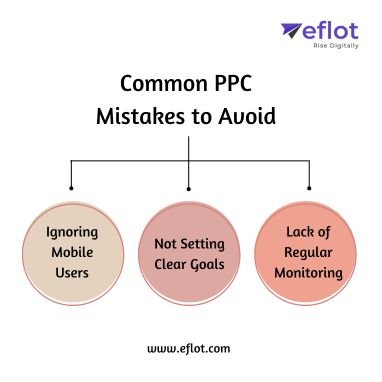
Ignoring Mobile Users
With mobile devices accounting for a large percentage of online traffic, failing to optimize your ads and landing pages for mobile can cost you conversions.
Not Setting Clear Goals
Before launching your campaign, set specific, measurable goals. Whether it’s increasing sales or driving sign-ups, having clear objectives will guide your ad strategy.
Lack of Regular Monitoring
PPC campaigns are not a “set it and forget it” endeavor. Regular monitoring is essential to ensure your ads are performing as expected. Use real-time data to make adjustments when necessary.
FAQs
What is the average cost of a PPC ad?
The average cost of a PPC ad varies depending on industry, keyword competitiveness, and bidding strategy. Costs per click can range from a few cents to over $50 for highly competitive keywords.
How long does it take for a PPC campaign to show results?
Results can vary, but you may start seeing traffic within a few days. However, optimizing for conversions may take several weeks as you refine your targeting and ad copy.
How do I know if my PPC ads are successful?
The success of a PPC campaign is measured by key metrics such as click-through rate, conversion rate, and cost per conversion. Analyzing these KPIs can help you determine if your campaign is meeting its goals.
Creating effective Pay-per-click ads that convert requires a combination of strategic planning, targeting, and optimization. By focusing on the right audience, choosing the best keywords, crafting compelling ad copy, and optimizing your landing pages, you can significantly improve your chances of converting clicks into valuable actions. Regular monitoring and testing will ensure your PPC campaigns continue to perform and deliver high returns on investment.
Digital Marketing services in Other Locations in India
Bangalore | Hyderabad | Chennai | Pune | Ahmedabad | Coimbatore | Mumbai | Kolkata | Patna | Amritsar | Indore | Kozhikode | Trivandrum | Jaipur | Nagpur | Gwalior | Dehradun | Noida | Vizag | Raipur | Agra | Gurgaon | Madurai | Udaipur | Thrissur |