





















How a Site Audit Can Strengthen Your Online Strategy
Struggling with low traffic or poor conversions? Discover how a site audit can reveal hidden issues and help sharpen your online strategy for better results.
Is your website helping your business grow, or holding it back without realizing it? What if one quick review could reveal hidden issues costing you customers?
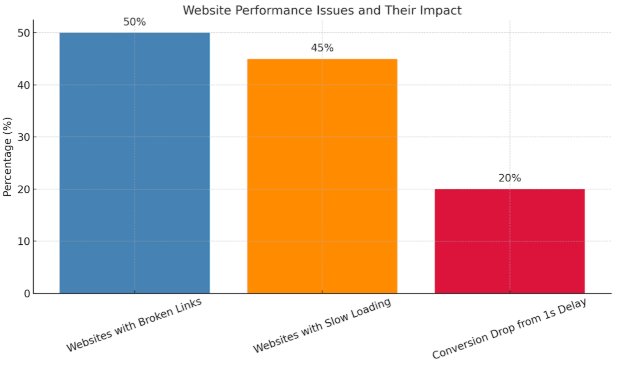
According to Semrush, over 50% of websites have broken links, and more than 45% suffer from slow loading times. A Google study shows that a 1-second delay in page load can reduce conversions by 20%.
Macy’s online sales dipped, so their team ran a comprehensive site audit to find the problem. They discovered:
-
High bounce rates on mobile
-
Missing structured data
-
Outdated JavaScript is slowing page load
Within weeks of fixing these issues, their website not only loaded faster but delivered a smoother user experience. The result? A 9% rise in conversions and a measurable boost in user satisfaction.
That’s the power of data-backed changes and something any business can replicate.
What Is a Site Audit?
A Site Audit is a detailed examination of your website’s overall health, structure, and performance. It helps identify technical errors, user experience (UX) issues, SEO gaps, and security flaws that may be weakening your online strategy. Think of it as a health check-up for your digital presence; without one, your site may look fine on the surface but be full of hidden problems underneath.
Why Your Online Strategy Depends on Site Audit
1. Improves Search Engine Visibility
Your online strategy starts with visibility. If customers can’t find your site in search engines, your strategy won’t matter. A site audit uncovers SEO issues such as:
-
Broken links
-
Missing meta tags
-
Duplicate content
-
Poor mobile usability
-
Slow page load speed
Search engines reward websites that are technically sound and user-friendly. Fixing these issues helps improve your rankings, which leads to more organic traffic.
2. Enhances User Experience (UX)
Visitors judge your business based on how your website looks and works. If it’s slow, confusing, or full of errors, they’ll leave and probably won’t return. A website audit helps improve:
-
Navigation flow
-
Mobile responsiveness
-
Readability and layout
-
Page speed
-
Clear calls to action (CTAs)
When your site is easier to use, visitors stay longer, trust you more, and are more likely to take action, like signing up, buying, or contacting your team.
3. Boosts Conversion Rates
Your traffic means nothing if it doesn't turn into leads or sales. A good website audit identifies obstacles in the conversion path such as:
-
Cluttered landing pages
-
Unclear messaging
-
Slow checkout process
-
Missing or weak CTAs
-
Forms that don’t work on mobile
Fixing these elements streamlines the user journey, leading to better engagement and higher conversions, which is the core goal of any online strategy.
4. Supports Content Strategy
A website audit isn’t only about technical errors, it also helps you understand how your content performs. It can show you:
-
Which pages are getting the most traffic
-
Which pages have high bounce rates
-
Which content isn’t being indexed by search engines
-
Where there are gaps in topics or keywords
With this data, you can refine your content strategy, focus on what works, and plan new content that aligns with what your audience wants.
5. Identifies Security Risks
Security is often overlooked in online strategies, yet it plays a huge role in trust. A website audit can reveal issues like:
-
Outdated plugins
-
Weak SSL certificates
-
Unsecured data transfer points
-
Vulnerable scripts or malware
Protecting your site not only keeps your business safe but also builds trust with your visitors, and trust leads to loyalty
6. Aligns Website with Business Goals
Is your website supporting your business goals or drifting off course? A site audit evaluates how well your website aligns with your key objectives, whether it’s lead generation, e-commerce sales, or brand awareness.
For example, if your goal is to capture leads, the audit will look at form placement, data collection practices, and how users are funneled through the site.
When Should You Perform a Site Audit?
Here are key times to run a site audit:
-
After a website redesign
-
Before launching a marketing campaign
-
If you see a drop in traffic or sales
-
Every 6 months for regular health checks
-
Before expanding into new markets
Making audits a regular part of your digital plan ensures your online strategy stays sharp, relevant, and results-focused.
How to Get Started
You don’t need to be a tech expert to benefit from a site audit. Here’s how to begin:
-
Use free tools like Google Search Console, GTmetrix, or Screaming Frog for basic audits.
-
Work with a digital agency or expert for a deeper audit covering SEO, UX, speed, security, and content.
-
Create an action plan based on audit findings, fix errors, enhance design, and update content.
-
Measure improvements after changes to see the real impact.
Your website is often the first impression your business makes. If it’s underperforming even slightly, it can cost you real results. A site audit gives you clear, actionable insights to strengthen every part of your online strategy. It’s not just about fixing problems, it’s about making your website work harder for your business.
Ready to uncover what’s holding your website back?
Reach out to our team at [email protected] and let us help you perform a full Site Audit that strengthens your digital game and grows your business.
Digital Marketing services in Other Locations in India
Bangalore | Hyderabad | Chennai | Pune | Ahmedabad | Coimbatore | Mumbai | Kolkata | Patna | Amritsar | Indore | Kozhikode | Trivandrum | Jaipur | Nagpur | Gwalior | Dehradun | Noida | Vizag | Raipur | Agra | Gurgaon | Madurai | Udaipur | Thrissur |