

























Essentials of Website Ranking
Explore key factors affecting website ranking, including SEO strategies, content quality, backlinks, user experience, and mobile optimization.

Improving website ranking involves fundamental strategies essential for online visibility. By focusing on keyword optimization, quality content, mobile compatibility, and user experience, websites can attract more visitors and enhance their presence online. Backlink building, social media engagement, and local SEO further contribute to achieving higher rankings.
An effective online presence is essential for both individuals and businesses, based on Essentials of Website Ranking. Search engines such as Google serve as the entry point when someone looks for products or information on the internet. The likelihood of being noticed increases with the position of your website in search results. This blog post explores the fundamentals of website ranking to help you better understand how to increase the exposure of your website and connect with your target market.
What is Website Ranking?
The position of your website for particular keywords or search phrases on search engine results pages (SERPs) is referred to as website ranking. Algorithms examine billions of online pages when a user puts a query into a search engine to produce the most pertinent and educational results. Knowing the elements that these algorithms take into account when ranking websites is essential to raising your rating.
-
The internet has a lot of users., with millions of websites competing for attention. With search engines like Google constantly updating their algorithms, achieving and maintaining a high ranking can be challenging. Many website owners struggle to understand the intricacies of search engine optimization (SEO) and how it impacts their online visibility.
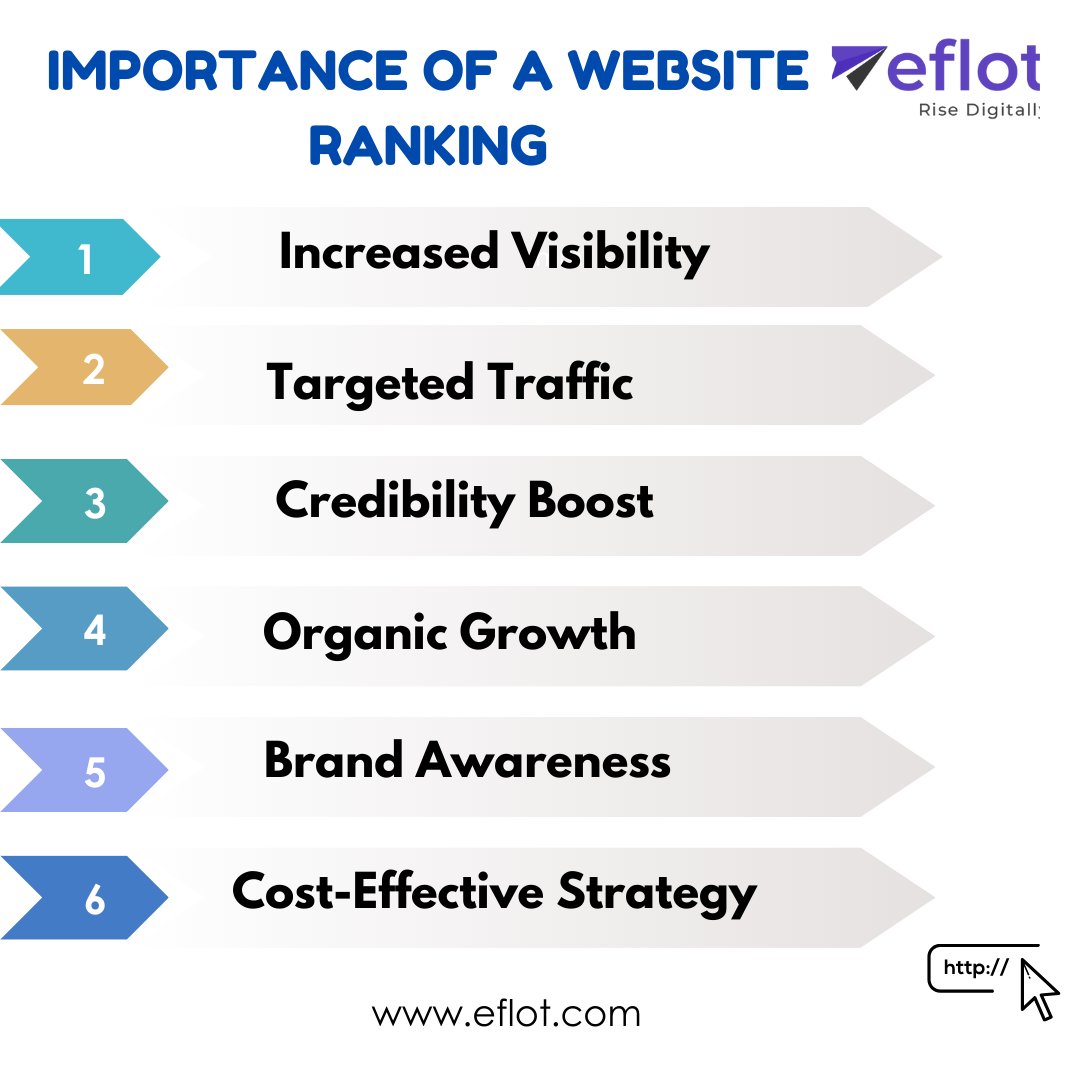
Why is Website Ranking Important?
There are several reasons why website ranking is important:
-
Increased Visibility: A higher ranking translates to more people seeing your website. This can lead to increased brand awareness, website traffic, and ultimately, more customers or leads.
-
Credibility and Trust: Websites that rank higher are often perceived as more credible and trustworthy sources of information.
-
Organic Traffic vs. Paid Advertising: Ranking well generates organic traffic, which is free and sustainable compared to paid advertising methods.
Understanding Search Engine Algorithms
The exact workings of search engine algorithms are complex and constantly evolving. However, we do know that they consider several key factors when ranking websites. Here are some of the most important ones:
Content: Your website's content should be high-quality, informative, and relevant to your target audience's needs. Search engines look for content that addresses user search intent and provides value.
Keywords: Keywords are the words and phrases people use to search for information online. Including relevant keywords throughout your website's content, titles, and meta descriptions signals to search engines what your website is about. However, keyword stuffing (overusing keywords unnaturally) can have negative consequences.
Technical SEO: This refers to the technical aspects of your website that make it easy for search engines to crawl and index your content. Factors like website speed, mobile-friendliness, and proper website structure all play a role.
Backlinks: Backlinks are links from other websites pointing to yours. Search engines consider backlinks as a sign of trust and authority. The more high-quality backlinks your website has, the better its ranking potential.
User Experience (UX): Search engines prioritize websites that offer a positive user experience. This includes factors like website navigation, page loading speed, and mobile responsiveness.
Taking Action: How to Improve Your Website Ranking
Now that you understand the basics of website ranking, let's explore some practical steps you can take to improve your website's visibility:
Content is King: Focus on creating valuable and informative content that your target audience will find genuinely useful. Conduct keyword research to identify relevant keywords and incorporate them naturally into your content.
Optimize On-Page SEO: Ensure your website titles, meta descriptions, and header tags accurately reflect your content and include relevant keywords.
Technical SEO: Make sure your website is mobile-friendly, has a clean and efficient code structure, and loads quickly. There are many free and paid tools available to help you with technical SEO audits.
Build Backlinks: Create high-quality content that other website owners will find valuable and want to link to. Engage in online communities, guest blog on relevant websites, and consider partnering with other businesses in your niche.
Focus on User Experience: Prioritize user-friendly website design and navigation. Ensure your website loads fast and functions effectively on all devices.
Monitoring website performance with analytics tools involves:
Traffic Analysis: Tracking the number of visitors to your site, where they're coming from, and which pages they're visiting.
User Behavior: Examining how users interact with your website, such as which links they click on and how long they stay on each page.
Conversion Tracking: Identifying the actions users take on your site that align with your goals, whether it's making a purchase, signing up for a newsletter, or filling out a form.
Bounce Rate Analysis: Understanding the percentage of visitors who leave your site without interacting further, indicating potential issues with content or usability.
Device and Location Insights: Determining which devices and geographical locations your visitors are accessing your site from, enabling better optimization strategies.
Page Speed Assessment: Evaluating how quickly your pages load and identifying any performance bottlenecks that may affect user experience.
Keyword Performance: Analyzing which keywords are driving traffic to your site and how they're performing in terms of attracting relevant visitors.
Content Evaluation: Assessing the effectiveness of your content by examining metrics like time spent on page, scroll depth, and engagement rates.
Goal Tracking: Setting up and monitoring specific goals within your analytics tool to measure the success of your website objectives.
Regular Reporting: Generating reports on a regular basis to track trends over time and make data-driven decisions for continuous improvement.
Improving your website ranking takes time and effort, but the benefits are substantial. By focusing on high-quality content, technical optimization, and positive user experience, you can increase your website's visibility and reach a wider audience. Remember, website ranking is an ongoing process. Stay updated on the latest SEO trends and continue to create valuable content to maintain a strong online presence.
Digital Marketing services in Other Locations in India
Bangalore | Hyderabad | Chennai | Pune | Ahmedabad | Coimbatore | Mumbai | Kolkata | Patna | Amritsar | Indore | Kozhikode | Trivandrum | Jaipur | Nagpur | Gwalior | Dehradun | Noida | Vizag | Raipur | Agra | Gurgaon | Madurai | Udaipur | Thrissur |