







What is Ecommerce Marketing? Strategies & Tips
Ecommerce businesses grow sales with ecommerce marketing like SEO, PPC, social media, email, content marketing, and customer retention strategies for steady, consistent results.
Ecommerce Brands often Face Gaps between TRAFFIC & REVENUE
You may have high-quality products and a well-designed website, yet orders remain inconsistent.
Traffic may fluctuate and advertising costs can rise without delivering matching returns.
As a result, sales often remain QUESTION MARK! This typically occurs when ecommerce marketing lacks proper planning and structure.
Without the right targeting, messaging and follow up strategy, attracting buyers and maintaining repeat purchases becomes challenging.
What is Ecommerce Marketing?
E commerce marketing is the process of promoting your online store through digital channels.
Its main goal is simple:
-
Bring visitors to your website
-
Convert visitors into prospects
-
Turn prospects into customers
-
Build long-term customer retention
In simple terms, e commerce marketing is how you communicate your product value to the right audience and guide them toward a purchase decision with the help of Ecommerce Advertising Agency.
It uses digital tools such as:
-
Search engines
-
Social media platforms
-
Email marketing
-
Paid advertising
-
Content marketing
Without ecommerce marketing, even a well-designed website may fail to attract traffic, generate inquiries, or produce consistent sales.
Channels Used in E Commerce Marketing
Ecommerce marketing uses multiple digital channels. Each channel plays a different role.
1. Search Engines (SEO)
When customers search for products on Google, your store should appear in results.
SEO helps your website rank higher, and with Shopify SEO services, your store can attract more relevant traffic and convert searches into actual sales.
It includes:
-
Keyword research
-
Product page optimization
-
Fast website speed
-
Mobile-friendly design
SEO brings consistent traffic over time.
2. Paid Advertising
Paid ads give faster visibility.
Platforms include:
-
Google Ads
-
Facebook Ads
-
Instagram Ads
-
YouTube Ads
With proper targeting, paid ads bring ready-to-buy customers. But without strategy, ad money can disappear quickly.
3. Social Media Marketing
Social media builds brand awareness and trust.
You can:
-
Share product updates
-
Post short videos
-
Highlight customer reviews
-
Announce limited offers
Customers like brands that communicate regularly.
4. Email Marketing
Email marketing helps you stay connected with customers.
You can send:
-
Welcome emails
-
Cart reminders
-
Discount offers
-
Festival campaigns
Email marketing supports repeat purchases.
5. Content Marketing
Blogs, buying guides, and product comparisons help customers make decisions. Content builds authority. When customers trust your brand, they buy with confidence. Together, these channels create a complete e commerce marketing system.
Strategies for Successful E Commerce Marketing
Running ads without direction leads to wasted budget. Effective ecommerce marketing follows a structured process.
Here’s a different and more strategic format:
Step 1: Define Your Ideal Customer
Start with clarity. Create a clear profile of your ideal customer.
Ask:
-
Who are they?
-
What problems are they trying to solve?
-
How much are they willing to spend?
-
Where do they spend time online?
Clear customer definition leads to focused campaigns and better targeting.
Step 2: Improve Your Product Presentation
Marketing brings traffic. Your product page converts it.
Your product presentation should:
-
Show clear product images from multiple angles
-
Explain benefits in simple language
-
Display price and delivery details clearly
-
Include real customer reviews
A structured and informative page reduces confusion and increases trust.
Step 3: Build a Multi-Channel Approach
Do not depend on one platform.
Use a mix of:
-
Search engine marketing
-
Social media ads
-
Email marketing
-
Organic content
Multiple channels create consistent visibility and reach different segments of your audience.
Step 4: Re-Engage Interested Visitors
Not every visitor buys on the first visit.
Use retargeting to:
-
Remind users about viewed products
-
Show abandoned cart ads
-
Offer limited-time deals
Re-engagement increases the likelihood of conversion.
Step 5: Create Timely Offers
Clear deadlines influence faster decisions.
Use:
-
Flash sales
-
Festive discounts
-
Limited stock messages
-
Bundle offers
Time-sensitive campaigns encourage immediate action.
Step 6: Measure, Analyze, Adjust
Performance tracking keeps your strategy aligned.
Track:
-
Traffic sources
-
Cost per conversion
-
Sales performance
-
Cart abandonment percentage
Data analysis helps adjust campaigns and improve outcomes over time.
Customer Retention Strategies in E Commerce
Getting a new customer often costs more than keeping an existing one. Customer retention is an important part of ecommerce marketing because repeat customers contribute to consistent revenue.
Below is the information presented in a clear tabular format:
|
Strategy |
Description |
Business Impact |
|
Loyalty Programs |
Offer points, discounts, cashback, or exclusive access to repeat buyers. |
Encourages repeat purchases and increases customer lifetime value. |
|
Personalized Emails |
Send product recommendations based on previous purchases and browsing activity. |
Increases engagement and repeat buying behaviour. |
|
Fast Customer Support |
Provide quick responses through chat, email, or phone support channels. |
Builds trust and improves customer satisfaction. |
|
Post-Purchase Follow-Up |
Send order confirmations, shipping updates, and feedback requests after delivery. |
Maintains communication and strengthens long-term relationships. |
Strong retention strategies create stable revenue and reduce the cost of acquiring new customers.
Benefits of Investing in ECommerce Marketing
Investing in e commerce marketing provides long-term business advantages that directly impact sales and visibility.
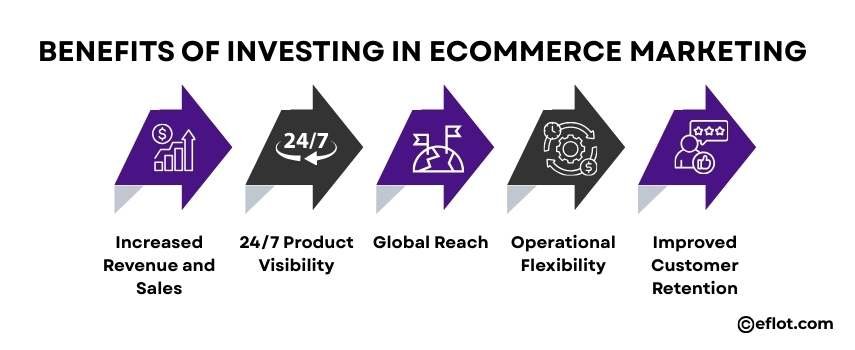
1. Increased Revenue and Sales
Targeted campaigns attract customers who are ready to buy.
Example: If you run Google Shopping ads for sports shoes, your product appears in front of users already searching for sports shoes online. This increases the chance of direct sales.
2. 24/7 Product Visibility
Your products remain visible in search engines at all times, even outside/physical business hours.
Example: A customer searches for sports shoes at 11 PM. Your SEO-optimized product page or active ad still appears, generating a sale even when your physical store is closed.
3. Global Reach
Online marketing removes location barriers.
Example: A sports footwear brand based in Bangalore runs social media ads and starts receiving orders from different cities across India.
4. Operational Flexibility
Campaigns can be adjusted quickly based on performance.
Example: If one sports shoe model is not performing well, you can reduce its ad budget instantly and shift spending to a high-performing design.
5. Improved Customer Retention
Consistent communication keeps customers engaged.
Example: After a customer buys sports shoes, you send a follow-up email recommending socks or fitness accessories. This increases the likelihood of repeat purchases.
FAQs
1. What do ecommerce marketing services include?
Ecommerce marketing services include SEO, Google Ads, social media ads, email marketing, and campaign analysis.
2. Why are ecommerce marketing services important for businesses?
They help businesses reach potential customers, increase product visibility, and generate consistent sales.
3. How do ecommerce marketing services increase website traffic?
They use search engine optimization, paid ads, and social media campaigns to bring targeted visitors to a website.
4. What is the difference between SEO and paid advertising in ecommerce marketing?
SEO focuses on improving search rankings organically, while paid advertising places your products at the top of search results through paid campaigns.
5. How do I choose the right ecommerce marketing agency?
Look for experience, client reviews, service offerings, pricing structure, and proven campaign performance before making a decision.
E commerce marketing is about combining the right channels with the right strategy. When traffic, conversions, and customer retention are managed together, online sales become more consistent.
Digital Marketing services in Other Locations in India
Bangalore | Hyderabad | Chennai | Pune | Ahmedabad | Coimbatore | Mumbai | Kolkata | Patna | Amritsar | Indore | Kozhikode | Trivandrum | Jaipur | Nagpur | Gwalior | Dehradun | Noida | Vizag | Raipur | Agra | Gurgaon | Madurai | Udaipur | Thrissur |