










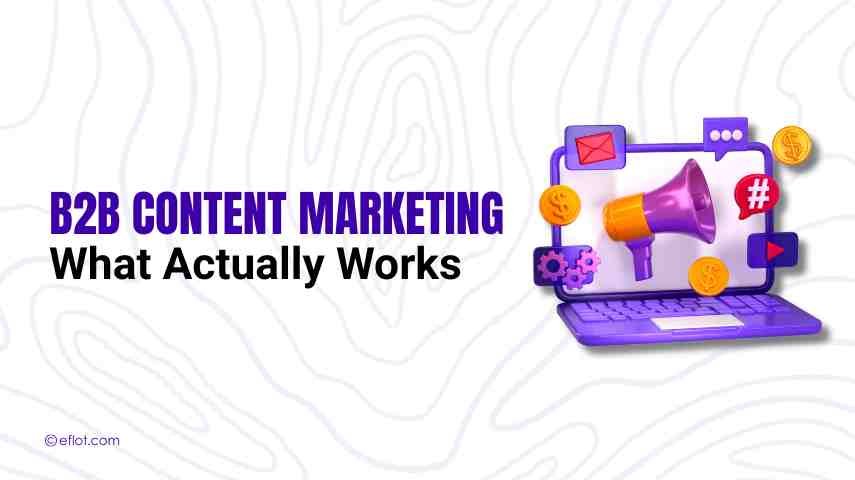







What is B2B Marketing? Strategy & Trends
Learn what B2B marketing is, how it works, key strategies and trends to generate quality leads, improve ROI, and grow your business.
Struggling with B2B Marketing Results?
If your B2B marketing isn’t attracting the right clients or driving conversions, it’s time to revamp your strategy.
The right strategy delivers better results, helping you connect with key decision-makers and drive meaningful business growth.
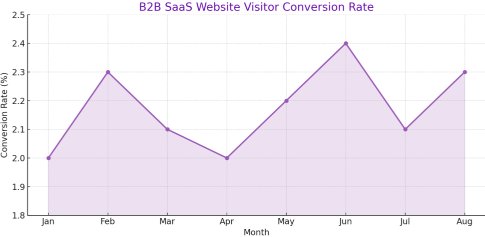
B2B SaaS companies convert 2.1% of website visitors into leads, showing the importance of clear content and strong calls to action.
What Is B2B Marketing?
B2B (Business-to-Business) marketing refers to the process where one business markets its products or services to another business. Unlike B2C (Business-to-Consumer), which targets individual consumers, B2B marketing focuses on building relationships between companies. The buying process in B2B is often more complex, and involves several decision-makers. These decisions are based on factors like ROI, efficiency and long-term value.
Effective B2B marketing helps businesses build trust, generate quality leads, and create long-term partnerships. In today's competitive market, it is essential for growing your business and establishing a strong market presence.
Importance of B2B Marketing
-
Reach Decision-Makers
Target professionals who control purchasing decisions by addressing their specific needs to improve engagement and campaign success. -
Build Brand Trust
Keep messaging consistent and provide valuable content that educates, building long-term confidence in your brand. -
Customer Loyalty
Improve strong relationships with ongoing value and support, encouraging repeat business and referrals. -
Support Revenue Growth
Focus on high-value clients, optimize marketing efforts, and track results to drive steady growth. -
Bring More Leads
Create targeted campaigns that guide prospects through the sales funnel, delivering qualified leads to sales teams.
STP framework for B2B Success
The STP framework: Segmentation, Targeting, and Positioning is important for B2B, helping companies focus on the right audience and deliver messages that connect. This approach relies heavily on data and personalization rather than broad appeals.
-
Segmentation: Group businesses by industry, size, location, roles, and buying stage to focus your marketing efforts.
-
Targeting: Choose the most promising segments, focusing on key decision-makers with relevant challenges.
-
Positioning: Show how your product solves business problems with clear messaging, proof, and a unique voice.
Example:
Salesforce uses the STP approach effectively by segmenting its market by company size and industry, targeting decision-makers like CIOs, and positioning its CRM solutions as tools to improve sales efficiency and customer management, backed by strong case studies and clear messaging.
Strategies for Effective B2B Marketing Firms
1. Account-Based Marketing (ABM)
-
Target High-Value Accounts: Identify businesses that are a strong fit for your services.
-
Develop Focused Campaigns: Create marketing efforts that directly address the needs of each account.
-
Engage with Personalized Communication: Use personalized emails and solutions to connect with each account effectively.
2. Improving SEO for B2B
-
Target High-Value Keywords: Identify relevant search terms that potential clients are using.
-
Develop Focused Content: Optimize your website content and meta tags for better rankings.
-
Engage with Backlink Strategies: Build quality backlinks to improve your Search Engine Rankings and visibility.
3. Engaging Prospects with Email Campaigns
-
Target High-Value Segments: Group your prospects based on behavior and needs.
-
Develop Focused Campaigns: Craft email sequences that guide prospects through their journey.
-
Engage with Personalized Emails: Send personalized messages that resonate with each prospect and drive conversions.
4. Building B2B Presence on Social Media
-
Target High-Value Connections: Follow and engage with industry leaders and potential clients.
-
Develop Focused Content: Share valuable insights, news, and success stories on social media.
-
Engage with Meaningful Interactions: Respond to comments and messages to build trust and foster relationships.
B2B vs B2C
|
B2B (Business to Business) |
B2C (Business to Consumer) |
|
Targets other businesses or companies |
Targets individual customers |
|
Buying takes longer, involves many people |
Buying is faster, usually one person decides |
|
Focuses on building long-term relationships |
Focuses on quick decisions and emotions |
|
Communication is formal and professional |
Communication is casual and friendly |
|
Price decisions based on value and ROI |
Price decisions influenced by deals and trends |
Understanding the B2B Sales Funnel
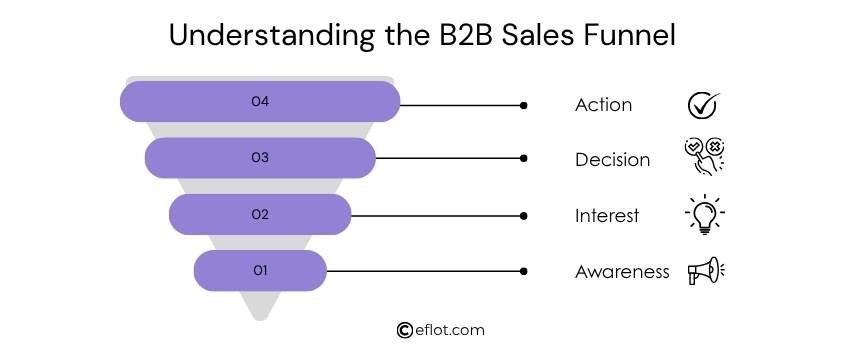
The B2B sales funnel is the journey your prospects take from initial awareness of your business to becoming paying customers. It has several stages:
-
Awareness: This is the first point of contact where the prospect learns about your brand, often through SEO, social media, or content marketing services.
-
Interest: At this stage, the prospect is actively interested in your product or service and begins seeking more information. This is where educational content plays a key role.
-
Decision: Here, prospects are considering multiple options. Case studies, product demos, and customer testimonials can help sway their decision in your favor.
-
Action: The final step in the funnel, where the prospect becomes a customer by making a purchase or signing a contract.
The key to moving prospects through the funnel is understanding their needs at each stage and delivering the right content at the right time.
Heard About eB2B?
eB2B (electronic Business-to-Business) refers to using digital platforms and tools for transactions and communication between businesses.
Features:
-
Online Marketplaces: Businesses buy and sell products through digital platforms.
-
Electronic Payments: Secure, fast online payment systems for businesses.
-
Digital Invoicing: Quick, paperless invoicing for faster transactions.
-
Cloud-Based Tools: Remote access to tools like accounting software and CRM enhances your digital marketing strategy.
-
B2B Financial Services: Digital platforms for loans, credit, and payments.
-
Collaboration Tools: Real-time document sharing and project management.
Example: Platforms like Alibaba and Amazon Business allow businesses to buy and sell products globally, while QuickBooks and Xero provide cloud-based accounting solutions for businesses to manage finances remotely.
Top B2B Marketing Trends
The landscape of B2B marketing is constantly evolving. Here are the top trends to look out for:
-
AI and Automation: AI tools will play an even larger role in automating tasks like lead scoring, content creation, and personalized recommendations. This will allow B2B marketing firms to save time and improve efficiency.
-
Personalized Experiences: Customers expect personalized experiences.B2B marketers will rely more on data-driven insights to personalize content and interactions at scale.
-
Video Marketing: Video content continues to grow in popularity. Using videos for demos, tutorials, and customer testimonials will help B2B companies engage their audience more effectively.
-
Social Selling: Platforms like LinkedIn will remain crucial for B2B brand marketing. Social selling allows businesses to connect with decision-makers, share valuable content, and build relationships.
-
Omnichannel Marketing: B2B companies will increasingly use multiple channels (email, social media, websites, etc.) to reach their audience. This ensures a consistent experience for prospects no matter where they engage.
FAQs
1. What is the B2B marketing strategy?
A B2B marketing strategy targets businesses by focusing on decision-makers, building relationships, and using segmentation, SEO, and personalized campaigns to generate leads and grow revenue.
2. What does B2B sales mean?
B2B sales involve one business selling products or services to another, often with longer sales cycles and multiple decision-makers focusing on ROI and efficiency.
3. What are the benefits of B2B?
B2B brings long-term clients, steady revenue, stronger brand trust, loyal customers, and better targeting through data-driven strategies like account-based marketing.
4. What is the success rate of B2B?
On average, B2B SaaS companies convert 2.1% of website visitors into leads. Success depends on clear content, targeted messaging, and effective sales funnel management.
5. How to do marketing for a B2B business?
Use account-based marketing, SEO, email, and social media to reach decision-makers, solve their problems, and guide them through the sales funnel with personalized content.
B2B marketing focuses on building trust, reaching the right businesses, and delivering solutions that meet specific needs. A clear strategy, targeted messaging, and consistent engagement help drive meaningful results. As trends shift toward automation, personalization, and multi-channel outreach, staying informed and focused will support long-term growth.
Ready to simplify your B2B marketing?
Let’s talk → [email protected]
Digital Marketing services in Other Locations in India
Bangalore | Hyderabad | Chennai | Pune | Ahmedabad | Coimbatore | Mumbai | Kolkata | Patna | Amritsar | Indore | Kozhikode | Trivandrum | Jaipur | Nagpur | Gwalior | Dehradun | Noida | Vizag | Raipur | Agra | Gurgaon | Madurai | Udaipur | Thrissur |