



















How CRM Enhances Your Digital Marketing Strategy
Discover how CRM integrates with digital marketing to improve targeting, personalize content, and boost customer engagement.

Are you having trouble keeping customer interactions in line with scaling your digital marketing activities?
Do you dream of monitoring all touchpoints with prospects and better personalizing your campaigns? The answer could be CRM for Digital Marketing. Customer Relationship Management (CRM) software is developed to enhance how businesses communicate with their customers, and when aligned with your digital marketing campaign, it can revolutionize your company.
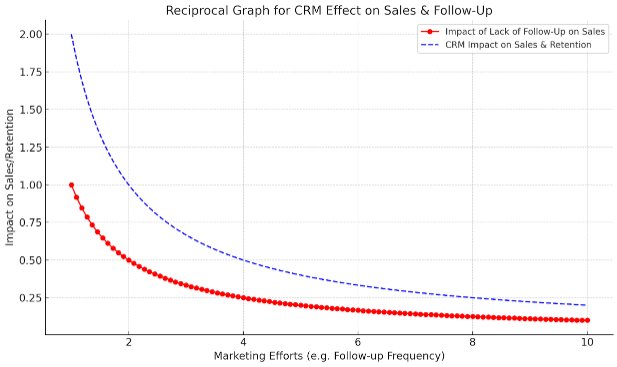
79% of marketing leads, as stated by Salesforce, never make it to a sale because of the lack of follow-up, and with CRM systems, it is possible to reverse this by simplifying customer communication and following up on time. Also, those companies that implement CRM systems realize an average revenue per salesperson increase of 41%. Businesses with effective CRM systems see customer retention as high as 30% higher, demonstrating that it not only enhances customer relations but also brings more robust connections and higher revenues.
A perfect case of how Digital Marketing CRM can improve business plans is provided by HubSpot, a top provider of CRM software. HubSpot employs its own CRM system to execute its inbound marketing campaigns. By connecting its CRM system to its marketing automation software, they were able to monitor customer interactions across various channels emails, social media, and web activity. This enabled HubSpot to customize content to individual groups of its audience, enhancing engagement and forcing better conversion rates.
With the integration of CRM into their digital marketing, HubSpot experienced dramatic increases in leads and sales. Their behavior-driven, personalized email campaigns converted leads into customers and kept them long-term. By integrating their CRM, they achieved a smooth interconnection between their marketing, sales, and customer service teams, increasing overall efficiency and customer satisfaction.
What is CRM for Digital Marketing?
CRM for Digital Marketing is the amalgamation of customer relationship management software with your marketing process. The software assists in monitoring customer information, dividing the audience into segments, handling communication, and sending automated follow-ups. Through the coordination of customer data, CRM systems enable you to create more targeted marketing campaigns, monitor their performance, and reallocate strategies in real-time.
In conjunction with digital marketing strategies such as email campaigns, social media campaigns, and content marketing, CRM solutions enable companies to better understand their customers, enhance engagement, and grow conversions. It's a deliberate tool that brings together sales, customer service, and marketing departments to provide targeted and consistent interactions with customers.
Key Benefits of CRM for Digital Marketing
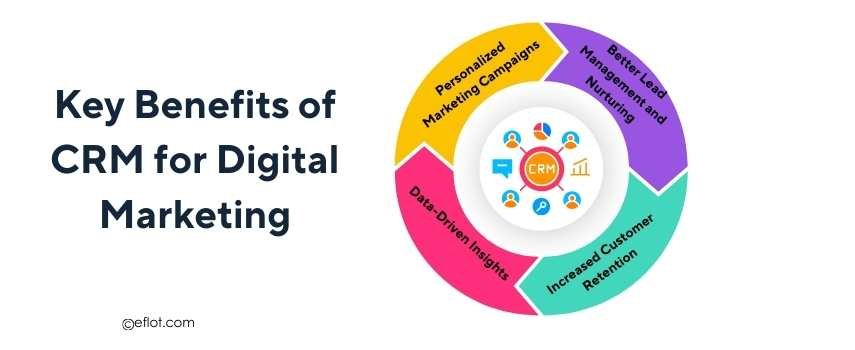
1. Personalized Marketing Campaigns
One of the most significant advantages of using a CRM system in digital marketing is the ability to personalize your outreach. CRM tools allow you to segment your audience based on demographics, behaviors, and past interactions. This segmentation enables you to craft targeted campaigns that resonate with each customer group, increasing the likelihood of conversions.
How It Helps:
-
Send tailored emails or messages based on customer preferences.
-
Deliver personalized offers and product recommendations.
-
Use behavioral data to send timely, relevant content to your audience.
2. Better Lead Management and Nurturing
With CRM, you can track the entire customer journey from the first interaction to post-purchase engagement. This helps you identify high-value leads and nurture them more effectively. Through automated workflows, CRM systems can send follow-up emails or reminders, ensuring that no lead is left behind.
How It Helps:
-
Automate follow-ups with leads who show interest in your products or services.
-
Manage and track leads efficiently, reducing the chances of missed opportunities.
-
Build stronger relationships with customers by delivering content that addresses their specific needs.
3. Increased Customer Retention
Retaining existing customers is often more cost-effective than acquiring new ones. CRM tools help you stay in touch with your existing customers by sending them personalized content, offering loyalty programs, and keeping track of their purchase history. With the data provided by CRM systems, you can predict customer needs and engage them in ways that feel genuine and timely.
How It Helps:
-
Offer loyalty discounts or rewards to repeat customers.
-
Send personalized birthday or anniversary emails to show appreciation.
-
Automatically track customer complaints and ensure prompt resolution.
4. Data-Driven Insights
CRM systems provide valuable insights into your customer behavior, preferences, and engagement patterns. By analyzing this data, you can make more informed decisions about where to focus your marketing efforts. Whether it’s understanding which products are most popular or identifying content that generates the most engagement, CRM tools help you optimize your campaigns based on real data.
How It Helps:
-
Analyze customer behavior and feedback to optimize your campaigns.
-
Understand which marketing channels generate the highest ROI.
-
Identify potential upselling or cross-selling opportunities based on purchase history.
How to Implement CRM for Digital Marketing
1. Choose the Right CRM Platform
Selecting the right CRM system is the first step. There are various CRM platforms available, each with unique features. Some popular options include Salesforce, HubSpot, and Zoho CRM. When choosing a CRM, ensure it integrates well with your existing marketing tools and meets the specific needs of your business.
How to Use It:
-
Look for CRM systems that integrate with email marketing, social media, and analytics tools.
-
Ensure the CRM has automation capabilities to save time on repetitive tasks.
2. Integrate CRM with Marketing Automation Tools
To fully leverage CRM in digital marketing, integrate it with your marketing automation tools. This will allow for seamless customer data sharing and ensure that marketing campaigns are based on up-to-date customer information. Automated workflows can be set up to send personalized emails, follow-ups, and recommendations based on customer interactions.
How to Use It:
-
Set up automated emails for nurturing leads.
-
Use CRM data to segment your audience for targeted campaigns.
3. Track and Analyze Campaign Performance
Once you have implemented your CRM system and integrated it with your digital marketing efforts, it’s important to continuously track and analyze the results. Use your CRM’s analytics features to monitor customer engagement, campaign performance, and sales growth. This data will help you refine your strategy and improve future campaigns.
How to Use It:
-
Regularly review reports and dashboards to evaluate performance.
-
Adjust your strategies based on customer behavior and campaign metrics.
CRM for Digital Marketing is a business game-changer in improving your marketing strategies and strengthening relationships with customers. CRM tools can significantly increase your ROI by making your marketing efforts more personalized, aligning leads with nurturing them effectively, and using data-driven insights.
So, if you're ready to take your marketing strategy to the next level and propel your business forward, consider using CRM for Digital Marketing. It's a great tool that can assist you in creating stronger, more meaningful relationships with your customers, fueling growth and long-term success. Contact us at [email protected] to get started today!
Digital Marketing services in Other Locations in India
Bangalore | Hyderabad | Chennai | Pune | Ahmedabad | Coimbatore | Mumbai | Kolkata | Patna | Amritsar | Indore | Kozhikode | Trivandrum | Jaipur | Nagpur | Gwalior | Dehradun | Noida | Vizag | Raipur | Agra | Gurgaon | Madurai | Udaipur | Thrissur |