














How to Utilize Email Marketing Automation for Ad Campaigns
Learn how email marketing automation supports ad campaigns by nurturing leads, sending timely messages, and improving conversions for better results in marketing.
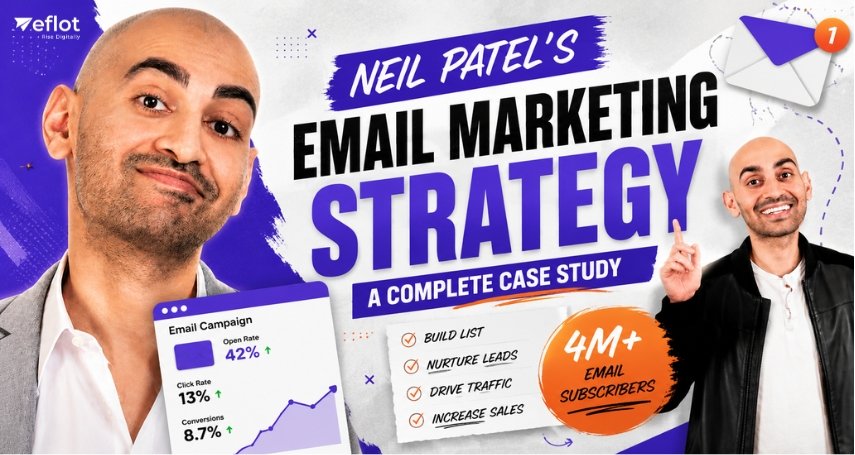
Businesses running digital campaigns often struggle to maintain consistent communication with potential customers. Leads arrive through ads, website forms, and landing pages, yet following up with each contact manually consumes time and resources. Automation in email marketing helps businesses manage this challenge by sending relevant messages to users based on their actions, interests, or stage in the buying process.
When implemented correctly, automated campaigns deliver timely communication that supports advertising performance and improves conversion rates. Automated emails can generate significantly stronger engagement compared with traditional bulk campaigns. Studies show automated emails achieve about 52% higher open rates and 332% higher click rates than regular email campaigns.
Understanding how automation works and applying the right strategies allows marketers to convert ad traffic into qualified leads and long-term customers.
What is Email Marketing Automation
Automation in email marketing refers to the process of sending targeted emails automatically based on predefined triggers, customer behaviour, or campaign workflows. Instead of manually scheduling individual messages, marketers set rules that determine when and why a subscriber receives communication.
For example, a user who downloads an ebook through a paid ad may automatically receive a welcome message followed by educational content and product updates over the next few days. These triggered workflows help businesses maintain continuous engagement with prospects without requiring manual intervention.
Automation also supports personalization. Customer data such as browsing activity, purchase history, and engagement behaviour can be used to deliver relevant messages. This approach improves communication quality while reducing operational effort.
Many organizations rely on advanced email marketing tools to design automated workflows, segment audiences, and track campaign performance. These systems allow marketing teams to manage thousands of contacts and interactions efficiently.
How Email Marketing Automation Works
Email automation follows a structured workflow built around triggers, audience segmentation, and predefined messaging sequences. Once configured, the system manages communication automatically.
A typical automation workflow includes the following steps:
1. Trigger Identification
Automation begins with a trigger event. Triggers may include actions such as:
-
Signing up through a landing page
-
Downloading a resource
-
Abandoning a shopping cart
-
Clicking a link in a previous email
These events signal that the subscriber is interested in a particular product or topic.
2. Audience Segmentation
After the trigger is detected, the automation system categorizes users into segments. Segmentation may be based on demographics, purchase behaviour, location, or engagement level.
Segmented audiences allow businesses to send personalized communication instead of generic mass emails.
3. Automated Workflow Creation
Marketers create structured email sequences that guide the user through a journey. These workflows often include welcome emails, product recommendations, educational content, and promotional offers.
These sequences form the foundation of effective automated emails that respond to customer behaviour.
4. Performance Monitoring
Automation platforms track open rates, click-through rates, conversions, and engagement patterns. These insights help marketers optimize campaigns and refine messaging strategies.
Research indicates that 63% of marketers use automation to adjust communication frequency based on subscriber engagement levels, which helps maintain customer interest.
Benefits of Automation in Email Marketing
Automation provides measurable advantages for businesses running digital advertising campaigns.
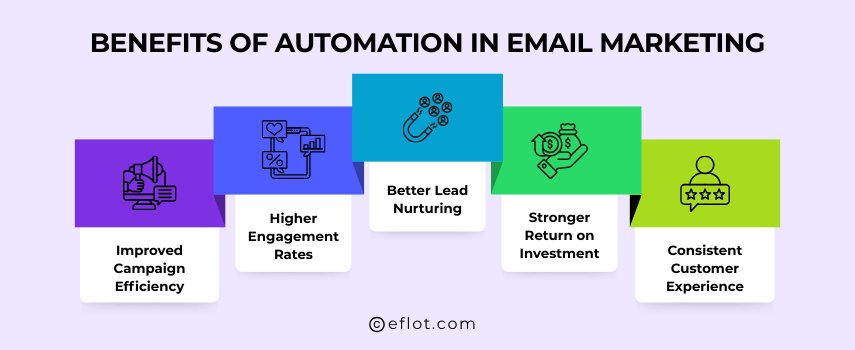
Improved Campaign Efficiency
Automated workflows eliminate repetitive tasks such as sending follow-up messages or scheduling reminders. Marketing teams can focus on strategy and creative development while the system handles execution.
Higher Engagement Rates
Triggered messages reach customers at the right moment. According to industry studies, automated emails often produce around 70% higher open rates and more than 150% higher click-through rates compared with standard campaigns.
Better Lead Nurturing
Automation allows businesses to guide prospects through multiple stages of the buying journey. Educational messages, product updates, and targeted offers help prospects gain confidence before making a purchase decision.
Stronger Return on Investment
Email marketing continues to deliver strong ROI for businesses. Industry data shows email campaigns generate approximately $36 to $42 in revenue for every $1 spent, making it one of the most cost-effective marketing channels available.
Consistent Customer Experience
Automation ensures that each subscriber receives timely communication regardless of when they join the campaign. This consistency improves brand credibility and strengthens customer relationships.
Key Strategies to Automate Email Marketing for Ad Campaigns
Businesses running advertising campaigns should design automation workflows that align with customer behaviour and marketing goals.
Welcome Email Series
A welcome sequence introduces new subscribers to the brand immediately after they sign up through an advertisement or landing page. These emails often provide helpful resources, brand information, and introductory offers.
Studies show automated welcome emails often achieve very high engagement levels because the subscriber has recently interacted with the brand.
Lead Nurturing Campaigns
Lead nurturing sequences educate potential customers over time. Instead of sending a single promotional email, businesses share valuable information such as product benefits, industry insights, and customer success stories.
Many organizations include educational content and practical guidance as part of their broader email marketing strategies for campaign success.
Abandoned Cart Reminders
E-commerce businesses frequently use automation to recover lost sales. When a user adds products to a cart but leaves without completing the purchase, an automated reminder email encourages them to return and finalize the transaction.
Industry benchmarks show cart-recovery emails can recover between 15% and 30% of abandoned purchases.
Event and Webinar Follow-Ups
Advertising campaigns that promote events, webinars, or product launches benefit from automated reminders and follow-up messages. These emails confirm registrations, provide event details, and share additional information after the event concludes.
Re-engagement Campaigns
Inactive subscribers can be reactivated through targeted automation campaigns. These messages often include personalized offers or useful content designed to renew interest.
Businesses that apply these structured workflows often see better engagement across automated emails compared with traditional promotional blasts.
Free Email Marketing Tools and Software
Businesses exploring automation often begin with free email marketing tools before investing in enterprise solutions. These platforms allow marketers to design campaigns, manage subscriber lists, and automate communication workflows.
1. Mailchimp
Mailchimp provides automation features such as welcome emails, behaviour-based triggers, and audience segmentation. The platform also offers analytics dashboards to monitor campaign performance.
2. Brevo (formerly Sendinblue)
Brevo supports automation workflows for transactional emails, newsletters, and customer engagement campaigns. Businesses can create automated workflows based on user actions such as sign-ups or purchases.
3. MailerLite
MailerLite is widely used for automation sequences including onboarding messages, product recommendations, and event invitations. The platform also includes landing page creation and campaign analytics.
4. HubSpot Email Marketing
HubSpot offers automation tools that connect with CRM data. Businesses can trigger personalized messages based on customer interactions, making it easier to deliver targeted communication.
These email marketing software platforms help businesses automate campaigns without extensive technical expertise.
Making Automation Work for Advertising Campaigns
Successful automation requires alignment between advertising strategy and email workflows. Businesses should start by mapping the customer journey from the first ad interaction to the final purchase.
Key steps include:
-
Capturing leads through optimized landing pages
-
Segmenting contacts based on campaign source
-
Building structured email sequences for different audience groups
-
Monitoring engagement metrics and refining messaging
When implemented correctly, automation transforms email marketing from a simple communication channel into a powerful conversion tool.
Automation in email marketing allows businesses to respond quickly to customer actions and maintain consistent engagement throughout advertising campaigns. By using triggered workflows, personalized messaging, and structured email sequences, organizations can nurture leads and improve conversion outcomes.
A well-designed automation strategy combines the right technology with clear campaign goals. Businesses that invest time in understanding customer behaviour and implementing effective email workflows can strengthen campaign performance while maintaining efficient marketing operations.
Organizations looking to improve digital campaign performance often benefit from working with an experienced email marketing service provider that can design automation workflows aligned with business goals.
People Also Ask
1. What is email automation in marketing?
Email automation sends emails automatically based on user actions such as sign-ups, downloads, or purchases. It helps businesses deliver timely communication and maintain consistent engagement without sending messages manually.
2. How does automation improve email marketing campaigns?
Automation delivers targeted messages based on subscriber behaviour. This improves engagement, nurtures leads, and ensures customers receive relevant communication at the right stage of the buying journey.
3. Are free email marketing tools useful for automation?
Many free email marketing tools offer basic automation features such as welcome emails, simple workflows, and audience segmentation. These tools help businesses automate campaigns without large budgets.
4. What types of emails can be automated?
Common automated emails include welcome messages, onboarding sequences, abandoned cart reminders, promotional offers, event confirmations, and follow-up emails.
Digital Marketing services in Other Locations in India
Bangalore | Hyderabad | Chennai | Pune | Ahmedabad | Coimbatore | Mumbai | Kolkata | Patna | Amritsar | Indore | Kozhikode | Trivandrum | Jaipur | Nagpur | Gwalior | Dehradun | Noida | Vizag | Raipur | Agra | Gurgaon | Madurai | Udaipur | Thrissur |