
















Why Content Marketing Matters for Driving Organic Traffic
Content marketing drives organic traffic by creating valuable, SEO-optimized content that builds trust, engages audiences, and boosts search rankings.
I have experienced personally how powerful content marketing can be in driving organic traffic. When I first started exploring content strategies, it amazed me how creating valuable, relevant, and engaging content could transform a website’s visibility. It’s not just about producing content for the sake of it; it’s about understanding your audience’s needs and providing solutions or insights they actively search for. I’ve watched well-crafted blog posts, guides, and videos not only improve search engine rankings but also build trust and authority within my target audience.
Over time, I’ve come to recognize the positive effect that strong content marketing creates. When you produce content that resonates, it naturally attracts backlinks, shares, and engagement, which further amplifies organic reach.
I’ve seen businesses that invested in high-quality, SEO-optimized content experience long-term benefits, from steady growth in website traffic to increased conversions, especially when supported by expert strategies like seo services by oxygen that focus on sustainable search visibility.
What is Content Marketing?
Content marketing is the practice of creating and distributing content that educates, entertains, or informs your audience, with the ultimate goal of building trust, generating leads, and driving conversions. Unlike traditional advertising, content marketing focuses on delivering value to the audience, positioning your brand as a trusted authority in your industry.
The Importance of Organic Traffic
Organic traffic refers to visitors who find your website through unpaid search results on platforms like Google or Bing. It is one of the most valuable sources of website traffic because:
-
Cost-Effective: Unlike paid ads, organic traffic doesn’t incur direct costs.
-
High-Quality Leads: Organic visitors often have higher intent, making them more likely to convert.
-
Sustainable: Unlike paid campaigns, the benefits of organic traffic compound over time.
-
Improved Brand Visibility: Higher rankings mean greater exposure for your brand.
Why Content Marketing Drives Organic Traffic
1. Search Engine Optimization (SEO)
-
Keyword Targeting: High-quality content that targets relevant keywords improves your website’s visibility on search engine results pages (SERPs).
-
Backlinks: Well-researched and authoritative content naturally attracts backlinks, further boosting your search rankings.
-
Long-Tail Keywords: Content marketing enables you to address specific queries with long-tail keywords, capturing niche audiences.
Example: A company selling eco-friendly products might create a blog post titled “10 Tips for a Sustainable Lifestyle.” This article can rank for keywords like “sustainable lifestyle tips” or “eco-friendly living,” bringing in relevant organic traffic.
2. Authority and Trust Building
-
Creating educational and insightful content positions your brand as an industry expert.
-
Over time, consistent high-quality content builds trust, encouraging visitors to return and share your content with others.
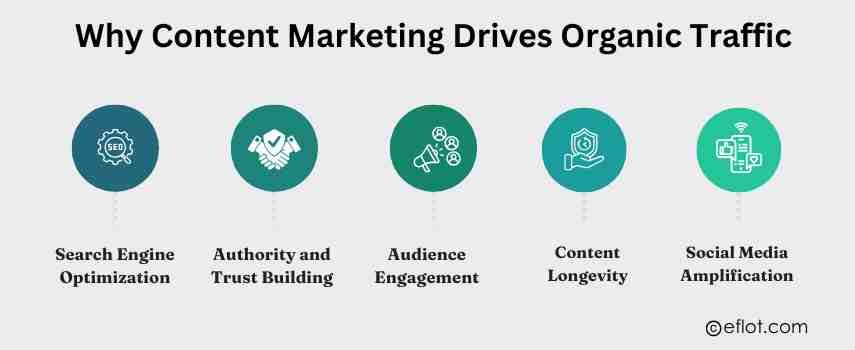
3. Audience Engagement
-
Engaging content keeps users on your site longer, reducing bounce rates—a factor that search engines consider for rankings.
-
Interactive content like quizzes, videos, or infographics enhances user experience and increases the likelihood of shares.
4. Content Longevity
-
Unlike paid campaigns that stop yielding results once you stop spending, a well-crafted blog or video can continue driving traffic for months or even years.
Example: HubSpot reports that 75% of their blog traffic comes from older posts, showing the enduring value of evergreen content.
5. Social Media Amplification
-
High-quality content can be repurposed and shared across social media platforms, increasing its reach and indirectly driving organic traffic back to your website.
Types of Content That Drive Organic Traffic
-
Blog Posts:
-
Ideal for targeting specific keywords and addressing common audience questions.
-
Examples: “Top 10 Tools for Small Business Marketing” or “How to Choose the Right CRM for Your Business.”
-
Videos:
-
Engaging and shareable, videos are highly favored by search engines.
-
Example: Product demos, tutorials, or customer testimonials.
-
Infographics:
-
Visually appealing and easy to digest, infographics are often shared widely, increasing backlinks and visibility.
-
Ebooks and Whitepapers:
-
These long-form content types are excellent for capturing leads through gated content strategies.
-
User-Generated Content:
-
Reviews, testimonials, and social media posts can drive traffic while building trust.
How to Create a Winning Content Marketing Strategy
Step 1: Define Your Goals
-
Increase website traffic?
-
Generate leads?
-
Build brand awareness?
Step 2: Understand Your Audience
-
Develop detailed buyer personas to understand their needs, pain points, and search behaviors.
Step 3: Conduct Keyword Research
-
Use tools like Google Keyword Planner, Ahrefs, or SEMrush to identify high-value keywords.
Step 4: Plan a Content Calendar
-
Schedule consistent content creation to keep your audience engaged.
Step 5: Optimize for SEO
-
Use relevant keywords, meta descriptions, and internal linking to maximize your content’s discoverability.
Step 6: Measure Performance
-
Use tools like Google Analytics to track traffic, bounce rates, and conversions.
-
Adjust your strategy based on data insights.
Case Study 1: AppSumo's Content Strategy Transformation
Overview
AppSumo, a leading marketplace for digital tools and resources, aimed to increase organic visibility and drive revenue through content marketing. Despite its strong brand presence, the company sought a systematic approach to boost its traffic and conversions.
Implementation
-
Partnered with Omniscient Digital to develop a data-driven content strategy.
-
Focused on creating high-quality, SEO-optimized articles tailored to their target audience of entrepreneurs and business owners.
-
Conducted in-depth keyword research to align content with high-value search queries.
-
Leveraged analytics to track performance and refine the strategy over time.
Outcome
-
Achieved an 843% increase in organic traffic.
-
Boosted revenue from organic sources by 340%, showcasing the significant impact of optimized content.
-
Strengthened brand authority in the entrepreneurial ecosystem.
Case Study 2: American Kennel Club’s (AKC) Traffic Growth with Content
Overview
The American Kennel Club (AKC), a trusted authority on dog breeds and pet care, wanted to expand its online presence and engage a wider audience with content tailored to dog owners.
Implementation
-
Collaborated with Contently to create a content strategy focused on their niche expertise.
-
Developed a mix of informative articles, engaging videos, and interactive tools to enhance user experience.
-
Focused on evergreen content that answers common questions about dog care, training, and breeds.
-
Integrated storytelling to resonate with pet lovers and boost shareability.
Outcome
-
Increased website traffic by 30%, significantly expanding their audience base.
-
Enhanced brand loyalty and engagement through consistent, high-quality content.
-
Cemented their position as a leading resource for pet owners.
Content marketing is a powerful tool for driving organic traffic, building authority, and creating lasting connections with your audience. By investing in high-quality, SEO-optimized content that resonates with your target audience, you can enhance your online presence and achieve sustainable growth. Whether you’re a small business or an enterprise, a well-executed content marketing strategy will be the cornerstone of your digital success.
Digital Marketing services in Other Locations in India
Bangalore | Hyderabad | Chennai | Pune | Ahmedabad | Coimbatore | Mumbai | Kolkata | Patna | Amritsar | Indore | Kozhikode | Trivandrum | Jaipur | Nagpur | Gwalior | Dehradun | Noida | Vizag | Raipur | Agra | Gurgaon | Madurai | Udaipur | Thrissur |