






















Why Backlink Types Matter for Search Engine Rankings
Understanding backlink types is crucial for improving search engine rankings. Learn how different links impact SEO and website authority.

As a digital marketing specialist, I can confidently say that backlinks are one of the most important factors in determining your website’s search engine rankings. However, not all backlinks are created equal. The backlink types you receive play a huge role in the effectiveness of your SEO strategy. Backlink quality can vary significantly, and understanding which backlink types provide the most value is essential for any business looking to improve its organic search results.
When I first started working in SEO, I assumed that any backlink would improve my website's ranking. I quickly learned that the quality of backlinks and the anchor text are much more important than the pure quantity of links. Google values the Backlink methods that come from authoritative, relevant, and trustworthy sources. Whether you’re new to SEO or looking to refine your strategy, learning about backlink types will give you the knowledge you need to improve your website’s visibility and rankings on search engine results pages (SERPs).
What Are Backlink Types?
Backlinks, also known as inbound links or incoming links, are links from one website to another. These links are vital because they are seen as a vote of confidence in the linked content’s authority, which search engines interpret as a signal of trustworthiness and relevance. However, backlinks come in many forms, and not all of them are equally effective at improving your SEO.
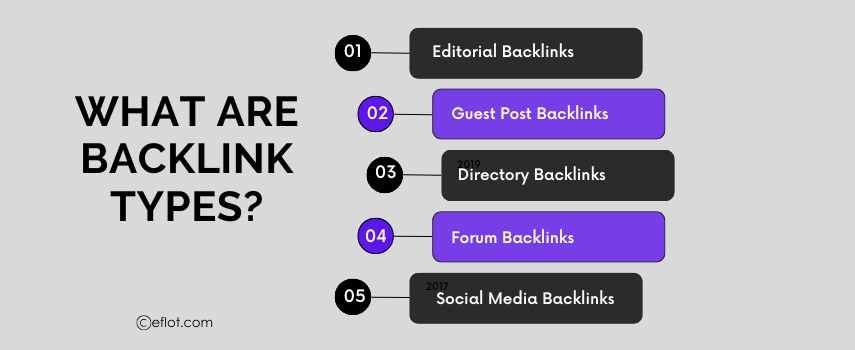
Several Backlink methods can help boost your rankings, such as editorial backlinks, guest post backlinks, and directory backlinks, among others. Let’s take a closer look at the most common types:
-
Editorial Backlinks: These are natural links that occur when another website links to your content because it finds it valuable, informative, or relevant. These types of backlinks are highly coveted in SEO because they typically come from high-authority sources and are editorially placed.
-
Guest Post Backlinks: Guest posting involves writing content for other websites within your niche or industry, and in return, you’re allowed to place a backlink to your site. While these can be valuable, it’s crucial to ensure that the website is high-quality and relevant to your field.
-
Directory Backlinks: These are links from business directories, and while they can still provide value, they often carry less weight in SEO than editorial backlinks or guest post backlinks. It’s important to choose reputable directories to avoid spammy sites that could negatively impact your rankings.
-
Forum Backlinks: Links placed in forums or discussion boards can be beneficial if they’re relevant and placed in high-authority communities. However, overusing them or getting links from low-quality forums can harm your SEO efforts.
-
Social Media Backlinks: Backlinks from social media platforms like Facebook, Twitter, and LinkedIn may not carry as much SEO weight as others, but they can still generate traffic and boost brand visibility. These types of backlinks are helpful for overall content promotion.
Each of these Backlink methods can influence your website's SEO differently, and learning to leverage them strategically will help you improve your search engine rankings and grow your online presence.
How Backlink Types Impact SEO
Backlinks are essentially votes of confidence from one website to another, but not all votes are equal. The backlink types you acquire can significantly impact your search engine rankings, and here’s why:
-
Link Authority: Some backlink types come from websites with high domain authority. These links are more valuable because they pass on more “link juice” or ranking power to your site. Editorial backlinks from authoritative websites in your niche are among the most powerful for improving your search engine rankings. Link authority plays a critical role in boosting your site's SEO.
-
Relevance: Backlinks from websites that are relevant to your industry or niche carry more weight in terms of SEO. For example, a backlink from a website in the tech industry is more valuable for a tech-related blog than a link from a fashion site. Relevance is a critical factor that can improve the value of the backlink types you receive.
-
Link Diversity: A healthy backlink profile includes a mix of Backlink methods. A diverse link profile with a balance of editorial, guest posts, and other backlinks appears more natural to search engines and can help improve your rankings. Link diversity helps avoid penalties for unnatural linking patterns, which can harm your website’s credibility.
-
Spammy Backlinks: Not all backlinks are beneficial, especially when they come from spammy or irrelevant sources. Poor-quality backlinks can negatively affect your rankings and lead to penalties from search engines like Google. That’s why it’s important to focus on high-quality, relevant Backlink methods.
-
Follow vs. No-follow Links: Not all backlinks are created equal when it comes to passing SEO value. Follow links pass on link equity (ranking power), while no-follow links do not. Although no-follow links won’t directly boost your rankings, they can still drive traffic and create brand awareness. They can be part of a natural backlink profile, contributing to an organic-looking link pattern.
Case Studies
Case Study1:
HubSpot, a leader in inbound marketing and sales software, relies heavily on its SEO strategy to attract organic traffic. The company’s content marketing approach includes writing high-quality, valuable blog posts that naturally attract editorial backlinks from authoritative sources.
Challenge:
To maintain and grow its organic reach, HubSpot needed to ensure that its content was receiving backlinks from high-authority websites to continue ranking well on Google.
Solution:
HubSpot focused on creating informative and comprehensive content that positioned them as a thought leader in the marketing space. This content often attracted editorial backlinks from highly respected websites in the industry. By using high-quality, authoritative backlinks, HubSpot was able to increase its website authority and improve its organic search rankings.
Case Study2:
Moz, a renowned SEO software company, has built its reputation through its strong focus on SEO content and link-building efforts. To increase visibility and drive traffic, Moz strategically used guest post backlinks to generate quality inbound links.
Challenge:
Moz needed to continually build high-quality backlinks to maintain and grow its search engine visibility. They wanted to focus on backlink types that were sustainable and would help boost long-term rankings.
Solution:
Moz implemented a guest blogging strategy to get high-quality backlinks from reputable blogs in the SEO and digital marketing industries. By contributing valuable guest posts to authoritative websites, they were able to gain backlink types that both drove traffic and improved their rankings.
Understanding the importance of backlink types is crucial to an effective SEO strategy. While backlinks are vital for improving search engine rankings, it’s the quality, relevance, and authority of these backlinks that truly matter. By focusing on acquiring high-quality Backlink methods, you can improve your website’s authority, enhance your SEO performance, and drive more organic traffic. Whether you're just starting to build backlinks or refining your existing strategy, it's essential to prioritize quality over quantity and make sure you're targeting the right Backlink methods to maximize your SEO potential.
Digital Marketing services in Other Locations in India
Bangalore | Hyderabad | Chennai | Pune | Ahmedabad | Coimbatore | Mumbai | Kolkata | Patna | Amritsar | Indore | Kozhikode | Trivandrum | Jaipur | Nagpur | Gwalior | Dehradun | Noida | Vizag | Raipur | Agra | Gurgaon | Madurai | Udaipur | Thrissur |