















Top CPC Digital Marketing Tips to Increase Traffic
Learn actionable CPC digital marketing tips to boost traffic, optimize ad performance, and drive meaningful results for your business online.

Among the many strategies available, CPC digital marketing (Cost Per Click) stands out as one of the most reliable and results-driven methods. It allows businesses to pay only when someone clicks on their ads, making it a cost-effective way to drive traffic. As someone who has worked closely with brands across various industries, I’ve seen the remarkable impact of a well-planned CPC digital marketing strategy.
When I started working with CPC campaigns, I noticed how businesses sometimes struggle to get results because they don’t know how to optimize their ads or target the right audience. It’s not just about setting up an ad and hoping for clicks. Successful CPC in digital marketing requires careful planning, creative ad copy, and continuous monitoring to ensure every click brings value to your business.
For instance, one of my clients, a local e-commerce store, saw a 150% increase in website traffic simply by refining their keyword strategy and improving their ad creatives. Here, I’ll share practical tips to help you master CPC digital marketing, avoid common mistakes, and drive meaningful traffic to your website. Whether you’re a beginner or looking to improve your current campaigns, these results will help you to create better ads and get more value for your investment.
What is CPC Digital Marketing?
CPC digital marketing is one of the most effective ways to drive targeted traffic to a website, as advertisers only pay for actual engagement when a user clicks on their ad. This model ensures cost efficiency, as businesses can control their budgets and focus on high-converting audiences. It’s commonly used in search engine marketing, social media ads, and display networks to promote products or services.
By setting specific keywords, demographics, and geo-targeting, businesses can reach potential customers at the right moment. Additionally, CPC campaigns offer measurable results, enabling advertisers to track clicks, monitor ROI, and optimize campaigns in real-time. This makes it an ideal strategy for both startups and established brands looking to increase visibility, generate leads, and boost sales.
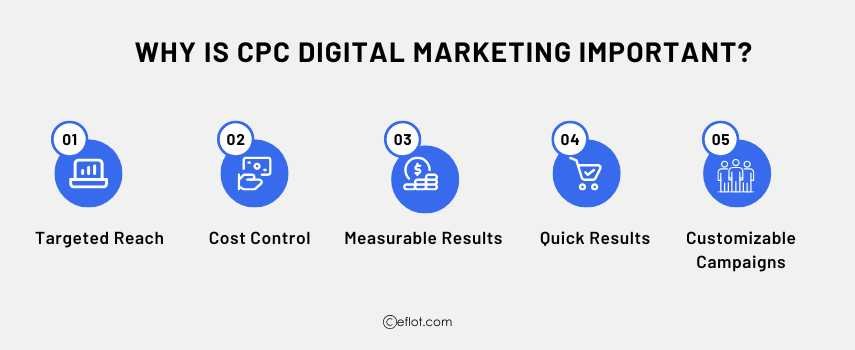
Why is CPC Digital Marketing Important?
-
Targeted Reach: Ads are shown to specific demographics, ensuring you reach the right audience.
-
Cost Control: You pay only for actual clicks, making it a budget-friendly option.
-
Measurable Results: CPC campaigns provide detailed insights, enabling performance tracking and optimization.
-
Quick Results: Unlike organic strategies, CPC digital marketing delivers immediate traffic, allowing businesses to achieve faster outcomes for time-sensitive campaigns.
-
Customizable Campaigns: Advertisers can adjust budgets, bids, and targeting parameters at any time, making it highly flexible and adaptable to changing business needs.
Top CPC Digital Marketing Tips to Increase Traffic
1. Choose the Right Keywords
Keywords are the backbone of any CPC in a digital marketing campaign. Use tools like Google Keyword Planner to identify relevant, high-performing keywords that match your audience's search intent.
Actionable Tip:
-
Focus on long-tail keywords (e.g., "affordable digital marketing services in Bangalore") as they often have lower competition and attract more qualified traffic.
2. Optimize Your Ad Copy
Your ad copy needs to be engaging, clear, and action-oriented. A compelling headline and a strong call-to-action (CTA) can significantly improve click-through rates (CTR).
Actionable Tip:
-
Highlight unique benefits or offers (e.g., "Get 20% Off on Your First Purchase!") to grab attention.
-
Use power words like “exclusive,” “proven,” and “guaranteed.”
3. Leverage Geo-Targeting
For local businesses, geo-targeting ensures that your ads are seen by people in your target location. This feature is especially beneficial in CPC in digital marketing, where relevance is key.
Actionable Tip:
-
Use tools like Google Ads to set location-specific parameters, ensuring your ads are shown to users within a certain radius.
4. Create Dedicated Landing Pages
Driving traffic through ads is only half the battle. A well-designed landing page ensures visitors stay and take action.
Actionable Tip:
-
Keep the landing page simple, with a clear headline, a concise description, and a prominent CTA.
-
Ensure mobile optimization, as a significant portion of CPC traffic comes from mobile devices.
5. Utilize Negative Keywords
Negative keywords prevent your ad from being displayed for irrelevant searches, saving your budget and improving campaign efficiency.
Actionable Tip:
-
Regularly update your negative keyword list to avoid wasting ad spend on unrelated searches.
6. A/B Test Your Campaigns
Testing different elements of your ads, such as headlines, images, and CTAs, allows you to identify what works best.
Actionable Tip:
-
Run multiple ad variations simultaneously to compare performance and refine your strategy based on data.
7. Monitor and Optimize Campaign Performance
Tracking metrics like CTR, conversion rates, and quality scores is essential for CPC's digital marketing success.
Actionable Tip:
-
Use analytics tools to monitor campaign performance and make data-driven adjustments to improve results.
8. Set a Realistic Budget
While CPC campaigns are cost-effective, setting a realistic daily budget ensures you don’t overspend while achieving your traffic goals.
Actionable Tip:
-
Start with a small budget and gradually scale up as you identify successful strategies.
9. Take Advantage of Remarketing
Remarketing targets users who have previously interacted with your website, increasing the chances of conversion.
Actionable Tip:
-
Use platforms like Google Ads to create custom remarketing lists and display tailored ads to past visitors.
10. Focus on Quality Score
Google Ads assigns a quality score to your ads based on their relevance and performance. A higher score reduces your CPC and improves ad placements.
Actionable Tip:
-
Ensure your ad copy, keywords, and landing page are aligned for maximum relevance.
Factors Affecting CPC Digital Marketing
CPC digital marketing (Cost Per Click) involves several elements that influence how much you pay per click in your advertising campaigns. Understanding these factors can help you optimize your campaigns and lower costs while increasing results. Here are the key factors:
1. Quality Score
Platforms like Google Ads assign a quality score to your ads based on relevance, click-through rate (CTR), and landing page experience. Higher quality scores lead to lower CPCs and better ad placements.
2. Competition
The level of competition in your industry or for specific keywords directly impacts your CPC. Highly competitive keywords like “digital marketing services” tend to have higher CPCs due to demand.
3. Target Audience
Your audience’s demographics, location, and interests affect CPC. Ads targeting high-value or niche audiences, like luxury product buyers, may have higher costs.
4. Ad Relevance
Ads that closely match user intent perform better and are rewarded with lower CPCs. Irrelevant ads lead to fewer clicks and higher costs.
How to Calculate CPC in Digital Marketing
Calculating CPC (Cost Per Click) is simple but essential for managing your advertising budget effectively. The formula for CPC is:
CPC = Total Ad Spend ÷ Total Clicks
Example Calculation:
Suppose you spent ₹10,000 on a Google Ads campaign and received 500 clicks. The CPC would be:
CPC = ₹10,000 ÷ 500 = ₹20
This means you’re paying ₹20 for each click generated by your ad.
Case Studies
Case Study1:
UrbanWear, a Bangalore-based e-commerce apparel brand, struggled to attract consistent traffic and increase sales amidst heavy competition. Despite having a user-friendly website and trendy products, the brand lacked visibility in the crowded online fashion market.
Challenges:
-
Low Website Traffic: The website was not receiving enough visitors despite regular marketing efforts.
-
Ineffective Ad Campaigns: Previous ad campaigns failed to drive qualified leads.
-
High Competition: Competing against well-established brands in the same niche.
Solutions:
To tackle UrbanWear’s traffic challenges, a detailed CPC in digital marketing strategy was implemented. The first step was keyword optimization, focusing on long-tail keywords like "affordable casual wear in Bangalore," which helped target niche audiences with higher purchase intent. Next, dynamic Google Ads campaigns were created to promote discounts and exclusive offers, making the ads more attractive to potential customers.
Case Study2:
TechEase CRM, a SaaS company providing customer relationship management tools for small businesses, struggled to generate traffic and leads. Their challenge was to stand out in a competitive SaaS market while operating on a limited budget.
Challenges:
-
Minimal Online Visibility: The brand had low awareness among its target audience.
-
High CPC Costs: Competing with larger SaaS companies led to high ad costs.
-
Low Conversion Rates: Despite receiving some traffic, conversions were minimal.
Solutions:
TechEase CRM adopted a strategic CPC in its digital marketing plan tailored to its SaaS audience. A significant part of the strategy was utilizing LinkedIn Ads, which allowed the brand to target decision-makers in small and medium-sized businesses directly. To refine their campaigns, A/B testing was conducted on multiple ad variations, helping identify the most engaging creatives and headlines.
CPC digital marketing is an incredibly effective way to increase website traffic and generate leads when done right. By focusing on keyword selection, ad copy, landing page optimization, and constant monitoring, you can maximize the value of your campaigns and achieve measurable results. In the competitive online space, businesses must use CPC digital marketing not just to attract visitors but to engage them meaningfully and convert them into loyal customers. Start implementing these tips, and watch your website traffic.
Digital Marketing services in Other Locations in India
Bangalore | Hyderabad | Chennai | Pune | Ahmedabad | Coimbatore | Mumbai | Kolkata | Patna | Amritsar | Indore | Kozhikode | Trivandrum | Jaipur | Nagpur | Gwalior | Dehradun | Noida | Vizag | Raipur | Agra | Gurgaon | Madurai | Udaipur | Thrissur |