
















Top 10 Advantages of Social Media
Discover the key benefits of social media, including enhanced communication, marketing opportunities, and brand visibility. Learn more about its advantages.

Social media has become an essential part of digital marketing strategies. The 10 Advantages of Social Media is its ability to reach a large audience quickly. Platforms like Facebook, Instagram, and Twitter allow businesses to connect with potential customers globally. By using targeted advertising, companies can ensure their content is seen by those most likely to be interested, which improves engagement and conversion rates.
Another 10 Advantages of Social Media is the opportunity for direct customer interaction. Social media platforms enable businesses to communicate directly with their audience, gathering valuable feedback and building stronger relationships. This interaction helps understand customer needs and preferences, which can inform product development and marketing strategies. Additionally, real-time customer service on social media can enhance brand loyalty and customer satisfaction.
Top 10 Advantages of Social Media include its cost-effectiveness in digital marketing. Compared to traditional marketing methods, social media campaigns can be more affordable while still reaching a large audience. Tools like analytics and insights provided by platforms help businesses measure the success of their campaigns and make data-driven decisions. This ability to track performance and adjust strategies ensures that marketing efforts are efficient and effective.
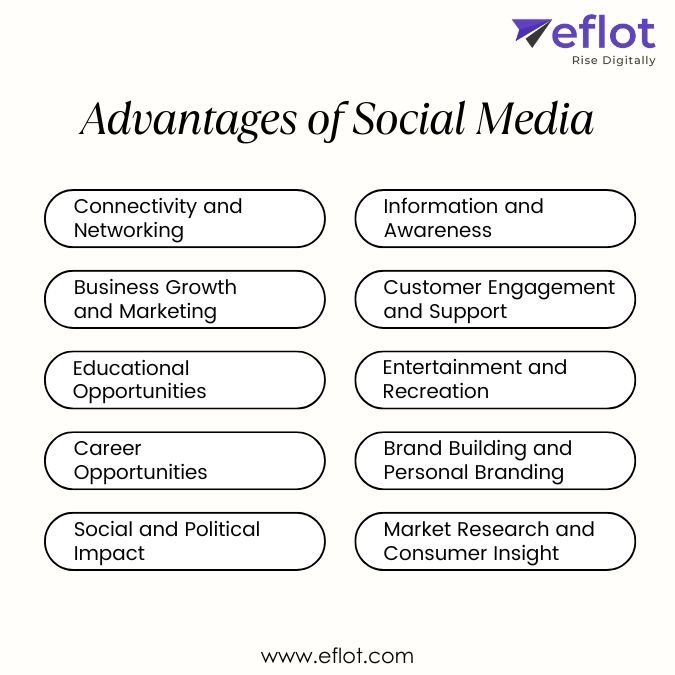
1. Connectivity and Networking
One of the most obvious benefits of social media is the chance to communicate with people from all over the world. Social media platforms such as Facebook, Twitter, LinkedIn, and Instagram allow users to stay in touch with family and friends, reconnect with old friends, and make new connections. Social media allows businesses to network with industry peers, potential clients, and other professionals.
2. Information and Awareness
Social media is an effective tool for sharing information fast and efficiently. News circulates quickly, keeping readers updated on worldwide events, trends, and topics of interest. This real-time access to information allows people to stay informed and engaged with the world around them. Furthermore, social media may be used to raise awareness about significant topics, rally support for various causes, and encourage community participation.
3. Business Growth and Marketing
Businesses focus heavily on social media as a marketing tool. It is a cost-effective technique to reach a large audience and promote businesses or services. Businesses may use social media marketing to communicate with their customers, establish brand loyalty, and enhance sales. Platforms such as Facebook Ads and Instagram Promotions allow for targeted advertising, ensuring that marketing efforts reach the intended demographic.
4. Customer Engagement and Support
Social media enables direct communication between businesses and their customers. This connection is critical to developing strong client relationships and providing exceptional service. Businesses can use social media to quickly respond to questions, address complaints, and gather feedback. This quick communication helps to improve customer satisfaction and trust.
5. Educational Opportunities
Social networking has several educational benefits. It provides access to a multitude of knowledge and resources, making learning easier. Educational institutions and online learning platforms utilize social media to publish educational content, host webinars, and interact with students. Individuals can find inspiration and knowledge on social media by viewing tutorials, articles, and videos on a variety of topics.
6. Entertainment and Recreation
Many people depend mostly on social media for enjoyment. Platforms such as YouTube, TikTok, and Instagram provide a diverse range of content, from hilarious videos and memes to music and art. Social media is an opportunity for creativity and self-expression, allowing individuals to share their skills and passions with a global audience. This entertainment component makes social media a fun and interesting way to spend time.
7. Career Opportunities
Social media networks, notably LinkedIn, are extremely useful for job seekers and professionals trying to better their careers. These platforms allow users to highlight their abilities, expertise, and accomplishments, making it easier for employers to locate suitable applicants. Furthermore, social media can be utilized for professional networking, linking individuals to industry leaders, mentors, and potential partners.
8. Brand Building and Personal Branding
Social networking is an effective brand-building tool for individuals and corporations alike. Users can develop a strong online presence by constantly providing information that matches their values and areas of expertise. Personal branding on social media enables people to stand out in a competitive job market, while corporations can build a distinct brand identity that connects with their intended audience.
9. Social and Political Impact
Social media has a huge influence on the social and political environments. It gives a platform for disadvantaged voices to express their stories and advocate for change. Social movements such as #MeToo and Black Lives Matter have acquired traction on social media, boosting awareness and inspiring social and political action. One of the most significant advantages of social media is its ability to empower individuals and communities.
10. Market Research and Consumer Insight
Businesses can use social media to acquire useful information about consumer behavior and market trends. Social media analytics solutions enable businesses to track interaction, monitor brand sentiment, and assess client preferences. This data-driven strategy enables organizations to make more informed decisions, improve their products and services, and create better marketing campaigns.
How Can Social Media Benefit Small Businesses?
Social media provides great benefits to small businesses by allowing them to reach a bigger audience and engage with customers in meaningful ways. Small businesses can adapt their marketing efforts to certain demographics with targeted advertising, ensuring that their products and services reach individuals who are most likely to be interested. This strategy not only raises the likelihood of converting viewers into consumers but also maximizes the return on investment for marketing dollars. Furthermore, organic content (posts, stories, and videos) allows businesses to create a loyal following without paying large investments. Small businesses can increase brand visibility and build a community around their brand by sharing meaningful and interesting content daily.
Engagement is an important part of social media for small businesses. Platforms such as Facebook, Instagram, and Twitter offer direct routes for communicating with customers, responding to requests, and receiving feedback in real-time. This level of connection promotes trust and loyalty by making clients feel acknowledged and valued. Furthermore, social media analytics systems provide insights into client behavior and preferences, enabling firms to continuously improve their digital marketing tactics. Small businesses can use these technologies to improve their social media presence, increase client happiness, and drive sales growth successfully.
The advantages of social networking are apparent. Social media is important in modern culture for many reasons, including increasing connectivity and awareness, driving commercial growth, and inspiring social change. Individuals and corporations may maximize the potential of social media to achieve their goals and make a good impact by recognizing and using its benefits.
Digital Marketing services in Other Locations in India
Bangalore | Hyderabad | Chennai | Pune | Ahmedabad | Coimbatore | Mumbai | Kolkata | Patna | Amritsar | Indore | Kozhikode | Trivandrum | Jaipur | Nagpur | Gwalior | Dehradun | Noida | Vizag | Raipur | Agra | Gurgaon | Madurai | Udaipur | Thrissur |