





















Building a Strong Digital Marketing Strategy from Scratch
Learn how to develop an effective digital marketing strategy from scratch. Discover key steps, tips, and tools for online success.

Building a Digital Marketing Strategy from scratch involves thoughtful steps to understand your audience, set clear goals, and choose the right tools and tactics. Start by doing market research to get a good grasp of what your audience needs and prefers. This will help you tailor your content and campaigns effectively. Setting clear goals is important and should align with your business objectives. Search engine optimization (SEO), pay-per-click (PPC) advertising, social media marketing, and email marketing are essential parts of an effective digital marketing strategy. Each of these helps increase your visibility and drive traffic to your website.
Additionally, content marketing and partnering with influencers can extend your reach and build credibility. Consistently creating valuable content keeps your audience engaged and helps position your brand as a knowledgeable source. It's also important to analyze your campaign performance to see what's working and what isn't. Use tools to track metrics like conversion rates, click-through rates, and social media engagement. By regularly reviewing these insights, you can tweak your Digital Marketing Strategy to better meet your goals and stay responsive to market changes. This way, your strategy remains well-rounded and adaptable as your business grows.
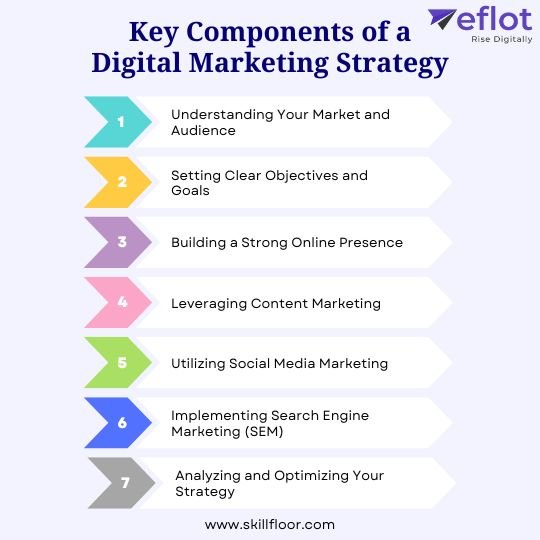
Key Components of a Digital Marketing Strategy
1. Understanding Your Market and Audience
Before diving into the specifics of digital marketing tactics, it’s essential to have a clear understanding of your market and target audience. Conduct thorough market research to identify your ideal customer profile, including demographics, interests, and online behavior. Utilize tools like Google Analytics, social media insights, and customer surveys to gather valuable data.
Key Steps:
-
Market Research: Identify trends, competitors, and opportunities within your industry.
-
Audience Segmentation: Break down your audience into distinct segments based on demographics, psychographics, and behavior.
-
Persona Development: Create detailed buyer personas to represent your ideal customers, helping you tailor your marketing efforts more effectively.
2. Setting Clear Objectives and Goals
Clear, measurable objectives are the foundation of any successful digital marketing strategy. Your goals should align with your overall business objectives and be specific, measurable, achievable, relevant, and time-bound (SMART).
Examples of Goals:
-
Increase Website Traffic: Aim to boost your website visits by a certain percentage within a specific timeframe.
-
Generate Leads: Set a target number of new leads per month.
-
Boost Sales: Increase online sales by a predetermined percentage.
-
Enhance Brand Awareness: Improve brand recognition and recall through social media engagement and content marketing.
3. Building a Strong Online Presence
Your online presence is the digital face of your brand. It’s essential to create and maintain a professional, user-friendly website that serves as the hub of your digital marketing efforts. Ensure your website is optimized for search engines (SEO), mobile-friendly, and provides a seamless user experience.
Key Elements:
-
SEO Optimization: Implement on-page and off-page SEO strategies to improve your website’s visibility on search engines.
-
Content Marketing: Develop high-quality, valuable content that resonates with your audience. This includes blog posts, videos, infographics, and more.
-
Social Media: Establish a strong presence on relevant social media platforms where your audience is active. Regularly post engaging content and interact with your followers.
4. Leveraging Content Marketing
Content marketing is a powerful way to attract and engage your target audience. By providing valuable, informative content, you can establish your brand as an authority in your industry and build trust with your audience.
Strategies:
-
Blogging: Consistently publish blog posts on topics that interest your audience and address their pain points.
-
Video Marketing: Create engaging videos that showcase your products, share customer testimonials, or provide how-to guides.
-
Email Marketing: Develop a robust email marketing strategy to nurture leads and keep your audience informed about your latest offerings and updates.
5. Utilizing Social Media Marketing
Social media platforms offer unparalleled opportunities to connect with your audience, promote your content, and drive traffic to your website. Each platform has its unique characteristics, so tailor your approach to fit the platform and audience.
Best Practices:
-
Platform Selection: Choose the right platforms based on where your audience spends their time (e.g., Facebook, Instagram, LinkedIn, Twitter).
-
Content Calendar: Plan and schedule your posts in advance to ensure consistency and maximize engagement.
-
Engagement: Actively engage with your followers by responding to comments, messages, and mentions.
6. Implementing Search Engine Marketing (SEM)
Search engine marketing, including pay-per-click (PPC) advertising, can drive targeted traffic to your website quickly. Platforms like Google Ads allow you to bid on keywords relevant to your business and display ads to users actively searching for those terms.
Key Tips:
-
Keyword Research: Use tools like Google Keyword Planner to identify high-value keywords for your campaigns.
-
Ad Copy: Write compelling ad copy that highlights your unique selling propositions (USPs) and includes a clear call to action (CTA).
-
Landing Pages: Ensure your landing pages are optimized for conversions, with a clear message and a simple, user-friendly design.
7. Analyzing and Optimizing Your Strategy
Regularly analyzing your digital marketing efforts is crucial for understanding what works and what doesn’t. Use analytics tools to track key metrics, such as website traffic, conversion rates, and social media engagement. Based on your findings, optimize your strategy to improve performance continually.
Metrics to Monitor:
-
Website Analytics: Track metrics like page views, bounce rate, and average session duration.
-
Conversion Rates: Measure the percentage of visitors who take the desired action (e.g., making a purchase, or filling out a form).
Engagement Metrics: Monitor likes, shares, comments, and other engagement metrics on social media platforms.
Why is a Digital Marketing Strategy Important?
A digital marketing strategy is crucial for aligning marketing activities with business goals, ensuring that all efforts contribute towards a unified objective. It provides a roadmap that helps businesses to remain focused and efficient in their marketing endeavors.
Having a strategy allows for better resource allocation and prevents wasted effort on ineffective tactics. It also facilitates consistent messaging across various platforms, enhancing brand recognition and trust.
Key Points:
-
A digital marketing strategy aligns marketing activities with business goals.
-
It ensures efficient resource allocation and prevents wasted efforts.
-
Consistent messaging across platforms enhances brand recognition and trust.
Building a strong digital marketing strategy from scratch requires careful planning, consistent effort, and a willingness to adapt. By understanding your market, setting clear goals, and leveraging various digital marketing channels, you can create a strategy that drives traffic, generates leads, and boosts sales. Regularly analyze your performance, stay updated with industry trends, and continuously optimize your approach to achieve long-term success.
Digital Marketing services in Other Locations in India
Bangalore | Hyderabad | Chennai | Pune | Ahmedabad | Coimbatore | Mumbai | Kolkata | Patna | Amritsar | Indore | Kozhikode | Trivandrum | Jaipur | Nagpur | Gwalior | Dehradun | Noida | Vizag | Raipur | Agra | Gurgaon | Madurai | Udaipur | Thrissur |