












AI-Powered Customer Segmentation & Personalization
AI-powered customer segmentation and personalization boosts engagement, conversions, and loyalty using AI tools and SEO audits for businesses.

Still Sending Generic Messages and Expecting Results?
Campaigns that do not match what people care about often fall flat. Personalization builds a personal connection, helping businesses understand their audience and deliver messages that actually matter.
Using ai customer segmentation tools and seo audit tools for business allows content to reach the right audience and create meaningful engagement.
Dabur, a leading Indian FMCG brand, aimed to engage its wide customer base more effectively for health and personal care products.
Generic marketing campaigns weren’t resonating. Engagement was low, repeat purchases were limited, and brand recall was weakening.
By using AI-powered customer segmentation, Dabur analyzed purchase history, preferences, and regional trends. Personalized campaigns led to:
-
25% higher engagement on email and app notifications
-
18% increase in repeat purchases across key product lines
-
Improved brand recall, with customer surveys showing a 20% increase in recognition
Understanding AI-Powered Customer Segmentation & Personalization
AI-powered customer segmentation helps businesses understand their audience in detail. It divides customers into groups based on behavior, preferences, and demographics, making marketing more precise.
Personalization uses these insights to deliver personalized campaigns messages, offers, product recommendations, that resonate with each segment. This approach improves engagement, conversions, and reduces wasted marketing spend.
-
Analyze customer data such as purchase history, browsing habits, and location.
-
Create distinct segments to target campaigns effectively.
-
Deliver personalized emails, ads, and product suggestions.
-
Measure performance and refine strategies in real time.
Impact: Brands like Swiggy have improved repeat orders by 20% in major cities by using AI-powered segmentation and personalization.
Different Types of Customer Segmentation Models
Customer segmentation helps businesses understand their audience and deliver more relevant marketing campaigns. Using different models allows brands to target customers based on their unique characteristics and behaviors, which also improves overall brand strength by ensuring consistent and impactful messaging.
1. Demographic Segmentation
-
Groups customers by age, gender, income, or occupation.
-
Helps create campaigns that fit audience characteristics.
-
Example: Myntra shows age-appropriate clothing and accessories for different demographics.
2. Geographic Segmentation
-
Divides customers based on location city, region, or climate.
-
Allows region-specific promotions for higher relevance.
-
Example: Big Bazaar runs campaigns for urban vs. rural audiences.
3. Psychographic Segmentation
-
Groups customers by lifestyle, values, interests, and attitudes.
-
Creates messaging that resonates emotionally with each group.
-
Example: Patagonia communicates with sustainability-conscious customers in India using campaigns suited to their interests.
4. Behavioral Segmentation
-
Focuses on purchase history, browsing behavior, and engagement levels.
-
Predicts customer preferences and keeps users returning.
-
Example: Netflix recommends shows based on viewing patterns to maintain engagement.
5. Technographic Segmentation
-
Understands devices, apps, and software your customers use.
-
Adapts campaigns to the platforms customers interact with.
-
Example: Retailers show mobile-friendly deals to smartphone users, improving conversions.
AI-powered customer segmentation tools make combining these models faster, easier, and more accurate. They analyze millions of data points in real time, helping businesses run highly personalized campaigns.
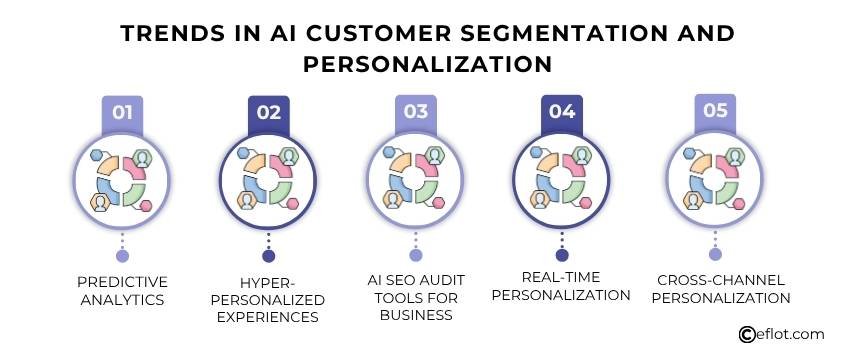
Trends in AI Customer Segmentation and Personalization
-
Predictive Analytics: AI forecasts customer behavior to improve product recommendations and sales.
-
Hyper-Personalized Experiences: Segmentation insights create highly relevant offers through email, push notifications, and apps.
-
AI SEO Audit Tools for Business: Detect SEO issues and optimize content for each segment to increase visibility.
-
Real-Time Personalization: Instant adjustments based on user actions, like cart abandonment, drive conversions.
-
Cross-Channel Personalization: Maintain consistent messaging across social media, email, ads, and website interactions.
How to Implement AI-Powered Customer Segmentation
Implementing AI-driven segmentation involves a structured approach:
Step 1: Collect Customer Data
Data is the foundation of segmentation. Businesses should gather information from multiple sources: transaction histories, website behavior, social media interactions, surveys, and CRM systems.
Step 2: Analyze and Segment
Using ai customer segmentation tools, businesses can identify clusters of customers with similar behaviors or characteristics. AI models uncover insights that might be invisible to human analysts, such as predicting high-value customers or early churn risks.
Step 3: Personalize Marketing Campaigns
Once segments are identified, campaigns can be tailored for maximum impact. For instance:
-
Email campaigns highlighting products relevant to a segment’s purchase history.
-
Social media ads based on geographic and demographic insights.
-
Website personalization showing products or content preferred by each user.
Step 4: Utilize AI SEO Audit Tools for Business
Optimizing content for each segment improves discoverability. ai seo audit tools for business can automatically detect keyword gaps, optimize on-page SEO, and suggest content updates that resonate with specific customer segments.
Step 5: Measure and Optimize
Track KPIs like conversion rates, engagement, and ROI. AI can provide continuous insights, enabling adjustments to campaigns in real-time.
Step 6: Integrate with Marketing Services
For best results, segmentation should align with broader digital marketing services:
-
SEO: Segment-specific content strategies
-
PPC: Ads targeted to high-value segments
-
Email Marketing: Personalized drip campaigns
-
Social Media: Tailored posts and promotions
-
Content Marketing: Relevant blog posts, videos, and guides
How Personalization with AI improves Conversions
-
Higher Engagement: Personalized content leads to 29% higher email open rates (Mailchimp).
-
Increased Conversions: Targeted offers drive more purchases; Swiggy saw 20% growth in repeat orders.
-
Better Customer Retention: 91% of consumers prefer brands that provide personalized offers (Accenture).
-
Optimized Marketing Spend: AI directs ads to relevant audiences; ai seo audit tools for business identify high-performing pages.
-
Actionable Insights: AI uncovers evolving customer needs, helping refine campaigns and generate revenue.
Partnering with an AI digital marketing agency can make implementing these personalization strategies easier and more effective. They help leverage advanced AI tools to deliver content that resonates with the right audience at the right time.
AI-powered customer segmentation and personalization help businesses understand their audience and deliver relevant messages. Using ai customer segmentation tools and ai seo audit tools for business makes marketing more effective. Adopting these strategies improves engagement, conversions, and customer loyalty.
Digital Marketing services in Other Locations in India
Bangalore | Hyderabad | Chennai | Pune | Ahmedabad | Coimbatore | Mumbai | Kolkata | Patna | Amritsar | Indore | Kozhikode | Trivandrum | Jaipur | Nagpur | Gwalior | Dehradun | Noida | Vizag | Raipur | Agra | Gurgaon | Madurai | Udaipur | Thrissur |