


















What is Off-Page SEO in Your Digital Marketing?
Learn what off-page SEO is in digital marketing, its strategies, and how it impacts website ranking and visibility on search engines.
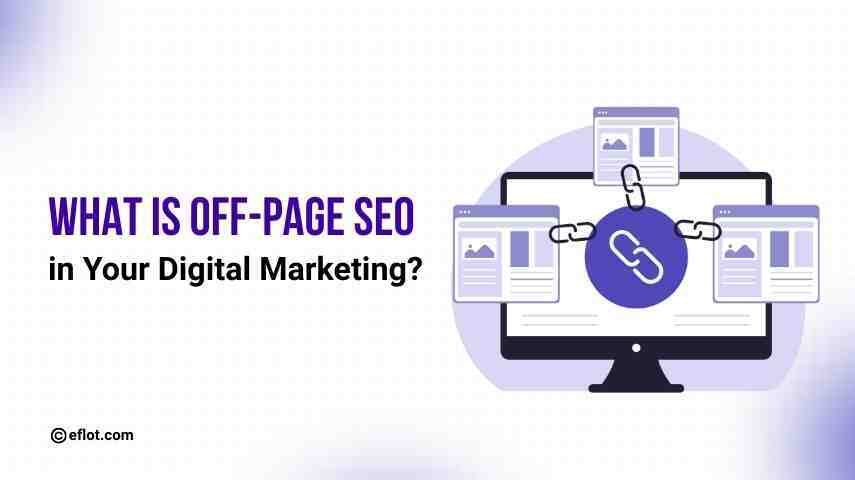
Search engine optimization (SEO) is essential for increasing traffic, visibility, and conversion rates. While on-page SEO focuses on optimizing aspects of your website, off-page SEO is just as important in establishing your website's authority and relevance across the internet. What is off-page SEO, and why is it so important for your business? Simply, it refers to measures conducted outside of your website that affect your search engine rankings. These efforts assist your brand in gaining credibility, trust, and visibility, which are essential for increasing search rankings and getting more qualified traffic.
As a digital marketing specialist with years of experience, I've witnessed personally what off-page SEO is and how it can have a huge impact on a website's digital marketing success. In my capacity, I've helped businesses develop and implement complete SEO strategies, utilizing off-page approaches to increase organic traffic and improve their online visibility. Off-page SEO is one of the most powerful components of SEO, in my opinion, yet it is often ignored. While it does not directly involve changing a website's content or structure, it is about enhancing a site's reputation and cultivating partnerships with authoritative sites, influencers, and the wider web.
Understanding Off-Page SEO
What is Off-Page SEO?
Off-page SEO refers to the activities carried out outside your website to improve its search engine rankings. Unlike on-page SEO, which deals with optimizing your website’s content, structure, and technical aspects, off-page SEO involves efforts like building backlinks, social media engagement, and brand mentions that influence how search engines perceive the authority and relevance of your website.
Essentially, search engines like Google evaluate your website based on its trustworthiness, popularity, and authority. While on-page SEO optimizes your site’s content for those factors, off-page SEO establishes the external signals that help search engines validate your site’s credibility. This can include gaining high-quality backlinks, social media shares, and positive online reviews. All of these elements influence how your website ranks on search engine results pages (SERPs) and how much organic traffic it generates.
Key Elements of Off-Page SEO
Off-page SEO focuses on building external signals that improve your site’s authority and trustworthiness. Below are the most important components of off-page SEO:
-
Backlinks (Link Building):
Backlinks, or inbound links, are one of the most significant elements of off-page SEO. These are links from external websites that point to your site. Search engines use backlinks as a signal of your site’s authority and relevance. The more high-quality backlinks you have, the higher your site’s chance of ranking well on search engines. -
Social Media Engagement:
Social media platforms like Facebook, Instagram, LinkedIn, and Twitter play an important role in off-page SEO. While social media signals themselves don’t directly influence rankings, they do help drive traffic to your website and create engagement around your brand. Regularly posting content, engaging with followers, and encouraging social sharing can lead to more traffic and increased brand visibility. -
Brand Mentions:
Even without backlinks, mentions of your brand on reputable websites, forums, and social media platforms can influence your off-page SEO. These mentions help search engines understand your brand's presence and authority. Tools like Google Alerts can help track brand mentions and ensure you're aware of where your brand is being discussed online. -
Guest Blogging and Content Distribution:
Guest blogging is a great way to acquire quality backlinks and reach a wider audience. By contributing valuable content to authoritative blogs in your industry, you can build backlinks and expose your brand to a new audience.
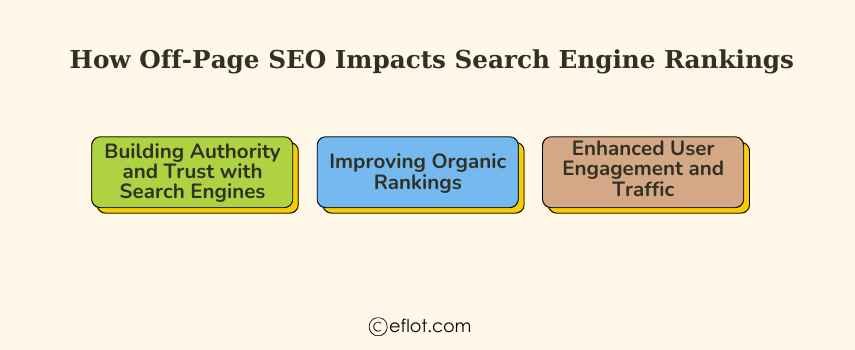
How Off-Page SEO Impacts Search Engine Rankings
-
Building Authority and Trust with Search Engines: The ultimate goal of off-page SEO is to build a strong, authoritative presence in your niche. Google, for example, uses algorithms like PageRank to evaluate how trustworthy and authoritative a website is based on external signals. The more authoritative websites that link to your content, the more likely your website is to be seen as credible by Google.
-
Improving Organic Rankings: Off-page SEO works together with on-page SEO to improve your website’s rankings on search engine results pages. While on-page optimization focuses on improving the content and structure of your website, off-page SEO focuses on improving your site’s external reputation. This combined approach ensures that your site has both high-quality content and authoritative recognition in the eyes of search engines.
-
Enhanced User Engagement and Traffic: When you create high-quality content and promote it through off-page SEO activities, you increase the chances of attracting more users to your website. Social media campaigns, influencer marketing, and brand mentions can all drive traffic back to your site, which in turn can lead to more conversions. Increased traffic also sends positive signals to search engines, further boosting your rankings.
Effective Off-Page SEO Strategies for Maximum Impact
-
Focus on Quality Over Quantity in Link Building: High-quality backlinks from authoritative sites have a much stronger impact on your rankings than numerous low-quality links. Use strategies like broken link building, guest posting, and outreach to acquire valuable links.
-
Use Social Media: Maintain an active presence on social media platforms, regularly post engaging content, and interact with your audience. Social media platforms can be powerful tools for increasing brand visibility and driving traffic to your website.
-
Encourage Online Reviews: Positive online reviews on platforms like Google My Business, Yelp, and industry-specific review sites can enhance your online reputation and provide valuable off-page SEO signals.
-
Influencer Collaborations: Partnering with influencers in your niche can help expand your brand’s reach, improve social proof, and drive traffic back to your website. This increases brand awareness and builds credibility.
Case study 1
Moz, a leading SEO tools provider, wanted to improve its domain authority and rankings in the competitive SEO industry.
Challenge:
Despite offering great tools and content, Moz lacked strong off-page SEO strategies, particularly backlinks and brand mentions, affecting its visibility in search engine results.
Solution:
Moz focused on building high-quality backlinks through guest blogging, content syndication, and partnerships with influencers. They also participated in online forums and generated brand mentions through social media. This led to a 45% increase in organic traffic and higher rankings for competitive keywords, solidifying Moz’s authority in the SEO space.
Case study 2
Booking.com aimed to improve its visibility and drive organic traffic to remain competitive in the global online travel market.
Challenge:
Booking.com needed to strengthen its off-page SEO through backlinks, brand mentions, and social signals to rank higher in search results.
Solution:
They secured backlinks from authoritative travel sites, partnered with influencers, and increased brand mentions on social media. These efforts led to a 30% boost in organic traffic and improved rankings, resulting in increased bookings.
Off-page SEO plays a crucial role in your digital marketing strategy, providing the external signals that build your site’s credibility, trustworthiness, and relevance. What is off-page SEO? Simply put, it refers to the activities outside of your website that influence its ranking on search engines, including backlinks, social media engagement, and brand mentions. By implementing effective off-page SEO strategies, businesses can improve their search engine rankings, drive more organic traffic, and build lasting relationships with their audience. By focusing on quality backlinks, social media engagement, and brand mentions, businesses can boost their visibility and credibility across the web, ultimately leading to greater success in their digital marketing efforts. As a digital marketing expert, I’ve seen how what is off-page SEO can dramatically improve a website’s performance and ROI when executed correctly. If you’re looking to take your digital marketing to the next level, investing in off-page SEO is essential for driving long-term growth and success.
Digital Marketing services in Other Locations in India
Bangalore | Hyderabad | Chennai | Pune | Ahmedabad | Coimbatore | Mumbai | Kolkata | Patna | Amritsar | Indore | Kozhikode | Trivandrum | Jaipur | Nagpur | Gwalior | Dehradun | Noida | Vizag | Raipur | Agra | Gurgaon | Madurai | Udaipur | Thrissur |